


 Top Rated Course

We may not have the course you’re looking for. If you enquire or give us a call on +44 1344 203 999 and speak to our training experts, we may still be able to help with your training requirements.
How to Become a Music Producer: A Step-by-step Guide
The Knowledge Academy 02 March 2026Discover How to Become a Music Producer by developing core skills in DAWs, music theory, sound engineering, portfolio creation, and professional networking. In this journey, it blends creative, technical skills, and industry knowledge. Each step is essential since it helps to shape your unique sound and distinct professional identity.

Training Outcomes Within Your Budget!
We ensure quality, budget-alignment, and timely delivery by our expert instructors.
Table of Contents

Behind every song lies a creative mind that shapes melodies, beats, and emotions into a powerful sound. Music Producers play a key role in transforming ideas into professional tracks, blending artistic vision with technical expertise. If you are passionate about music and want to turn it into a career, understanding How to Become a Music Producer is the first step towards building a successful journey.
Music Producers not only create beats or use software, but it also involves mastering digital audio tools, understanding music theory, and much more. In this blog, you will learn about How to Become a Music Producer, their role, job opportunities, and more. Keep reading to explore a practical roadmap to being a confident producer!
Table of Contents
1) Who is a Music Producer?
2) Role of Music Producer
3) How to Become a Music Producer?
4) Job Opportunities of Music Producer
5) What is the Difference Between a Music Producer and a Recording Engineer?
6) Career Outlook for Music Producers
7) Conclusion
Who is a Music Producer?
A Music Producer is a professional who helps artists shape their songs and bring their musical vision to life. They work closely with singers, bands, and composers throughout the recording process. They act as a creative partner and a technical expert, ensuring that a track is polished, balanced, and impactful.
Music Producers create experiences through sound. At its core, their work involves designing and organising sounds that can evoke emotions, memories, and reactions. Blending creativity with technology, Music Producers transform raw ideas into powerful musical stories that connect deeply with the audience.

Role of Music Producer
While learning How to Become a Music Producer, the first step is understanding what this role entails. They take the raw musical elements such as melodies, lyrics, instruments, and vocals and blend them together to create a piece of music. Let's break down the different aspects of a Music Producer's role:
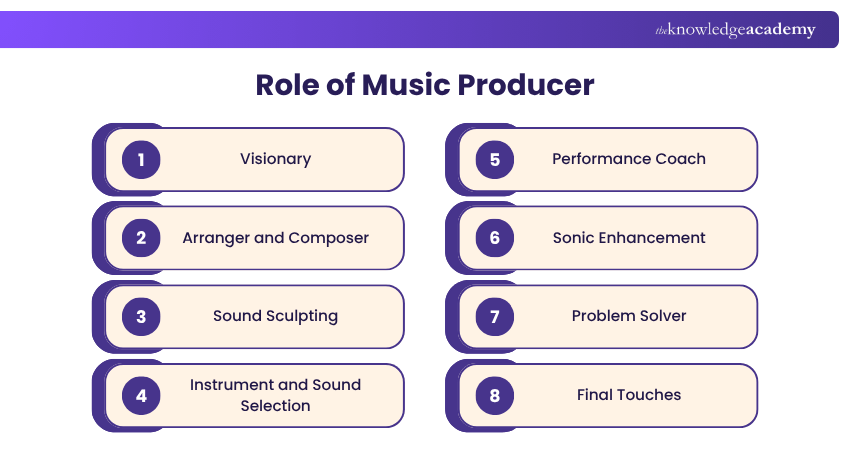
Visionary
1) A Music Producer outlines a vision for how a song should sound.
2) The Producer envisions the final track, much like a Film Director who imagines a scene before shooting.
3) They collaborate with artists to make sense of their ideas and emotions.
Arranger and Composer
1) Producers shape the arrangement and structure of a song.
2) They make decisions regarding where the verses, choruses and bridges should appear.
3) Their role is to make sure that the song has a natural flow that keeps listeners engaged.
4) They make creative choices like moving a chorus earlier or shortening sections.
Sound Sculpting
1) From instruments to vocals and effects, every sound in a song is important.
2) The Music Producer shapes and refines these sounds with various tools and techniques.
3) They adjust the volume levels to balance all the elements in the mix.
4) Their goal is to create a polished and harmonious final track.
Instrument and Sound Selection
1) A Music Producer is like a painter picking colours for a canvas.
2) They select instruments and sounds that best match the song’s mood.
3) For a romantic feel, they may use strings or orchestral sounds.
4) They might choose electric guitars and strong drums for an energetic vibe.
Performance Coach
1) The Producer acts like a coach for the performers during the recording process.
2) They offer guidance to the artists so that they deliver their best possible performance.
3) Producers may suggest changes in the artist's tone, style or delivery.
4) Their goal is to capture the song’s true energy.
Sonic Enhancement
1) Producers make songs sound bigger and more impactful.
2) They use various effects including reverbs, echo and compression.
3) These enhancements add depth and richness to the track.
4) Their work helps create a unique atmosphere for the song.
Problem Solver
1) Music production can come with substantial challenges.
2) These challenges can include technical issues or creative blocks.
3) Disagreements between Artists can also pop up during the process.
4) In these situations, the Producer steps in as a problem solver.
5) Their role is to keep the workflow smooth and the creativity on track.
Final Touches
1) After recording and mixing, the producer applies the final touches.
2) This step includes mastering the track for a professional finish.
3) They make sure the volume levels are consistent across the song.
4) The goal is to achieve a balanced and ready-to-release sound.
Compose your own music, turn ideas into powerful melodies with Music Composition Course today!
How to Become a Music Producer?
Whether you're a music lover or a budding artist, the role of a Music Producer is crucial in bringing music to life. So, let’s explore the essential steps and valuable insights on How to Become a professional Music Producer:
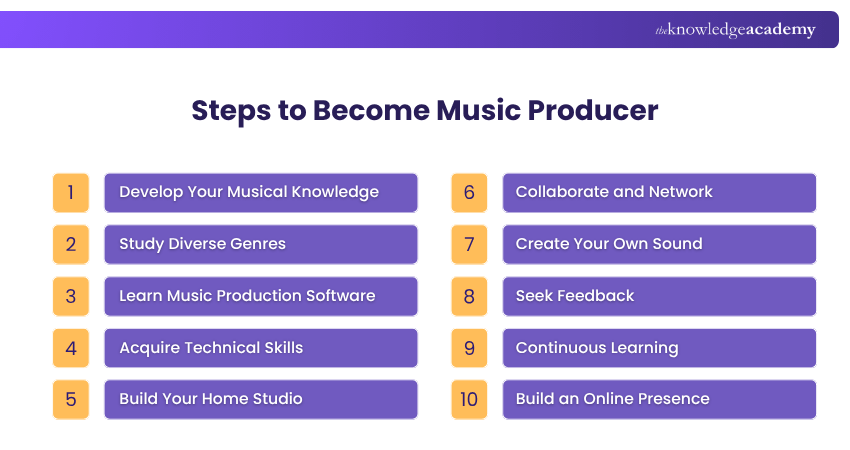
1) Develop Your Musical Knowledge
Before you enter into producing music, you need a strong foundation in music theory and composition. Learn about scales, chords, melodies, and harmonies. Understanding the elements of music can empower you to create unique,captivating sounds that resonate with your audience.
When you understand these musical elements, you can create original and captivating sounds. This allows you to experiment confidently, develop your own style, and produce music that connects emotionally with listeners.
2) Study Diverse Genres
Get acquainted with a wide range of musical genres. Each genre has its own distinct characteristics and production techniques. By immersing yourself in different styles, you can expand your creative toolkit and be better equipped to experiment with various sounds.
Studying these different styles helps you learn cool tricks that Musicians use, like how to make your music feel relaxed or exciting. When you implement it in your music, you create something that's uniquely yours. Plus, knowing about different music styles makes you good at working with different Musicians who like different kinds of music.
3) Learn Music Production Software
Music Production involves working with Digital Audio Workstations (DAWs). Popular DAWs like Ableton Live, Logic Pro, and FL Studio, along with Music Production Software, are essential tools for Producers. Invest time in learning the key features and functions of your chosen DAW to manipulate audio, arrange tracks, and apply effects.
As you practice using these programs, you can get better at making your music sound amazing. It's like becoming good at playing a video game; the more you play, the better you become. And the cool thing is, once you've learned these programs, you can use them to bring the music in your head to life and share it with the world.
4) Listen Actively and Broaden Your Musical Horizons
Great Music Producers develop their skills by exploring a wide range of musical genres. They listen actively and pay attention to how songs are built. Exploring styles, such as jazz, rock, electronic pop, and more, helps you understand different rhythms, moods, and creative approaches to music.
Analysing production techniques, arrangements, and instrumentation across genres provides valuable insight into how professional tracks are created. This practice expands your musical knowledge, sparks creative ideas, and strengthens your ability to experiment confidently with sound.
5) Acquire Technical Skills
Music Production blends creativity with technical skills. To become a skilled producer, you need to learn key techniques such as sound synthesis, mixing, mastering, and arranging. Practice creating unique sound textures, applying effects, and shaping audio to get the results you want.
Building your knowledge through online courses, workshops, or a degree in Music Production can give you a strong technical base. Hands-on practice with different software and equipment will sharpen your abilities. Over time, your unique style and sound will begin to emerge.
6) Build Your Home Studio
Creating a conducive working environment is essential. While you don't need a state-of-the-art studio initially, invest in quality headphones, monitors, and audio interfaces. Set up a space where you can focus on your creativity without distractions.
Personalise the space with inspiring artwork, plants, or whatever makes you feel connected to your music. Over time, as you experiment and learn, your home studio can become your artistic sanctuary, where your musical ideas transform into beautiful tracks.
Turn your passion for the piano into a career, one key at a time. Sign up for our Piano Course now!
7) Collaborate and Network
One of the best ways to start learning Music Production is by connecting with other producers. You can connect online or in person. Since the field is always changing, sharing ideas and working together helps you pick up new skills and stay updated. Join social media communities and other online forums and groups to learn and connect.

Building relationships with musicians, singers, and fellow producers gives you hands-on experience and a strong network. Collaborating not only improves your skills but also grows your portfolio and boosts your exposure. Working with others allows you to create fresh and exciting music.
8) Create Your Own Sound
Developing a unique sound sets you apart from the crowd. Experiment with various instruments, effects, and techniques to discover your signature style. Your distinct sound can become your trademark in the competitive music landscape.
Your sound might be a fusion of different genres, or it could involve a distinct use of specific instruments or effects. This is your musical fingerprint, and it's what sets you apart from other Producers.
9) Seek Feedback
Constructive criticism is indispensable for growth. Share your work with trusted peers or mentors who can provide honest feedback. Use feedback to refine your tracks and enhance your production skills.
Feedback is a two-way street. When you share your work, you open the door for constructive criticism that can lead to improvements. On the flip side, when you give feedback to others, you learn to communicate your thoughts and deeply understand the artistic and technical aspects of Music Production.
10) Continuous Learning
The Music Production field is ever evolving. So, stay updated with industry trends, new software updates, and production techniques. Attend workshops webinars and read Music Production blogs to keep your skills current.
Furthermore, learning is an integral part of mastering your craft. Every piece of knowledge you gain contributes to your proficiency in Music Production. The pursuit of continuous learning is an effort to refine your skills, strengthen your foundation, and push the boundaries of your potential.
11) Build an Online Presence
In the digital era, having an online presence is pretty much necessary .Build an eye-catching portfolio to showcase your work on platforms like SoundCloud, YouTube, and social media. Building a strong online brand can attract potential clients, artists, and collaborators.
As your online brand grows, you'll notice that it acts as a magnet, attracting fans and potential clients equally. Collaborative opportunities arise as musicians and vocalists like your style and approach. Brands and projects seeking Music Producers may also discover your work, opening new opportunities.
12) Stay Committed and Patient
For learning How to Become a Music Producer, it requires you to embark upon a long-term journey. Progress may feel slow, and setbacks are part of the learning process. Instead of giving up, focus on improving your skills, refining your sound, and staying true to your style.
It is equally important to adapt to changes in the music industry. Explore new tools, techniques, and trends while continuing to experiment with your creativity. Over time, steady effort and passion will help you grow as a producer, proving that success in music production belongs to the one who persists and keeps pushing.
Master the mix and make your music shine. Sign up for our Music Mixing Course now!
Job Opportunities of Music Producer
A career in music production opens doors to many existing roles across the music and entertainment industry. Below are some key job opportunities available for Music Producers.

1) Artist Career: Create original music, release albums, perform live, and earn through streaming, tours, and collaborations.
2) Audio Engineering: Work in mixing, mastering, and sound quality for recordings, concerts, and live events.
3) Commercial Production: Produce music for advertisements, films, television, video games, and digital media projects.
4) Teaching and Training: Teach music production skills through schools, workshops, online courses, or private coaching.
5) Sound Design: Design unique sound effects and audio experiences for films, games, animations, and multimedia content.
Play your favourite songs with confidence with Guitar Course – Join now!
What is the Difference Between a Music Producer and a Recording Engineer?
Here are the key differences between Music Producer and Recording Engineer:
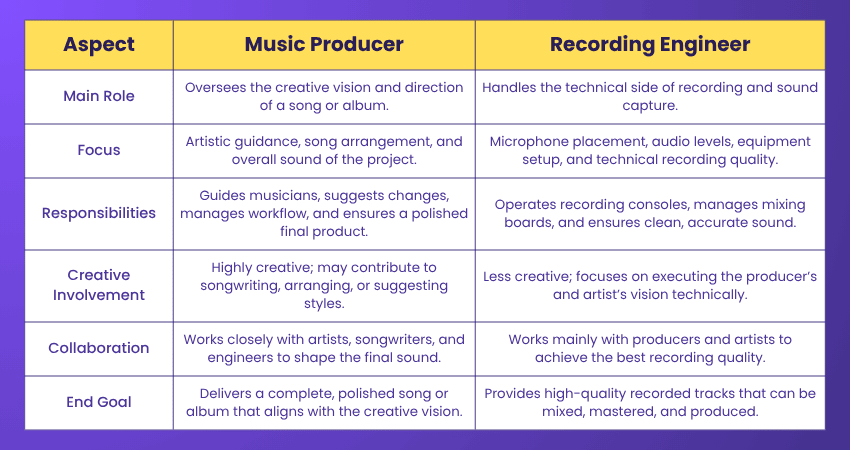
Both roles are essential in music production; their responsibilities differ in focus and approach. A Music Producer shapes the creative direction of a project, guiding the overall sound and artistic vision. In contrast, a Recording Engineer focuses on the technical aspects of audio.
Together, they work closely to create high-quality tracks; their collaboration ensures that creative ideas are transformed into professionally recorded music that meets both artistic and technical standards.
Career Outlook for Music Producers
Music production is a fast-growing field that plays a key role in the global music and entertainment industry. With the rise of digital platforms, streaming services, and independent artists, the demand for skilled Music Producers continues to increase.
If you are considering a career in this field, the career outlook is shaped by both opportunities and challenges. Before exploring prospects, it is important to understand the opportunities available and the challenges Music Producers face in their professional journey.
Conclusion
Becoming a Music Producer blends creativity, technical skills, and persistence. Each step in the journey is essential to help you grow artistically and professionally. If you are serious about learning How to Become a Music Producer, practice consistently, explore genres, and connect with other creatives. With patience and passion, you can turn your love for music into a rewarding career.
Discover your passion, learn something new with Hobbies & Interests Courses now!
Frequently Asked Questions
Can I Learn Music Production in One Year?

Yes, you can learn the Music Production basics in a year with focus and practice. By studying techniques like mixing, mastering, and arranging (and using software regularly), you can build a solid foundation. Mastery, however, takes ongoing learning and experience.
What is the Best Age to Start Music Production?
There’s no fixed age to start Music Production. Many people begin as teenagers, but you can start at any stage of life. What matters most is passion, consistency and practice. With today’s accessible tools and courses, anyone can learn Music Production.
What are the Other Resources and Offers Provided by The Knowledge Academy?
The Knowledge Academy takes global learning to new heights, offering over 3,000+ online courses across 490+ locations in 190+ countries. This expansive reach ensures accessibility and convenience for learners worldwide.
Alongside our diverse Online Course Catalogue, encompassing 17 major categories, we go the extra mile by providing a plethora of free educational Online Resources like Blogs, eBooks, Interview Questions and Videos. Tailoring learning experiences further, professionals can unlock greater value through a wide range of special discounts, seasonal deals, and Exclusive Offers.
What is The Knowledge Pass, and How Does it Work?
The Knowledge Academy’s Knowledge Pass, a prepaid voucher, adds another layer of flexibility, allowing course bookings over a 12-month period. Join us on a journey where education knows no bounds.
What are the Related Courses and Blogs Provided by The Knowledge Academy?
The Knowledge Academy offers various Hobbies & Interests Courses including the Music Production Course, Mixing and Mastering Course and the Guitar Course. These courses cater to different skill levels, providing comprehensive insights into Keyboard vs Piano.
Our Business Skills Blogs cover a range of topics related to Music Production, offering valuable resources, best practices, and industry insights. Whether you are a beginner or looking to advance your Music Production skills, The Knowledge Academy's diverse courses and informative blogs have got you covered.

The Knowledge Academy


Global Training Provider
The Knowledge Academy is a world-leading provider of professional training courses, offering globally recognised qualifications across a wide range of subjects. With expert trainers, up-to-date course material, and flexible learning options, we aim to empower professionals and organisations to achieve their goals through continuous learning.

Upcoming Business Skills Resources Batches & Dates
Date
 Music Production Course
Music Production Course
Fri 22nd May 2026
Music Production Course
Fri 21st Aug 2026
Music Production Course
Fri 13th Nov 2026

 If you wish to make any changes to your course, please


