


We may not have the course you’re looking for. If you enquire or give us a call on +55 8000201623 and speak to our training experts, we may still be able to help with your training requirements.
Key Benefits of Stress Management
ByThe Knowledge AcademyLast updated on: 18 November 2026
Discover the key benefits of stress management, including better physical health, improved emotional well-being and stronger relationships. Explore how managing stress can support concentration, resilience and overall quality of life through simple, practical techniques.
The Gist
1. Stress-related symptoms can include headaches, muscle tension, fatigue and digestive discomfort.2. Different coping techniques can address physical tension, anxious thoughts and emotional responses.3. Managing stress can improve how individuals respond to challenges and handle daily responsibilities.4. Exercise, balanced nutrition and relaxation practices offer practical ways to manage stress.5. Small, consistent habits can make managing everyday pressures more sustainable.
Do you think your stress stays only in your head?
While occasional stress is a normal part of life, prolonged stress can affect your physical health, emotional well-being and daily performance. The effects may develop gradually, making it difficult to recognise when stress starts interfering with your everyday activities.
This is where understanding the benefits of stress management becomes essential. Effective techniques can help you feel calmer, think more clearly and maintain emotional balance during challenging situations.
So, what can managing stress do for your well-being? Let's explore its key benefits.
Key Benefits of Stress Management
Effective stress management can improve your physical health, emotional well-being and overall quality of life. From reducing daily tension to strengthening relationships, let's explore the key benefits of managing stress effectively.
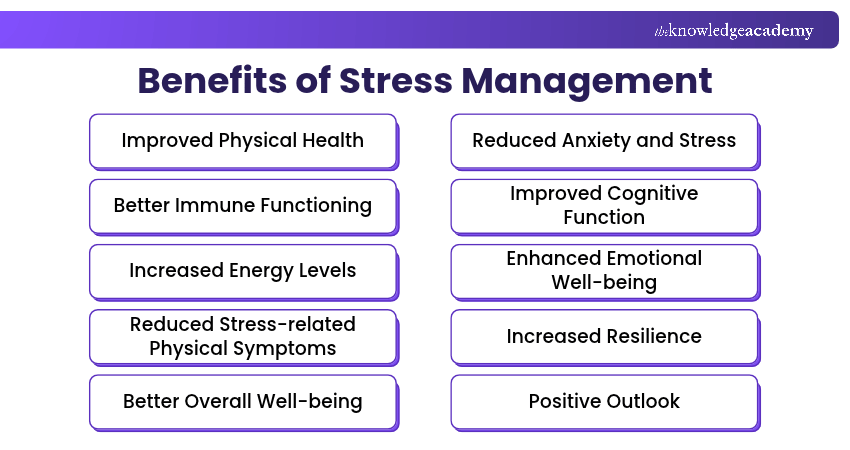
1) Improved Physical Health
Managing stress effectively may help reduce stress-related increases in blood pressure and support cardiovascular well-being. Regular relaxation and healthy lifestyle practices can also help reduce the physical effects of prolonged stress.
2) Better Immune Functioning
Chronic stress can disrupt normal immune functioning and affect how the body responds to certain health challenges. Managing prolonged stress may help reduce these effects and support overall immune health.
3) Increased Energy Levels
Managing prolonged stress may help reduce feelings of exhaustion and support better daytime energy. This can make it easier to stay motivated and participate in everyday activities.
4) Reduced Stress-related Physical Symptoms
Managing chronic stress can help ease stress-related physical symptoms, such as headaches and digestive discomfort. Relaxation techniques and healthy coping strategies may reduce the frequency or intensity of these symptoms.
5) Better Overall Well-being
Managing stress can help individuals make more time for enjoyable activities, social connections and personal interests. These opportunities support greater life satisfaction and a healthier sense of balance.
6) Reduced Anxiety and Stress
Effective stress management techniques can help ease feelings of anxiety and reduce everyday tension. Practices such as mindfulness, deep breathing and relaxation can promote a greater sense of calm during challenging situations.
Trainer's Pro Tip
Don't wait for stress to build up before taking action. Try two minutes of deep breathing or gentle stretching between tasks. These small, regular breaks can help ease tension and make daily pressures easier to manage.
7) Improved Cognitive Function
Managing stress can support memory, concentration and decision-making abilities. With fewer stress-related distractions, individuals may find it easier to focus on tasks, solve problems and think clearly.
8) Enhanced Emotional Well-being
Stress management helps individuals recognise and regulate their emotions more effectively. This can reduce irritability, support emotional stability and make challenging situations easier to handle.
Strengthen emotional awareness to facilitate healthy relationships with our Emotional Intelligence Training. Join now!
9) Increased Resilience
Practising stress management can help individuals develop resilience and respond more effectively to challenges. It also supports their ability to recover from setbacks and adapt to difficult situations.
10) Positive Outlook
Managing stress can encourage a more constructive outlook on life by helping individuals recognise unhelpful thought patterns and develop more balanced perspectives. This may help them approach challenges with greater confidence and optimism.
11) Stronger Relationships
Stress management can help individuals communicate more calmly, respond with empathy and handle disagreements constructively. These improvements support healthier and more meaningful personal and professional relationships.
12) Improved Productivity
Managing stress can support concentration and help individuals organise and prioritise tasks more effectively. This helps individuals work more efficiently and maintain consistent progress towards personal and professional goals.
13) Better Work-life Balance
Effective stress management can encourage individuals to establish healthy boundaries, prioritise self-care and manage competing responsibilities. When combined with manageable workloads and adequate rest, these practices can create a better balance between professional commitments and personal life.
14) Better Sleep Quality
Managing stress can help improve sleep quality by reducing mental tension and promoting relaxation before bedtime. Maintaining regular sleep habits alongside mindfulness and deep breathing exercises may help you relax and sleep more comfortably.
15) Reduced Physical Tension
Stress often causes muscles to tighten, particularly around the neck, shoulders and back. Relaxation practices such as gentle stretching, deep breathing and progressive muscle relaxation can help reduce tension and improve physical comfort.
Build mental strength with our Handle Stress and Develop Your Resilience Courses. Join now!
Ways to Manage Stress Effectively
Simple daily habits can help restore calm and improve emotional balance. By adopting small lifestyle changes, individuals can reduce tension and maintain better well-being. Let's explore some practical ways to manage stress effectively:
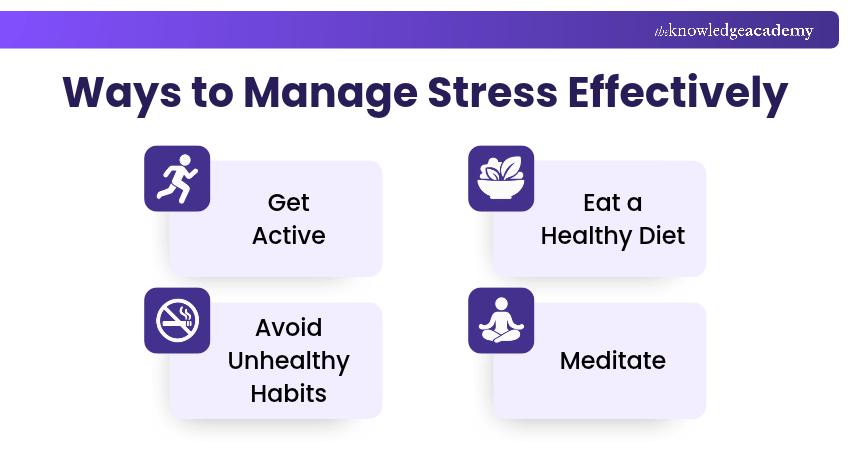
1) Get Active
Regular physical activity can ease stress and promote a more positive mood. Activities such as walking, jogging, gardening or cycling support physical and mental well-being by providing a healthy break from everyday pressures. Exercise also helps shift attention away from daily worries and can improve mental clarity.
2) Eat a Healthy Diet
A nutritious, well-balanced diet supports physical health and mental well-being. Include fruit, vegetables and whole grains in your diet, as they provide essential nutrients that help maintain energy levels and support normal brain function.
3) Avoid Unhealthy Habits
Some people cope with stress through unhealthy habits, such as excessive caffeine consumption, alcohol consumption, smoking or overeating. Although these habits may seem comforting in the short term, they can contribute to stress-related difficulties and affect health over time.
4) Meditate
Meditation can promote relaxation and help individuals cope with stressful thoughts more effectively. Practices such as mindfulness and guided meditation can support emotional balance, while deep breathing offers another way to ease everyday tension. Many of these techniques can be practised in different settings.
Keep This in Mind
Stress management is not about eliminating every stressful situation. It is about recognising your triggers, developing healthy coping habits and knowing when to seek support. Small, consistent changes can help you respond more effectively to everyday challenges.
Learn to assess and support the mental well-being of individuals effectively with our Mental Health Courses. Sign up now!

The Knowledge Academy develops accessible learning content across Project Management, IT, Cybersecurity, Data Science, Business Analysis, HR, Accounting and Finance, Leadership and Health and Safety. Its resources combine subject research with clear explanations to help professionals build practical knowledge across a wide range of disciplines.
View Detail

 If you wish to make any changes to your course, please


