


We may not have the course you’re looking for. If you enquire or give us a call on 01344203999 and speak to our training experts, we may still be able to help with your training requirements.
Benefits of Program Management: How It Creates Business Value
ByVishnu SankarLast updated on: 17 September 2026
The Benefits of Program Management extend beyond coordinating multiple projects. Program Management helps organisations align related projects with strategic goals, optimise shared resources, manage dependencies and risks, and turn individual project outputs into broader business value.
One project is progressing well. Another is on schedule. A third is delivering exactly what was planned.
But what if they are not working together?
That is the challenge Program Management is designed to address. When several related projects contribute to the same goal, success depends on more than completing each one individually. Their resources, dependencies, risks, decisions, and outcomes need to work together.
This blog explores the Benefits of Program Management, how it creates value across related projects, and when managing work at program level can make the greatest difference.
What is Program Management?
When several projects are working towards the same business goal, managing each one successfully is only part of the challenge. Their timelines, decisions, resources, and outcomes also need to work together.
Program Management brings these related projects under one coordinated approach. It keeps the wider objective in view, connects work across projects, and helps ensure that their combined efforts deliver the outcomes and benefits the organisation is aiming for.
In simple terms, Project Management focuses on delivering a project, while Program Management focuses on making related projects succeed together.

One Project vs the Bigger PictureProject Management:“Are we delivering this project successfully?”Program Management:“Are these related projects collectively delivering the outcome we need?”The difference is perspective. Projects deliver specific outputs, while programs coordinate related work towards wider outcomes and benefits.
What are the Benefits of Program Management?
Managing related projects together gives organisations a clearer view of how individual efforts contribute to a larger goal. It helps connect strategy with delivery while keeping resources, dependencies, risks, and expected benefits visible across the program.
Here are the key Benefits of Program Management:
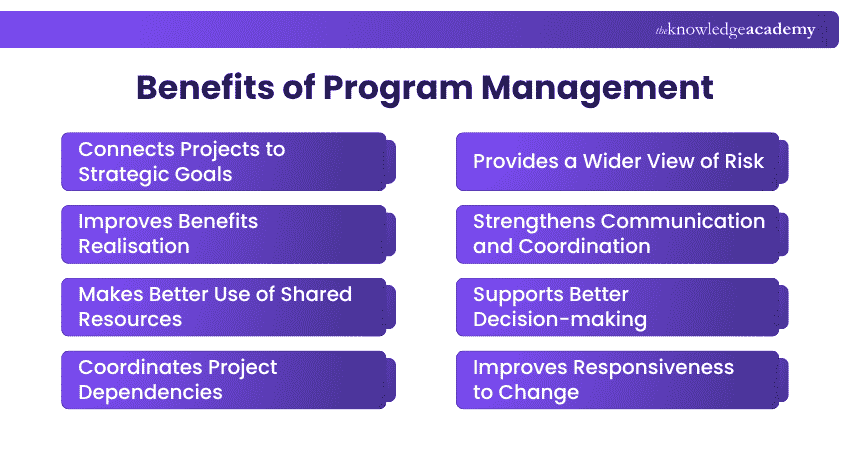
1) Connects Projects to Strategic Goals
Program Management keeps related projects focused on the wider objectives they are intended to support. As business priorities evolve, organisations can review whether each project still contributes to the desired direction.
This helps ensure that time, investment, and effort remain concentrated on work that creates meaningful strategic value.
2) Improves Benefits Realisation
Successful delivery is only one part of success. Organisations also need to realise the benefits those projects were created to achieve.
Program Management keeps these expected benefits visible throughout delivery. By tracking outcomes across related projects, organisations can see whether the combined work is producing the intended business value.
3) Makes Better Use of Shared Resources
Several projects may need the same specialists, technology, funding, or other resources at the same time. Program Management provides visibility across these competing requirements.
Resources can then be coordinated according to priorities and availability, helping reduce duplication, address bottlenecks, and direct critical capabilities where they are needed most.
4) Coordinates Project Dependencies
One project may depend on another to deliver a system, decision, data, or capability before work can continue. These connections can become difficult to manage when projects are viewed separately.
Program Management brings dependencies into the wider picture, helping teams coordinate schedules and understand how changes in one project could affect progress elsewhere.
5) Provides a Wider View of Risk
A risk affecting one project can sometimes create consequences across several others. Program Management helps identify risks that cross project boundaries and understand their wider impact.
This broader visibility supports coordinated responses and helps teams consider how managing a risk in one area could influence the rest of the program.
Strengthen your Project Management expertise with our PMP® Certification Training – Join today!
6) Strengthens Communication and Coordination
Programs bring together different project teams, departments, stakeholders, and decision-makers. Program Management creates a shared view of priorities, progress, dependencies, risks, and key decisions.
With better information flowing across the program, teams can coordinate their work more effectively and understand how their responsibilities connect with those of others.
7) Supports Better Decision-making
A decision that benefits one project could create difficulties for another. Program Management allows important decisions to be considered from a wider perspective.
Leaders can evaluate potential effects across resources, schedules, dependencies, strategic objectives, and expected benefits before deciding the best course of action.
8) Improves Responsiveness to Change
Business priorities can shift while projects are underway. New technology, customer expectations, regulations, or market conditions can also affect what an organisation needs from its program.
A program-level view helps organisations assess these changes across connected projects and adjust priorities while maintaining focus on the intended outcomes.
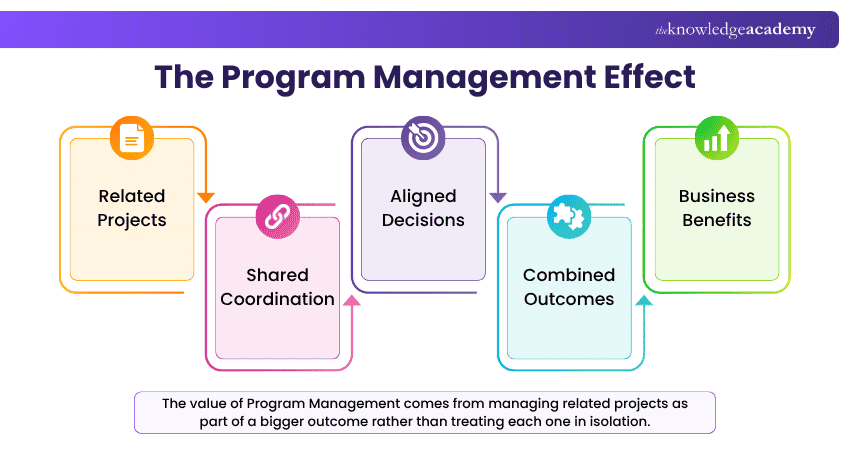
How Does Program Management Create Value Across Multiple Projects?
The value of Program Management is often found between projects, not within them. A project can deliver everything expected of it, but the wider business goal may still fall short if related projects are not aligned.
Imagine a company is transforming its digital customer experience through three connected projects:
Project A: Builds a new customer portal
Project B: Upgrades the CRM system
Project C: Prepares customer service teams
Now imagine Project A finishes first, but the CRM integration is not ready. The portal launches, but customer information does not flow correctly. Meanwhile, the service team has not yet been trained to handle the new customer journey.
All three projects could eventually deliver their individual outputs, yet the organisation would not immediately achieve the customer experience it planned.
This is where Program Management creates value. It coordinates the projects as one connected effort, ensuring that dependencies are recognised, timelines work together, shared resources are managed, and each project remains focused on the same outcome.
See the DifferenceWithout Program Management:Portal ✓ | CRM ✓ | Training ✓ → Separate project outputsWith Program Management:Portal + CRM + Training → Connected customer experienceThe value is not simply in completing more projects. It is in making sure those projects create the right result together.
When is Program Management Most Valuable?
Program Management is most valuable when several projects are closely connected and their success depends on how well they work together. It becomes particularly useful when projects share goals, resources, dependencies or outcomes and when decisions or changes in one project can affect the others.
Quick Program CheckAsk these four questions:Are the projects related?Do they depend on one another?Do they contribute to the same outcome?Can decisions in one project affect the others?The more often the answer is “yes”, the stronger the need for coordinated management across the projects.
Turn project plans into meaningful outcomes with our PMP® Certification Training – Join today!

Vishnu Sankar is a Senior Content Writer with 5+ years of experience across content development, software development, web development and system administration. His technical background and professional training support his expertise in IT and Tech, while his extensive research and writing experience covers Project Management and Health and Safety.
View Detail

 If you wish to make any changes to your course, please


