


 Top Rated Course

We may not have the course you’re looking for. If you enquire or give us a call on 01344203999 and speak to our training experts, we may still be able to help with your training requirements.
Top Benefits of Digital Transformation
The Knowledge Academy 27 August 2026Key Benefits of Digital Transformation include improved operational efficiency, reduced business costs, and more innovation. AI, Cloud Computing, and the Internet of Things (IoT) help organisations gain competitive advantages.

Training Outcomes Within Your Budget!
We ensure quality, budget-alignment, and timely delivery by our expert instructors.
Table of Contents
Key Takeaways
Digital Transformation can improve efficiency by automating repetitive processes and streamlining workflows.Better use of data can support faster and more informed business decisions.Digital tools can improve customer experiences through personalisation and faster service.Cloud, AI and automation can help organisations become more flexible and responsive.Successful transformation depends on people, processes and culture, not technology alone.
Digital Transformation has gone from being a competitive advantage to being a business necessity in record time. But that's no surprise. Imagine walking into an office where employees still copy data between spreadsheets, customers wait hours for simple answers and managers rely on last week’s reports to make today’s decisions.
Now picture the same organisation using automation for repetitive tasks, real-time dashboards for decisions and AI-powered tools to support customers instantly.
That shift is what the Benefits of Digital Transformation make possible. It is not simply about replacing old technology with new tools. It is about changing how an organisation works and creates value. Its power is exemplified by the fact that the Digital Transformation market is projected to reach approximately £4.083 trillion by 2033, and this blog explores what’s powering its success.
What is Digital Transformation?
Digital Transformation is the powerful process of integrating technology into all the vertical areas of a business. This results in fundamental changes in the business operations and how it delivers value to the customer. Such transformation involves a cultural shift in the organisation and the willingness to embrace new technology and adapt to new working methods.
The driving force behind this is the rapid growth of Artificial Intelligence (AI) and Cloud Computing. The impacts of Digital Transformation in banking, retail, education and healthcare have been especially significant. This is proven by the fact that 89% of customers are likelier to return to a brand following a seamless digital experience.
Here’s a quick check to determine where Digital Transformation can create value:
QUICK CHECK
Consider whether your organisation:
□ Relies heavily on repetitive manual processes□ Struggles to access reliable and timely data□ Has disconnected systems or teams□ Delivers inconsistent customer experiences□ Finds it difficult to scale operations quickly□ Experiences unnecessary operational costs□ Struggles to introduce new products or services quickly

What are the Benefits of Digital Transformation?
The Benefits of Digital Transformation are aplenty and can significantly impact businesses of all sizes. Here are the best ways Digital Transformation can elevate every aspect of a business:
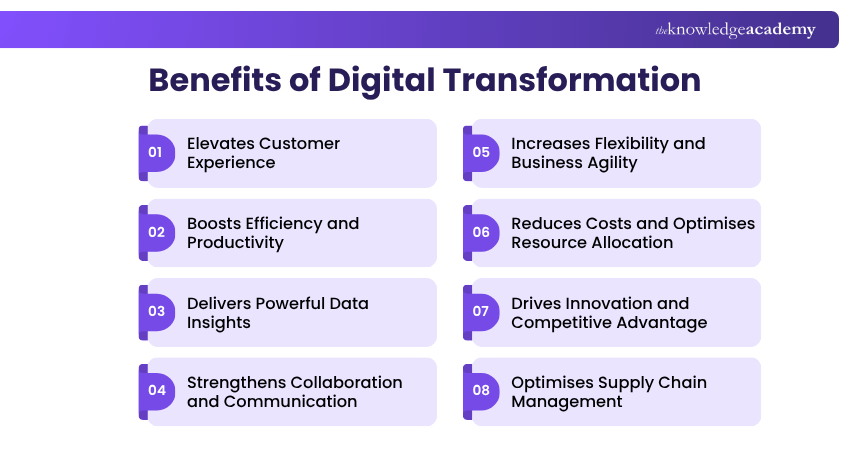
1) Elevates Customer Experience
Today's customers expect personalised interactions across every possible channel and as seamlessly as possible. Digital Transformation can create unified experiences across websites, social media platforms, mobile apps, etc.
By digging deep into customer preferences and making the best use of digital tools, organisations can craft distinct experiences that can assure conversions. Technology like chatbots and automated service systems also helps resolve customer queries faster.
2) Boosts Efficiency and Productivity
Eliminating repetitive tasks and maximising employee productivity is one of the top benefits of digital technologies. While automation reduces manual effort, cloud-based solutions can help your team access information anytime and from anywhere. AI and Machine Learning (ML) provide deeper insights that help businesses mitigate errors and improve accuracy.
3) Delivers Powerful Data Insights
Data is one of the most valuable assets in this era. Digital Transformation helps organisations gather and analyse information from multiple sources to surface meaningful insights. These insights can help better understand customer behaviour, personalise marketing efforts and identify emerging trends. Combining structured business data with unstructured sources, such as social media, helps organisations build strategies that adapt quickly and stay customer-focused.
Pro Tip
Don't measure Digital Transformation success by how much data you collect. Focus on whether that data helps teams make faster and more accurate decisions.
4) Strengthens Collaboration and Communication
Collaboration is vital for business success and Digital Transformation makes it smoother than ever. Modern tools like instant messaging, video conferencing and collaborative workspaces, among many, allow employees to work together in real time.
This improved connectivity improves teamwork and assures faster problem-solving. Simultaneously, digital communication channels allow organisations to engage customers more effectively.
Discover how technology can amplify employee experiences with our Digital Transformation in HR Training - Sign up now!
5) Increases Flexibility and Business Agility
Adaptability is a major plus point in the crowded digital marketplace. Digital Transformation helps businesses respond to changing customer expectations and market disruptions with confidence. Cloud computing is a good example of this, allowing businesses to scale operations up or down quickly in response to demand, without major infrastructure investment. Meanwhile, AI and automation improve responsiveness like never before.
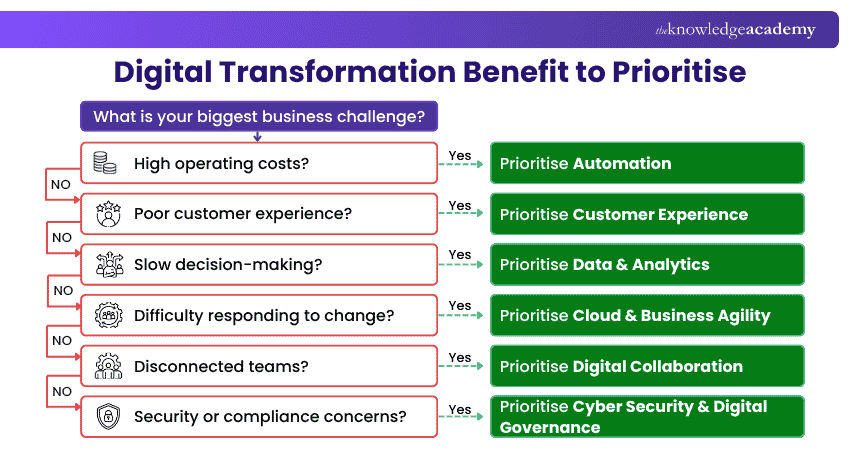
Prioritising which Benefit of Digital Transformation matters most can be difficult. Here's a quick way to work through it:
6) Reduces Costs and Optimises Resource Allocation
Cost optimisation is one of the most immediate advantages of Digital Transformation. By automating processes, organisations can lower operational expenses like never before. Real-time data monitoring also helps businesses identify bottlenecks and areas for improvement, thus making way for smarter resource allocation and better financial performance over time.
7) Drives Innovation and Competitive Advantage
Digital Transformation nurtures an environment where innovation becomes the norm. By embracing emerging technologies, businesses can develop new products and create fresh revenue opportunities. Digital-first organisations can respond faster to shifting customer needs, giving them a head start in anticipating market changes and staying ahead of competitors.
8) Optimises Supply Chain Management
A digital supply chain offers greater visibility and improved coordination. Organisations can track processes better, collaborate more closely with suppliers and make data-fuelled decisions in real time.
Successful digital supply chains involve being cyber-aware, connected, collaborative and cognitively enabled. This way organisations can protect data, achieve end-to-end visibility and use technologies such as AI, Machine Learning and Predictive Analytics for smarter supply chain decisions.
9) Boosts Security and Compliance
As businesses become increasingly digitised, protecting sensitive data becomes critical. Digital Transformation introduces advanced security capabilities like encryption, access management, automated monitoring and disaster recovery solutions. AI, ML and advanced analytics further strengthen security by detecting risks early.
Pro Tip
Avoid trying to transform everything simultaneously. Prioritise areas where digital improvements are most closely connected to important business objectives.
10) Improves Employee Engagement and Retention
Employees are likelier to remain engaged when they have access to proper tools and streamlined processes. Digital Transformation removes many of the repetitive and time-consuming tasks that can lead to frustration. For example, HR Digital Transformation automates administrative processes, thus allowing employees to focus on meaningful work.
11) Supports Sustainability and Social Responsibility
Digital Transformation plays a major role in helping organisations achieve sustainability goals. By using resources in an efficient manner and reducing their environmental footprint, businesses can operate in a more sustainable manner. Key sustainability benefits include:
a) Reduced Paper Consumption: Digital documents reduce the need for printing and physical paperwork.
b) Energy-efficient Operations: Smart technologies help organisations monitor and optimise energy use across their operations.
c) Sustainable Supply Chain Practices: Digital tools improve supply chain visibility and support more efficient use of resources.
d) Greater Support for Remote Work: Digital collaboration tools enable remote work and can reduce the need for daily commuting.
e) Environmentally Conscious Product Development: Digital Transformation helps design products with environmental impact in mind.
12) Accelerates Revenue Growth and Profitability
Digital Transformation opens new revenue pathways that traditional operations can't match. Businesses can reach larger audiences, launch e-commerce and subscription models, and use customer data to spot upsell opportunities. This stronger revenue performance, paired with leaner operations, directly boosts profitability.
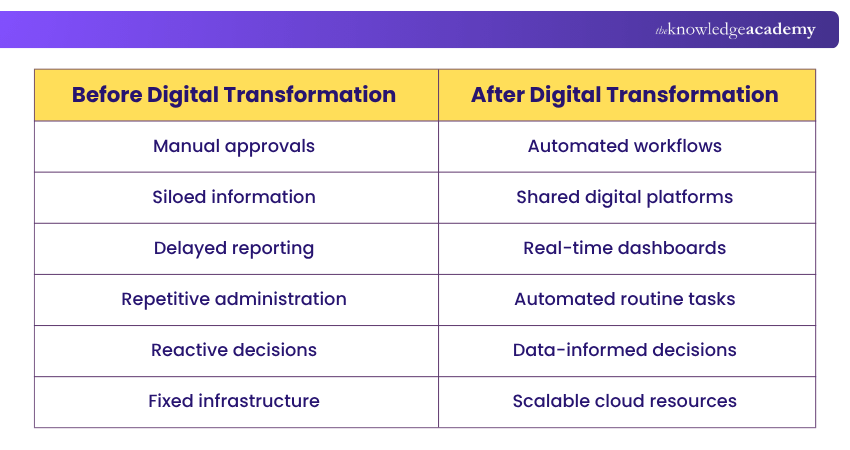
The table below summarises what this shift looks like in practice:
Industries Being Transformed by Digital Transformation
Digital Transformation is reshaping almost every industry. Here are the sectors seeing the greatest impact:
a) Healthcare: In this sector, Digital Transformation's biggest contributions are telemedicine, AI-powered diagnostics, electronic health records, and remote patient monitoring.
b) Banking, Financial Services, and Insurance (BFSI): Digital banking, mobile payments, fraud detection, blockchain, and AI-driven customer services make financial transactions more convenient.
c) Manufacturing: Smart factories, Industrial IoT, predictive maintenance, robotics and digital twins help reduce downtime and improve product quality.
d) Retail and E-commerce: Omnichannel shopping, AI-powered recommendations, inventory automation, and digital payments create personalised customer experiences.
e) Transportation and Logistics: Real-time shipment tracking, route optimisation, warehouse automation and fleet management improve supply chain delivery efficiency.
f) Education: Learning Management Systems (LMS), virtual classrooms, AI tutors, and personalised learning platforms make education more accessible.
g) Government and Public Services: E-governance, digital identity systems, online public services and smart city initiatives improve service delivery.
h) Energy and Utilities: Smart grids, IoT sensors, predictive maintenance and renewable energy management improve sustainability.
i) Telecommunications: Cloud infrastructure, 5G, AI-powered network management and automation are improving connectivity and service quality like never before.
j) Agriculture: Precision farming, drones, IoT sensors, satellite monitoring and AI analytics are helping farmers increase crop yields with reduced resource consumption.
k) Automotive: Connected vehicles, autonomous driving technologies, predictive maintenance and smart manufacturing are transforming mobility services.
Trainer's Insight
Even powerful digital tools create limited value if employees do not adopt them. Involve users early, explain how the change improves their work and provide appropriate training throughout the transformation.
Conclusion
Digital Transformation is about building upon new technologies and paving the way for unprecedented possibilities for innovation and growth. This is how organisations can stay ahead in the expanding digital landscape. By having a firm grasp on the Benefits of Digital Transformation, businesses can invest in transformation today to stay better prepared to adapt to tomorrow’s challenges.
Take charge of the future of your business with our range of Digital Transformation Courses - Sign up now!
Frequently Asked Questions
How is Digital Transformation Implemented?

Here are the steps to implement a Digital Transformation initiative:
a) Assess existing technology
b) Identify key stakeholders and leaders
c) Define clear objectives
d) Build a comprehensive Digital Transformation roadmap
e) Identify budget and resources
f) Prepare employees to adopt new digital tools
What Technical Skills do Leaders Need for Digital Transformation?
These are the necessary technical skills:
a) Data analytics
b) AI and Machine Learning fundamentals
c) Cloud architecture awareness
d) Cyber Security and privacy principles
e) Automation and process redesign
f) Understanding emerging digital tools and platforms
How Long Does Digital Transformation Take?
While individual initiatives may take months, full Digital Transformation often spans several years depending on organisational size and complexity. It's important to remember that Digital Transformation is far from a one-time project; it's an ongoing journey.
What is the First Step in Digital Transformation?
Every successful Digital Transformation journey starts off with a clear understanding of why change is needed. Before investing in anything new, organisations must assess their current capabilities, identify existing challenges and define their long-term business goals.
Why is Digital Transformation Difficult?
Digital Transformation's success depends on the right balance of people, processes and organisational culture. Resistance to change and low adoption among employees are common challenges. Legacy systems and skills shortages can also slow implementation. As organisations adopt AI, they must address related ethical challenges too.

The Knowledge Academy


Global Training Provider
The Knowledge Academy is a world-leading provider of professional training courses, offering globally recognised qualifications across a wide range of subjects. With expert trainers, up-to-date course material, and flexible learning options, we aim to empower professionals and organisations to achieve their goals through continuous learning.


 If you wish to make any changes to your course, please


