


 Top Rated Course


We may not have the course you’re looking for. If you enquire or give us a call on 01344 203999 and speak to our training experts, we may still be able to help with your training requirements.
Why is Sustainability Important in Business? Key Insights
James Smith 10 February 2026The importance of Sustainability in business lies in driving efficiency, reducing costs, and improving supply chains while boosting long-term growth. It also enhances brand reputation, builds trust with stakeholders and attracts investment. It ensures regulatory alignment and creates a balance between profitability and responsibility.

Training Outcomes Within Your Budget!
We ensure quality, budget-alignment, and timely delivery by our expert instructors.
Table of Contents

Every decision a business makes leaves a footprint on the planet, on society, and on its own future. The question is what kind of footprint will your business imprint? This is where Sustainability emerges as the guiding principle that shapes responsible growth. Sustainability is no longer a buzzword; it is a powerful tool for resilience, growth, and trust.
From reducing costs to winning customer loyalty, it is transforming how businesses compete and thrive. There is a lot of difference between surviving today and thriving tomorrow. Curious to learn more? Keep reading to discover Why is Sustainability Important in Business and how it can help you build long-term value that outlasts short-term profits!
Table of Contents
1) What is Sustainability in Business?
2) Reasons Why Sustainability is Important in Business
3) The Value of Sustainability
4) Why is Sustainability Important in the Workplace?
5) What are the Principles of Business Sustainability?
6) Conclusion
What is Sustainability in Business?
Sustainability in business means combining economic, environmental, and social responsibility in daily operations and long-term plans. It helps companies grow while caring for society and reducing their impact on the planet. Instead of focusing only on quick profits, it creates lasting value by balancing people, profit, and the planet.
By embedding Sustainability into strategy, businesses can strengthen resilience, enhance reputation, and secure ongoing trust from customers, employees, and stakeholders alike. It also positions them as forward-thinking leaders ready to adapt to future challenges and opportunities.

Reasons Why Sustainability is Important in Business
Sustainability is no longer optional. It is a vital part of business strategy that drives long-term success. By adopting sustainable practices, you can tackle ethical and environmental issues while gaining big benefits. Explore Why is Sustainability Important in Business:
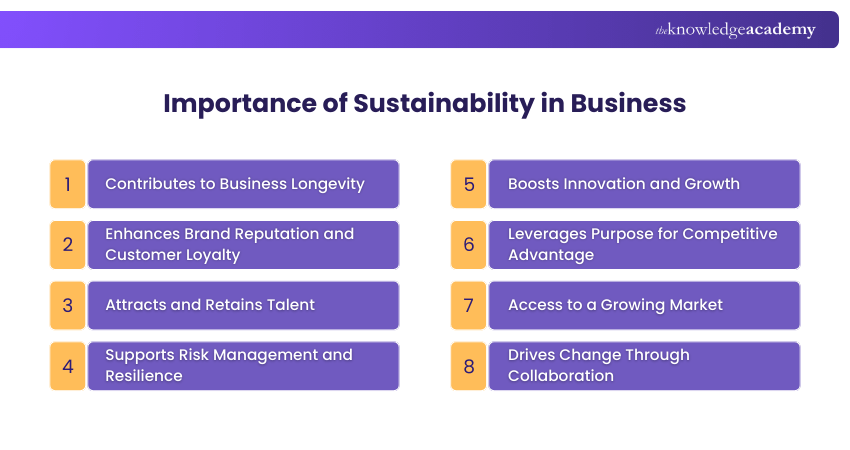
1) Contributes to Business Longevity
Sustainable practices improve efficiency, reduce costs, and strengthen resilience. Businesses that prioritise Sustainability are better equipped to adapt to regulatory changes and shifting market demands, ensuring a competitive edge in a rapidly evolving landscape.
2) Enhances Brand Reputation and Customer Loyalty
Today’s consumers increasingly support businesses that act responsibly. By committing to Sustainability, as a business, you can build trust and strengthen loyalty. A strong reputation can also differentiate you in crowded markets, helping attract new customers and encouraging existing ones to stay loyal.
3) Attracts and Retains Talent
Modern employees prefer to work for companies with strong Sustainability values. Research shows that many would even accept lower pay to join businesses committed to the environment and social responsibility. By embedding Sustainability into workplace culture, you can attract top talent, boost engagement, and reduce turnover.
4) Supports Risk Management and Resilience
Sustainability also acts as a safeguard against risks. Ignoring environmental or social issues can lead to reputational damage, legal penalties, or supply chain disruptions. Businesses that proactively address these areas not only avoid risks but also build resilience, enabling them to thrive in uncertain conditions.
5) Boosts Innovation and Growth
Sustainability fuels innovation by encouraging businesses to adopt new technologies, rethink processes, and design products that meet changing customer expectations. This not only opens up fresh revenue opportunities but also strengthens competitiveness in future markets.
Build trust and foster stronger collaboration with our Team Development Training – Sign up soon!
6) Leverages Purpose for Competitive Advantage
Sustainability gives purpose to every business. A clear commitment to ethical and sustainable practices helps attract motivated employees who want their work to make a difference. Purpose-driven companies also inspire innovation, as employees feel more engaged in creating meaningful solutions.
7) Access to a Growing Market
Consumer demand for sustainable goods is rising sharply, with more people willing to pay extra for eco-friendly products or brands with social responsibility values. Customers prefer companies that align with their ethics. By adopting sustainable practices, businesses can win market share and strengthen customer loyalty.
8) Drives Change Through Collaboration
When businesses unite around Sustainability, they amplify their impact. By working together in a collaborative workplace, purpose-driven companies can drive meaningful progress while setting higher standards across industries.
Do you want to develop a continuous improvement plan? Register for our Business Process Improvement Training now!
The Value of Sustainability
Sustainability isn’t about giving up profits or growth. It is about becoming an essential part of every organisation’s long-term strategy. By reducing waste, conserving resources, and adopting ethical practices, companies not only lower costs but also strengthen their reputation and relationships with stakeholders.
Sustainability also enhances resilience, enabling businesses to adapt effectively to regulatory changes, market pressures, and global challenges. Beyond the financial advantages, sustainable businesses earn greater trust from customers, employees, and investors, which helps secure loyalty and attract new opportunities.
Why is Sustainability Important in the Workplace?
A sustainable workplace strives to use resources responsibly, ensuring minimal impact on the environment while protecting employees’ health. It focuses on practices such as reducing energy use, recycling, and cutting down on waste.
Promoting Sustainability at work improves efficiency, conserves resources, and creates healthier, more productive environments. It boosts job satisfaction and helps attract and retain talent, as today’s workforce values responsible and ethical employees. Sustainability in workplace culture builds reputation, ethical commitment, and positions a business as a forward-thinking, resilient leader.
What are the Principles of Business Sustainability?
There are three principles of Business Sustainability. Let's check what they are:
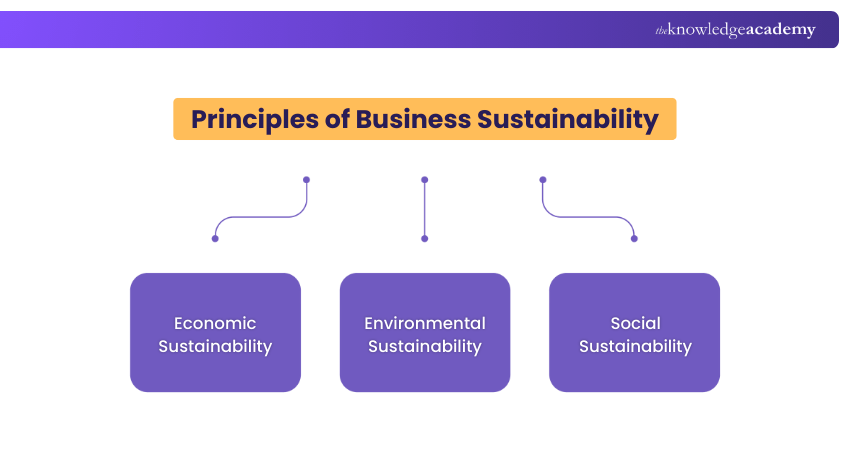
1) Economic Sustainability
Economic Sustainability focuses on building long-term profitability and resilience. It involves efficient Resource Management, fair business practices, and investment in innovation to ensure businesses thrive without sacrificing people or the planet.
2) Environmental Sustainability
Environmental Sustainability is about reducing negative impacts on the planet. This includes cutting carbon emissions, conserving water and energy, minimising waste, and adopting renewable resources to protect ecosystems for future generations.
3) Social Sustainability
Social Sustainability emphasises the well-being of people and communities. It covers fair wages, safe working conditions, diversity, inclusion, and ethical supply chains, ensuring businesses create positive social impact alongside profit.
Conclusion
Sustainability has become a cornerstone of modern business, guiding companies to balance profit with responsibility. It strengthens resilience, builds trust, and drives innovation while ensuring long-term growth. Knowing Why is Sustainability Important in Business helps you in creating value that lasts for the organisation, its people, and society as a whole.
Drive organisational change and improve operations with our Management Courses – Explore now!
Frequently Asked Questions
Why is Sustainability Important in Business?

Sustainability is vital for businesses because it promotes long-term viability. It helps companies reduce costs, mitigate risks, enhance established brand image, and satisfy customer needs for Sustainability and socially responsible practices.
What are the 3 C's of Sustainability?
The 3 C’s of Sustainability are:
1) Company: How businesses operate and manage resources.
2) Community: The impact of business practices on surrounding populations and society.
3) Climate: The consideration of environmental factors and efforts to reduce carbon footprints.
What are the Other Resources and Offers Provided by The Knowledge Academy?
The Knowledge Academy takes global learning to new heights, offering over 3,000+ online courses across 490+ locations in 190+ countries. This expansive reach ensures accessibility and convenience for learners worldwide.
Alongside our diverse Online Course Catalogue, encompassing 19 major categories, we go the extra mile by providing a plethora of free educational Online Resources like Blogs, eBooks, Interview Questions and Videos. Tailoring learning experiences further, professionals can unlock greater value through a wide range of special discounts, seasonal deals, and Exclusive Offers.
What is The Knowledge Pass, and How Does it Work?
The Knowledge Academy’s Knowledge Pass, a prepaid voucher, adds another layer of flexibility, allowing course bookings over a 12-month period. Join us on a journey where education knows no bounds.
What are the Related Courses and Blogs Provided by The Knowledge Academy?
The Knowledge Academy offers various Management Courses, including the Business Sustainability Course, Senior Management Training, and Event Management Course. These courses cater to different skill levels, providing comprehensive insights into Business Sustainability.
Our Business Skills Blogs cover a range of topics related to the Sustainability in Business, offering valuable resources, best practices, and industry insights. Whether you are a beginner or looking to advance your business skills, The Knowledge Academy's diverse courses and informative blogs have got you covered.

James Smith


Digital Marketing Manager and Trainer
James Smith is a digital marketing professional with over a decade of experience in SEO, content strategy, paid media and analytics. He has supported both SMEs and global brands in transforming their digital presence. James’s writing and training are rooted in results-driven tactics and the latest marketing trends.
View Detail
Upcoming Business Skills Resources Batches & Dates
Date
 Business Sustainability Course
Business Sustainability Course
Fri 24th Jul 2026
Business Sustainability Course
Fri 16th Oct 2026

 If you wish to make any changes to your course, please


