


 Top Rated Course

We may not have the course you’re looking for. If you enquire or give us a call on 01344 203999 and speak to our training experts, we may still be able to help with your training requirements.
What is Electrical Engineering? Branches, Skills and Roles
The Knowledge Academy 06 February 2026Electrical Engineering designs and applies systems using electricity, electronics, and electromagnetism, from microchips to power grids. It drives cutting-edge innovations in communication, computing, and renewable energy. Electrical engineers solve complex problems to power modern life, advanced technology, and sustainable systems.

Training Outcomes Within Your Budget!
We ensure quality, budget-alignment, and timely delivery by our expert instructors.
Table of Contents
What is Electrical Engineering? The field of Electrical Engineering creates power systems which generate electricity for all electronic devices, renewable energy sources, and contemporary technological advancements. The field of electronics and Electrical Engineering consists of fundamental principles, real-world applications, and various career paths.
Table of Contents
1) What is Electrical Engineering?
2) Major Branches of Electrical Engineering
3) Key Skills required for Electrical Engineers
4) How to Become an Electrical Engineer?
5) Electrical Engineering vs Other Branches
6) Application of Electrical Engineering in Everyday Life
7) Electrical Engineers Salary
8) Is Electrical Engineering a Good Career?
9) The Future of Electrical Engineering
10) Conclusion
What is Electrical Engineering?
Electrical Engineering is a critical occupation that involves the analysis, design, and application of systems based on electricity, electronics and electromagnetism. It plays a key role in advancing sectors like energy, telecommunications, and automation, offering technology solutions to real-world problems.
This discipline is responsible for effects in the lives of modern society’s necessities such as powering homes and supporting long-distance communication. From designing circuits to enhancing renewable energy systems and developing networks, Electrical Engineers help improve the world.

Major Branches of Electrical Engineering
Electrical Engineering, considered as one of the Types of Engineering comprises a wide area of specialisation, such as signal processing, electronics and electrical, microelectronics, power engineering, and control engineering. Each branch specialises in certain areas, including communications, circuits, renewable energy and industrial automation.
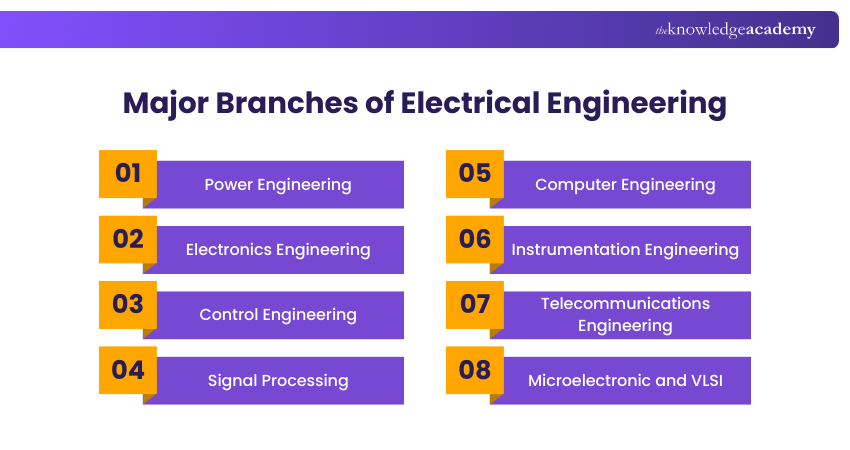
1) Power Engineering
1) Power Engineering includes the generation, transmission, and distribution of electrical power, as well as the efficient use of energy.
2) It includes managing electricity networks and incorporating sustainable energy sources like solar and wind.
3) Power Engineers are responsible for ensuring an optimal supply of electricity to households, industries, and institutions. They develop systems to optimise the use of renewable resources and maintain stable energy production.
2) Electronics Engineering
1) This field focuses on designing, optimising, and analysing electronic systems and devices for their intended purposes.
2) It encompasses everything from consumer electronics like smartphones to large industrial machinery.
3) Electronics Engineers ensure circuits and systems function properly and efficiently, enhancing devices like healthcare equipment, automation systems, and consumer electronics.
3) Control Engineering
1) Control Engineering is the branch of Electrical Engineering that deals with designing systems that regulate and monitor operations in various processes.
2) It is widely used in industries such as robotics, manufacturing, and aerospace to ensure the smooth, safe, and efficient operation of machines and processes.
3) Control Engineers design and implement feedback systems to monitor and adjust system performance, ensuring reliability, safety, and efficiency in industrial processes and automation systems.
4) Signal Processing
1) Signal processing deals with analysing and manipulating signals, such as sound, images, or data, to extract useful information.
2) It plays a critical role in improving communication systems, data transfer, and technologies like medical imaging and voice recognition.
3) Engineers enhance or filter data to ensure clearer transmission, which is essential for efficient communication and advancements in technologies.
5) Computer Engineering
1) Computer Engineering studies computer systems design, which includes processors, circuit boards, and embedded systems.
2) The system optimises hardware architecture for operation across computers, mobile phones, and smart devices.
3) Engineers develop systems that combine hardware with software to deliver performance which is both dependable and innovative.
6) Instrumentation Engineering
1) Instrumentation Engineering involves creating devices that measure and control pressure, temperature, flow, and other physical measurements.
2) The system maintains safety and reliability while delivering productive operations for automated processes across various industrial sectors.
3) Engineers create systems that use sensors and control mechanisms to achieve maximum operational efficiency in manufacturing, aviation, and industrial settings.
7) Telecommunications Engineering
1) Telecommunications Engineering studies information transmission and reception through cable systems, optical fibre networks, and wireless communication systems.
2) The system requires engineers to create design solutions for data networks, mobile communication systems, and satellite communication systems.
3) Engineers develop systems which provide dependable communication services for digital networks that operate worldwide.
8) Microelectronic and VLSI
1) Microelectronics and VLSI work on creating integrated circuits through the development of miniature electronic components which they combine into semiconductor chips.
2) The system integrates microelectronics with Very Large-Scale Integration (VLSI) to enable the placement of millions of components onto a single chip.
3) The field develops compact high-performance technologies which power smartphones and computers and advanced electronic systems.
Key Skills Required for Electrical Engineers
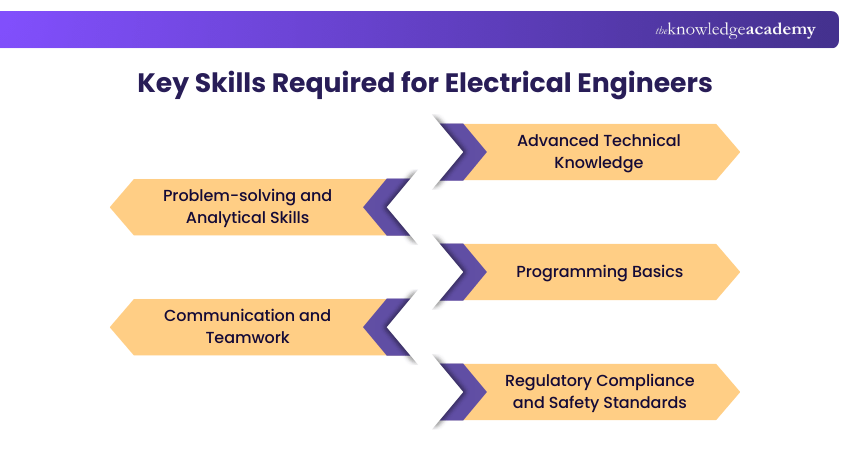
Some of the key skills required for Electrical Engineers are mentioned below.
1) Advanced Technical Knowledge
Electrical engineers need to understand electrical systems and circuit design tools to create and enhance intricate solutions. The process of staying updated with emerging technologies guarantees continuous professional relevance.
2) Problem-solving and Analytical Skills
Engineers use analytical thinking skills to discover problems while creating dependable and efficient solutions. The process supports three activities which include optimisation and troubleshooting and innovative work.
3) Programming Basics
Basic programming skills provide automation for processes while enabling data analysis and supporting embedded systems and smart systems. The skills establish a stronger connection between hardware components and software applications.
4) Communication and Teamwork
Effective communication allows engineers to present technical concepts to their stakeholders. The team works together through different fields to achieve their project objectives.
5) Regulatory Compliance and Safety Standards
The comprehension of safety regulations together with industry standards enables systems to achieve compliance while maintaining operational reliability and safety. The system provides protection to users while fulfilling all necessary legal obligations.
Understand how you can prepare for an interview with our Interview Skills Training – Register now!
How to Become an Electrical Engineer
Becoming an Electrical Engineer involves a structured journey of education, exposure, and professionalism.
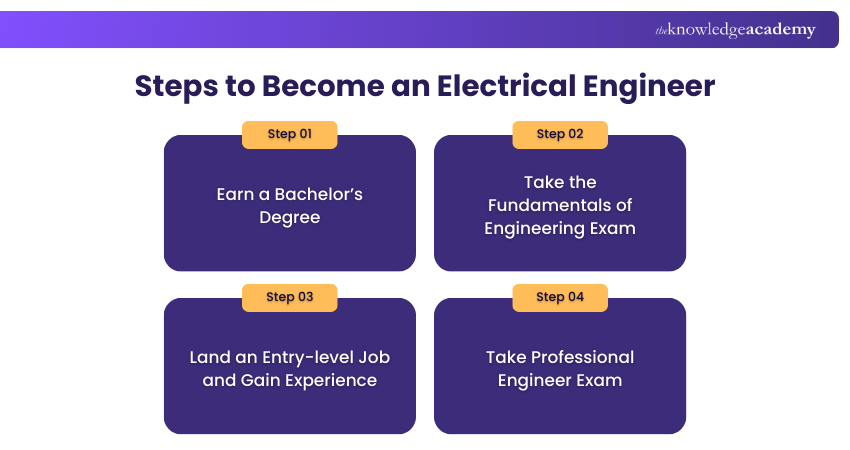
1) Earn a Bachelor’s Degree
A bachelor's degree in electrical engineering from an accredited program provides students with fundamental knowledge of circuits and systems and mathematics through hands-on laboratory experience.
2) Take the Fundamentals of Engineering Exam
After graduation, one can take the FE examination to become an Engineer-in-Training (EIT), which will be the first move towards express licensure.
3) Land an Entry-level Job and Gain Experience
Entry-level roles are employed in providing hands-on experience, so all professional engineers left can gather practical imprints on the field to fill up the operational vacuity of them.
4) Take Professional Engineer Exam
Once engineers gain enough experience, they can take the PE licensing exam in order to be promoted to supervisor or greater leadership roles.
Electrical Engineering vs Other Branches
The different engineering branches provide students with the needed path, which matches their personal interests. The engineering branches establish three main study areas: mechanical systems, electrical power, and electronics design.
Electrical Engineering vs Mechanical Engineering
Electrical engineering studies electricity and electronics together with power systems, whereas mechanical engineering deals with the design and analysis of physical machines and mechanical systems.
Electrical Engineering vs Electronics Engineering
The field of electrical engineering includes three main areas, which are power generation, power transmission, and the operation of large electrical systems. The discipline of electronics engineering centres its activities on the development and maintenance of compact electronic parts and devices.
Learn how to adapt to changes in working routine or environment with our Stress Management Course!
Application of Electrical Engineering in Everyday Life
Electrical Engineering powers every aspect of daily life through its application in home appliances and communication systems and transportation networks and energy distribution networks which make contemporary technological systems both efficient and dependable and cutting-edge.
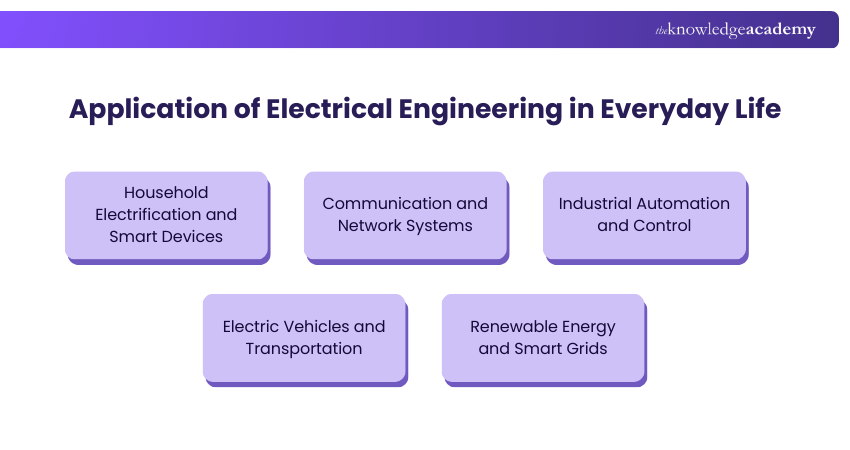
1) Household Electrification and Smart Devices: Electrical Engineering supports safe power distribution and the design of household appliances and smart devices that improve comfort and energy efficiency.
2) Communication and Network Systems: Communication systems such as mobile networks, internet infrastructure, and IoT devices rely on Electrical Engineering for reliable signal transmission and connectivity.
3) Industrial Automation and Control: Electrical engineering enables automation through controllers and sensors that improve production efficiency, accuracy, and workplace safety.
4) Electric Vehicles and Transportation: Electric vehicles, charging systems, and transport control technologies are designed using Electrical Engineering to enhance efficiency and sustainability.
5) Renewable Energy and Smart Grids: Electrical engineers develop solar and wind systems along with smart grids to support efficient energy generation, distribution, and monitoring.
Electrical Engineers Salary
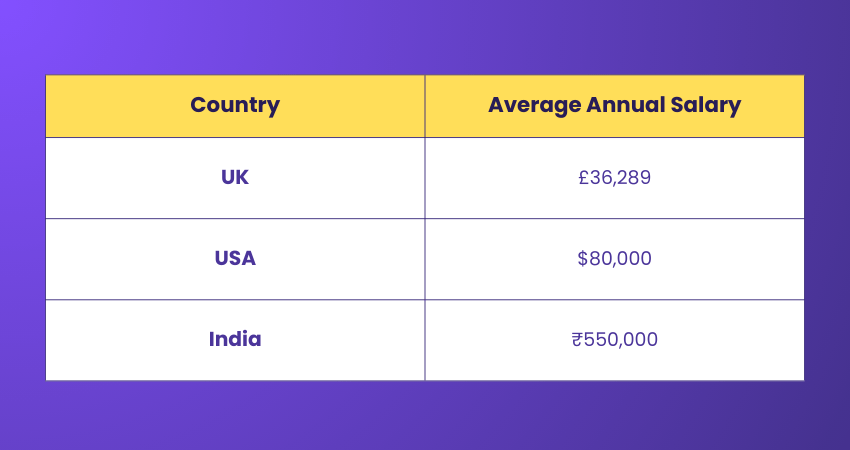
Here are the variations in Electrical Engineering salaries, which can vary significantly based on several factors like experience, speciality, and regional demand.
Is Electrical Engineering a Good Career?
Electrical Engineering provides excellent job opportunities through its various fields, which include power distribution and communication systems and automation technologies and new technological advancements. The field remains future-focused, impactful, and in high demand across industries.
The Future of Electrical Engineering
The field of Electrical Engineering is experiencing fast changes because of its commitment to clean energy and electrification and smart infrastructure development. Engineers will create power systems that achieve high efficiency while maintaining their ability to withstand challenges and adapt to future needs.
The field is undergoing transformation because of three major trends: renewable energy integration and electric transport and energy storage. The increasing need for sustainable innovative technologies will create abundant job prospects for engineers who possess those skills.
Conclusion
Understanding What is Electrical Engineering shows how it shapes modern technology and innovation. From smart devices to sustainable energy, it offers exciting career opportunities. Explore this field and let it power your future.
Elevate your personal and professional skills today with Personal Development Courses - Register Now!
Frequently Asked Questions
What are the Job Roles Available in Electrical Engineering?

Electrical and electronics engineering provides multiple career opportunities which include aerospace engineering automotive engineering and robotics as well as IT consultancy and energy system design.
What Does an Electrical Engineer Do?
Electrical Engineers are involved in designing circuits, developing power systems, enhancing communication networks, and implementing industrial automation. They specialise in sectors such as renewable energy, robotics, telecommunications, and others, addressing diverse global needs.
What are the Other Resources and Offers Provided by The Knowledge Academy?
The Knowledge Academy takes global learning to new heights, offering over 3,000+ online courses across 490+ locations in 190+ countries. This expansive reach ensures accessibility and convenience for learners worldwide.
Alongside our diverse Online Course Catalogue, encompassing 19 major categories, we go the extra mile by providing a plethora of free educational Online Resources like Blogs, eBooks, Interview Questions and Videos. Tailoring learning experiences further, professionals can unlock greater value through a wide range of special discounts, seasonal deals, and Exclusive Offers.
What is The Knowledge Pass, and How Does it Work?
The Knowledge Academy’s Knowledge Pass, a prepaid voucher, adds another layer of flexibility, allowing course bookings over a 12-month period. Join us on a journey where education knows no bounds.
What are the Related Courses and Blogs Provided by The Knowledge Academy?
The Knowledge Academy offers various Personal Development Courses, including Time Management Training, Exceptional Customer Service Training, and Supervisor Training. These courses cater to different skill levels, providing comprehensive insights into Aerospace Engineering.
Our Business Skills Blogs cover a range of topics related to Electrical Engingineering, offering valuable resources, best practices, and industry insights. Whether you are a beginner or looking to advance your Business skills, The Knowledge Academy's diverse courses and informative blogs have got you covered.

The Knowledge Academy


Global Training Provider
The Knowledge Academy is a world-leading provider of professional training courses, offering globally recognised qualifications across a wide range of subjects. With expert trainers, up-to-date course material, and flexible learning options, we aim to empower professionals and organisations to achieve their goals through continuous learning.

Upcoming Business Skills Resources Batches & Dates
Date
 Engineering Skills Training
Engineering Skills Training
Fri 17th Jul 2026
Engineering Skills Training
Fri 9th Oct 2026

 If you wish to make any changes to your course, please


