


 Top Rated Course

We may not have the course you’re looking for. If you enquire or give us a call on +44 1344 203 999 and speak to our training experts, we may still be able to help with your training requirements.
Top Tips for Maintaining Good Mental Health
Michael Jones 03 January 2026Good Mental Health helps you manage stress, stay productive, and feel calm. Exercise, healthy habits, strong connections, and mindfulness support it. In addition, maintaining a balanced lifestyle, setting boundaries, practising gratitude, and seeking support when needed can further enhance mental resilience, focus, and overall well-being.

Training Outcomes Within Your Budget!
We ensure quality, budget-alignment, and timely delivery by our expert instructors.
Table of Contents
Maintaining Good Mental Health is essential for overall wellbeing, productivity, and happiness. It helps individuals cope with stress, stay focused, and navigate daily challenges effectively. By adopting healthy habits, fostering strong social connections, and practising mindfulness, people can build resilience and maintain emotional balance. In this blog we will explore practical tips to support and enhance mental wellbeing in everyday life.
Table of Contents
1) Good Mental Health Definition
2) Components of Good Mental Health
3) Signs of Good Mental Health
4) What are the 7 Characteristics of Mental Health?
5) What do Mentally Strong People Do?
6) Conclusion
Good Mental Health Definition
Good Mental Health is a condition where an individual is in good health to the point that they are able to handle the regular pressures of life, perform effectively, and perform well in the community. It includes sentimental, intellectual, and social abilities, which aid everyday functioning and strength.
As this definition notes, Good Mental Health does not only consist of the absence of disease, but it also entails being able to perceive and control their thoughts and feelings, be able to maintain their relationships and pursue purposes that are significant to them. It is associated with general satisfaction in life, competence, and adaptive coping with various situations in life.
Components of Good Mental Health
The components of Good Mental Health are intertwined constituents that affect the manner in which we think, feel, and behave. The knowledge of these elements can assist people in identifying the areas where they can improve and develop habits that can sustain long-term wellbeing. The key components are:
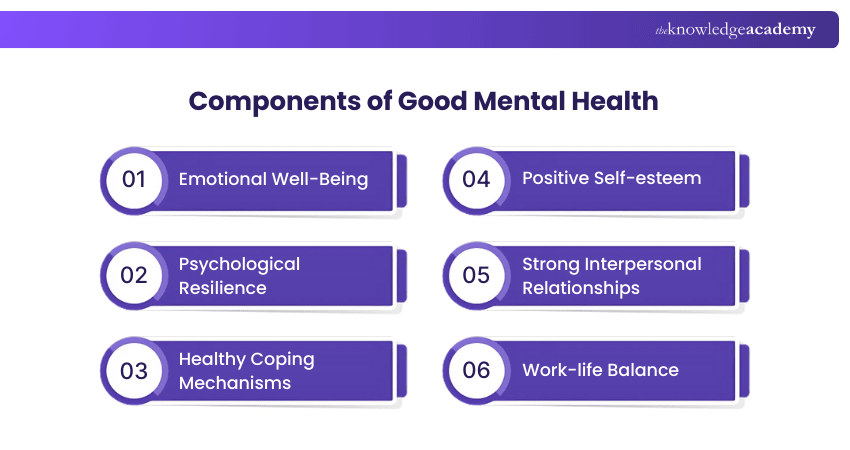
1) Emotional Well-Being
Emotional well-being involves recognising, understanding, and managing our emotions in a healthy manner. It is related to avoiding negative emotions and learning to handle them constructively. People with good emotional well-being can identify their feelings, properly convey them, and regulate their emotional responses. This component allows us to experience a wide range of emotions while maintaining emotional stability.
2) Psychological Resilience
Psychological resilience is the capability to adapt and rebuild from adversity, stress, and challenges. It deals primarily with avoiding difficulties and developing the skills and mindset to overcome them. Resilient people can maintain a sense of hope, optimism, and control even during challenging times. This component fosters mental strength, adaptability, and the capacity to learn and grow from setbacks.
3) Healthy Coping Mechanisms
Life is full of stressors, no matter how meagre. Good Mental Health involves having effective coping mechanisms to deal with these stressors. Healthy coping strategies might include problem-solving, seeking social support, engaging in hobbies, practising relaxation techniques, and maintaining a balanced lifestyle. These mechanisms enable us to effectively manage stress, prevent burnout, and maintain a sense of well-being.
4) Positive Self-esteem
Positive self-esteem is the foundation of a positive attitude toward oneself. It deals with valuing oneself, having confidence in one's abilities, and maintaining a realistic and positive self-perception. Individuals with positive self-esteem are less susceptible to criticism and setbacks. This component encourages self-compassion, self-acceptance, and a healthy sense of self-worth.
5) Strong Interpersonal Relationships
Healthy relationships are pivotal for Good Mental Health. Positive interactions with family, friends, and colleagues provide a sense of belonging, emotional support, and opportunities for meaningful connection. Nurturing relationships contributes to reduced feelings of loneliness and isolation, fostering emotional well-being and overall life satisfaction.
6) Work-life Balance
Balancing personal life and work is crucial for maintaining mental well-being. Keeping this balance helps prevent burnout, reduce stress, and enhance happiness. Good Mental Health requires time for relaxation, leisure, and pursuing personal interests outside of work commitments. Therefore, finding this equilibrium supports long-term psychological health.
Nail Your Next Interview! Explore our curated list of Mental Health Support Worker Interview Questions to ensure you're fully prepared.
Signs of Good Mental Health
Now that we know the definition of Good Mental Health and its components, we will explore the various signs associated with it. The sign of Good Mental Health is reflected in four broad categories of signs, as described below:
1) Emotional Signs
1) Stability: Balanced and stable emotions, even in challenging situations
2) Positivity: An optimistic outlook and hopeful attitude towards the future
3) Resilience: Bouncing back from setbacks with determination and growth
4) Empathy: Understanding and acknowledging others' emotions
2) Behavioural Signs
Behavioural signs indicate behavioural abnormalities, such as
The following are some of the behavioural signs that reflect Good Mental Health:
1) Problem-solving: Constructive approach to challenges, seeking solutions
2) Coping: Healthy strategies to manage stress and difficulties
3) Relationships: Positive interactions and nurturing connections
4) Self-care: Prioritising self-care activities that promote physical and mental well-being.
Get tips for a balanced life with our Health and Wellbeing PDF - Download now!
3) Cognitive Signs
Cognitive abilities relate to how we process information in our minds. It includes
The following are some of the cognitive signs that reflect Good Mental Health:
1) Clear Thinking: Coherent thought patterns and effective decision-making
2) Adaptability: Openness to change, flexible thinking, and learning
3) Focus: Concentration on tasks and information processing
4) Resilient Mindset: Viewing mistakes as opportunities for growth
4) Social Signs
Social signs are the symptoms that deal with abnormalities in social interactions. The following are some of the social signs that reflect Good Mental Health:
1) Relationships: Healthy connections and effective communication
2) Empathy: Understanding and compassion towards others
3) Conflict Resolution: Constructive handling of conflicts
4) Engagement: Active participation in social activities and communities
Learn how to possess an attitude of respect and acceptance with our Counselling Course – Join now!
What are the 7 Characteristics of Mental Health?
There are seven core behaviours that support Good Mental Health with regard to emotional stability and wellbeing. These features not only indicate the lack of the illness, but also the positive coping, social, cognitive, and adaptive skills.
Activity: The physical and mental activity is necessary to improve mood, engagement and motivation.
Healthy Defence Mechanisms: Positive coping and dealing with negative thinking to cope with stress.
Social Connection: Establishing and sustaining positive bonds so as to alleviate isolation.
Emotional Regulation: Being able to control emotions and thoughts in a realistic and balanced manner.
Cognitive Functioning: Attention, planning, and social understanding are used to successfully carry out functions.
Self- Acceptance: Having a healthy self-esteem and being aware of personal strengths and weaknesses.
Adaptability: Changes in thoughts and behaviour in order to manage change and life challenges successfully.
What do Mentally Strong People Do?
Mentally strong people can overcome difficulties and embrace transformation in their lives, which can make them grow out of such hard situations. Studies indicate that they have strong qualities that enable them to cope with the worst. They also possess emotional maturity and take time to analyse past failures to learn and move on.
Conclusion
Maintaining Good Mental Health requires consistent effort, self-awareness, and healthy daily habits. By understanding the key components of mental wellbeing and adopting positive behaviours, individuals can build resilience and manage life’s challenges more effectively. Prioritising mental health supports emotional balance, productivity, and long-term quality of life.
Advance Your Understanding of Human Behaviour with our Psychology Course - Join today!
Frequently Asked Questions
What is Positive Mental Health?

Positive mental health is the ability to remain emotionally and mentally strong by staying resilient against stresses, life's challenges, and unhealthy relationships, among other adverse factors.
What Is a Good Mental Health Mindset?
A Good Mental Health mindset is a positive and balanced way of thinking that allows one to manage stress, stay resilient, and maintain emotional well-being.
What are the Other Resources and Offers Provided by The Knowledge Academy?
The Knowledge Academy takes global learning to new heights, offering over 3,000+ online courses across 490+ locations in 190+ countries. This expansive reach ensures accessibility and convenience for learners worldwide.
Alongside our diverse Online Course Catalogue, encompassing 19 major categories, we go the extra mile by providing a plethora of free educational Online Resources like Blogs, eBooks, Interview Questions and Videos. Tailoring learning experiences further, professionals can unlock greater value through a wide range of special discounts, seasonal deals, and Exclusive Offers.
What is The Knowledge Pass, and How Does it Work?
The Knowledge Academy’s Knowledge Pass, a prepaid voucher, adds another layer of flexibility, allowing course bookings over a 12-month period. Join us on a journey where education knows no bounds.
What are the Related Courses and Blogs Provided by The Knowledge Academy?
The Knowledge Academy offers various Mental Health Courses, including the Mental Health and Wellbeing Training, and the Psychology Course. These courses cater to different skill levels, providing comprehensive insights into How to Meditate for Beginners: A Step-By-Step Approach.
Our Health & Safety Blogs cover a range of topics related to Workplace Safety, Compliance, and Wellness, offering valuable resources, best practices, and industry insights. Whether you are a beginner or looking to advance your Health and Safety skills, The Knowledge Academy's diverse courses and informative blogs have got you covered.

Michael Jones


Health and Safety Consultant and Compliance Trainer
Michael Jones is a seasoned health and safety expert with more than 15 years of experience in workplace safety, risk management, and compliance training. He has worked across construction, manufacturing, and corporate sectors, helping organisations meet legal requirements and create safer working environments. Michael’s training and writing are known for being practical, clear, and aligned with UK regulations.

Upcoming Business Skills Resources Batches & Dates
Date
 Mental Health and Wellbeing Training
Mental Health and Wellbeing Training
Fri 10th Apr 2026
Mental Health and Wellbeing Training
Fri 17th Jul 2026
Mental Health and Wellbeing Training
Fri 30th Oct 2026

 If you wish to make any changes to your course, please


