


 Top Rated Course

We may not have the course you’re looking for. If you enquire or give us a call on + 1-866 272 8822 and speak to our training experts, we may still be able to help with your training requirements.
What to Do After GCSEs: Options and Career Paths
The Knowledge Academy 09 May 2026The General Certificate of Secondary Education (GCSE) exam is taken by UK students aged 14-16, covering subjects vital for future academic or career progression. This blog comprehensively explores What to do After GCSE, including options for part-time education, apprenticeship and volunteering. Read on to learn more!

Training Outcomes Within Your Budget!
We ensure quality, budget-alignment, and timely delivery by our expert instructors.
Table of Contents

GCSEs are a thrilling milestone for UK students, opening up a world of possibilities. Whether you're aiming for further education, considering an apprenticeship, or ready to dive into the workforce, the options are vast. It might seem overwhelming, but discovering your passions and goals can guide you to the perfect path.
From A-levels and apprenticeships to practical work experience, this blog is the ideal starting point for understanding what to do after GCSEs. So read on, uncover the options that align with your dreams, and set yourself on a journey towards a successful and fulfilling future. Let’s turn those ambitions into reality!
Table of Contents
1) Options After GCSEs: Full-time education
2) Options After GCSEs: Part-Time Study and On-the-Job Training
a) T-Levels
b) Traineeships
c) Apprenticeships
d) Supported Internships
e) Volunteering
f) Starting a Business
3) Conclusion
Options After GCSEs: Full-time Education
After completing your GCSEs, deciding on your next steps can feel overwhelming, but continuing with full-time education is a popular and rewarding choice. If you're considering this path, there are several options for GCSE graduates that stand out. Here are two of the best choices to explore:
A-Levels
Schools often provide A-levels with sixth-form colleges, dedicated sixth-form colleges and Further Education colleges. It includes:
a) In-depth Study: A-Levels allow you to study your chosen subjects in greater depth.
b) University Preparation: They are ideal for students who want to go to university or need specific qualifications for their dream jobs.
c) Strong Foundation: A solid foundation in the subjects you enjoy and excel at is excellent preparation for your next step.
Vocational Courses
This includes the following excellent options:
a) Hands-on Learning: Vocational courses combine practical skills with industry-specific theoretical knowledge.
b) Immediate Career Start: BTECs or NVQs are perfect for those who enjoy hands-on learning and want to start their careers promptly.
c) Recognition: Employers and universities acknowledge vocational qualifications, giving you the option to further your education or enter the workforce right away.
Deciding Between A-Levels and Vocational Courses
This decision comes down to the following:
a) Career Goals: Consider your career aspirations and the qualifications needed.
b) Learning Preference: Think about whether you prefer academic study or hands-on learning.
c) Future Aspirations: Both routes offer valuable opportunities to enhance your skills and knowledge, helping you move forward with confidence.
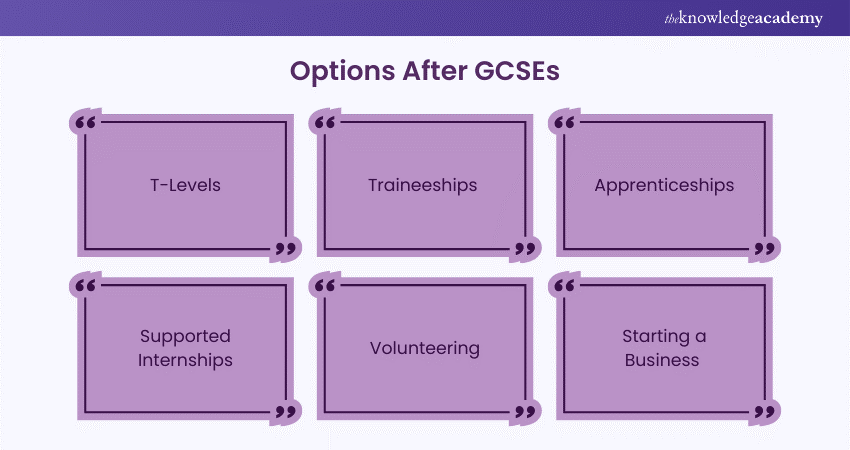
Options After GCSEs: Part-time Study and On-the-job Training
After completing your GCSEs, you have several options to start working part-time, undergo on-the-job training, and take advantage of learning opportunities. Note that full-time employment typically begins at 18 years old.
1) T-Levels
T Levels are groundbreaking qualifications that are equivalent to three A Levels in size and are proving hugely popular. Here are some important points to consider:
a) Duration: T Levels are two-year courses equivalent to three A-Levels.
b) Learning Structure: They combine classroom learning with approximately 315 hours (about 2 weeks) of industry experience.
c) Preparation: T Levels offer a mix of practical and theoretical learning, preparing you for higher education or the workforce.
2) Traineeships
Traineeships are courses for 16-19-year-olds that provide work experience, help them with the next steps, and offer support to improve their Math and English skills.
a) Duration: Traineeships typically last from eight weeks to six months.
b) Work Experience: They provide practical work experience to help you acquire new skills.
c) Career Advice: You receive guidance on career advancement, making you ready for apprenticeships or jobs.
d) Financial Assistance: These opportunities are voluntary but often come with financial support.
3) Apprenticeships
Apprenticeships are ideal for people of all ages to launch their careers in various exciting industries or upskill at multiple levels.
a) Duration: Apprenticeships can last from one to three years.
b) Paid Opportunities: They offer paid work while you gain qualifications.
c) Practical Experience: Apprenticeships provide hands-on experience in various sectors, making them an excellent post-GCSE option.
Develop technical skills and boost your career with our Soft Skills Engineering Course – Register now!
4) Supported Internships
These internships are unpaid positions where most of the learning is done in the workplace. They also offer the opportunity to study for qualifications as part of a personalised study program.
a) Target Group: Designed for individuals with learning disabilities.
b) Training and Support: These internships offer training, support, and work experience for at least six months.
c) Compensation: Supported internships do not provide financial compensation but focus on skill development.
5) Volunteering
While volunteering isn’t paid work, you’ll gain valuable skills, and it’ll amplify your CV. You don’t have to volunteer in one place. You can spread the hours across many volunteering opportunities.
a) Skill Development: Volunteering helps you develop essential skills, support Personality Development, and enhance your resume.
b) Accreditation: You can receive accreditation by volunteering for more than 20 hours each week.
c) Community Impact: Volunteering allows you to contribute to your community while gaining valuable experience.
6) Starting a Business
In case you’ve got a good idea for a business or have Develop a Business Plan, you can work on it alongside your GCSE study. But if you’re already working more than 20 hours a week on your business, you can get an accreditation.
a) Entrepreneurship: Starting a business while still focusing on your GCSEs can help you develop important entrepreneurial skills.
b) Skill Development: Running a business provides practical knowledge and experience in the field.
c) Future Opportunities: This option allows you to explore your interests and potentially create a career path in entrepreneurship.
Land Your Dream Job Faster with our Job Search Course today!
Conclusion
As you stand at the crossroads after completing your GCSEs, choosing What to do after GCSEs provides a broad range of options catering to your abilities and passions. Whether you choose to continue your education, embark on an apprenticeship, or step into the workforce, each path brings you unique opportunities to grow and succeed. Take the time to explore your interests and align them with your goals. Achieving strong GCSE Grades 2025 can be an important step in this process, helping you to be well on your way to a fulfilling and successful future.
Level up your career options with our Career Development Course – Sign up now!
Frequently Asked Questions
What are the Highest Paying GCSEs?

STEM subjects like Sciences, Technology, Engineering, and Mathematics often lead to higher-paying careers after GCSEs. Some excellent job options after GCEs include:
a) Healthcare Assistant
b) Sales Executive
c) Firefighter
d) Estate Agent
e) Head Chef
f) Site Manager
g) Electrician
Is 7 GCSEs Enough for Oxford?
No, seven GCSEs aren't enough to successfully gain entrance into Oxford. Successful applicants to Oxford typically have around eight grade nine to seven (A* to A) GCSEs. Oxford considers GCSE results in its admissions process, and having a high proportion of seven, eight and nine grades at GCSE amplifies your application.
What are the Other Resources and Offers Provided by The Knowledge Academy?
The Knowledge Academy takes global learning to new heights, offering over 3,000+ online courses across 490+ locations in 190+ countries. This expansive reach ensures accessibility and convenience for learners worldwide.
Alongside our diverse Online Course Catalogue, encompassing 19 major categories, we go the extra mile by providing a plethora of free educational Online Resources like Blogs, eBooks, Interview Questions and Videos. Tailoring learning experiences further, professionals can unlock greater value through a wide range of special discounts, seasonal deals, and Exclusive Offers.
What is The Knowledge Pass, and How Does it Work?
The Knowledge Academy’s Knowledge Pass, a prepaid voucher, adds another layer of flexibility, allowing course bookings over a 12-month period. Join us on a journey where education knows no bounds.
What are the Related Courses and Blogs Provided by The Knowledge Academy?
The Knowledge Academy offers various Personal Development Courses, including the Time Management Training, Job Search Course, and Career Development Course. These courses cater to different skill levels, providing comprehensive insights into Best Computer Courses After 12th.
Our Business Skills Blogs cover a range of topics related to Personal Development, offering valuable resources, best practices, and industry insights. Whether you are a beginner or looking to advance your Business skills, The Knowledge Academy's diverse courses and informative blogs have got you covered.

The Knowledge Academy


Global Training Provider
The Knowledge Academy is a world-leading provider of professional training courses, offering globally recognised qualifications across a wide range of subjects. With expert trainers, up-to-date course material, and flexible learning options, we aim to empower professionals and organisations to achieve their goals through continuous learning.

Upcoming Business Skills Resources Batches & Dates
Date
 Career Development Course
Career Development Course
Fri 17th Jul 2026
Career Development Course
Fri 20th Nov 2026

 If you wish to make any changes to your course, please


