




We may not have the course you’re looking for. If you enquire or give us a call on + 1-866 272 8822 and speak to our training experts, we may still be able to help with your training requirements.
What is Diversity in the Workplace | Importance
Amelia Williams 06 May 2026Wondering What is Diversity in the Workplace? A diverse workplace brings together people with different perspectives and experiences. This variety fosters innovation and creativity. It is having a staff that represents a variety of backgrounds and national origins, which promotes gender, society, and culture. Keep reading to learn more!

CMI Level 7 Award in Strategic Approaches to Equality, Diversity and Inclusion Training Course
 Top Rated Course
Top Rated Course
Exclusive 40% OFF
Training Outcomes Within Your Budget!
We ensure quality, budget-alignment, and timely delivery by our expert instructors.
Table of Contents
Related Courses
Wondering What is Diversity in the Workplace? A workplace is a vibrant melting pot of diverse mindsets which come together to build the foundation for an organisation’s long-term success. Diversity not only uncovers a broad range of talents within a team but also fosters innovative collaborations, resulting in out-of-the-box ideas.
According to the research from McKinsey & Company, companies with higher racial and ethnic diversity are 35% more likely to have better financial results than others in their industry. Similarly, companies with better gender diversity are 15% more likely to perform better financially.
Keep reading this blog to explore What is Diversity in the Workplace. We will also discuss the importance, advantages and challenges of workplace diversity.
Table of Contents
1) What is Diversity in the Workplace?
2) Benefits of Diversity in the Workplace
3) How to Promote Diversity in the Workplace?
4) Challenges of Achieving Diversity in the Workplace
5) Diversity in the Workplace Examples
6) Conclusion
What is Diversity in the Workplace?
Diversity means having a mix of different perspectives on a team. It's not just about race or social justice but also includes factors like gender, background, religion, education, sexual orientation, gender identity, ethnicity, neurodiversity, and life experiences as all of which can influence the effectiveness of Employee Engagement Strategies. Board diversity also plays a crucial role in bringing varied viewpoints at leadership levels, ensuring a broader perspective in decision-making.
Benefits of Diversity in the Workplace
Diversity is the key to unlocking not just productivity but also creativity in the workplace. Consider these major advantages that workplace diversity can offer to organisations.

Improved Creativity and Problem-solving
Diversity in the workplace is proven to increase creativity by bringing people from different backgrounds and mindsets together. Exposure to different cultures can promote workplace innovation.
By introducing teams to multiple new perspectives, diversity in the workplace can expand a company’s decision-making strategies, problem-solving skills and overall effectiveness.
Expanding the Talent Pool
Gender-diverse teams often outperform homogeneous teams in terms of sales, profitability, as well as budget and time management.
In recent years, an increasing number of job seekers reported diversity as an important factor in evaluating a company. This is why embracing diversity in the workplace can attract top talent and result in a skilled workforce that significantly boosts business growth.
Providing NLP Training can further enhance communication and understanding among a diverse workforce, promoting a more inclusive and collaborative environment.
Bolster your workforce with our Ethics In Workplace Training – Sign up now!
Promotes Personal and Professional Growth
Diversity in the workplace promotes professional growth by exposing employees to different approaches towards work, different perspectives and skills. Essentially, working in a diverse group encourages employees to expand their learning and broaden their perspectives.
Additionally, learning to accept different points of view can improve active listening skills and help cultivate empathy resulting in a stronger and healthier company culture and work environment.
Builds Brand Reputation
Recent trends suggest that customers, especially Gen Z customers, pay close attention to the diversity and inclusion policies of companies and make their choices based on them.
Accordingly, companies can build excellent reputation by:
a) Focusing on marketing efforts related to diversity, equity, and inclusion.
b) Openly addressing diversity issues and establishing an inclusivity-focused brand voice.
c) Donating to organisations that promote inclusivity and diversity.
d) Customising products and services for diverse customer groups.
Boosts Employee Performance
There’s no denying the importance of workplace diversity in increasing employee satisfaction. Employees who feel accepted and heard are much more likely to be satisfied with their jobs. This is important because job satisfaction is directly related to job performance.
Implementing strategies like Neuro-Linguistic Programming can help create an inclusive environment where diverse perspectives are valued, and communication is improved. By empowering the employees, diversity in the workplace can encourage them to put their best foot forward, resulting in greater employee engagement, performance and productivity.
Helps Companies Understand Customers
It's safe to assume that any customer base will consist of people from different social backgrounds. This is why diversity in the workplace can help a company better understand its customers.
By having a team of diverse professionals, the company can gain a wider understanding of customers’ needs. People are more inclined to interact with a business if it makes them feel seen and represented.
Ensures Profitability
Based on the above-mentioned points, it’s clear that diversity in the workplace helps companies achieve more profits. This is achieved through improved talent hire, understanding consumer bases, strengthened brand reputation, and increased employee productivity. As such, workplace diversity supports a company’s financial health and helps accelerate business growth.
Looking to diversify your business and make it more inclusive? Learn about it through an Equality and Diversity course.
How to Promote Diversity in the Workplace?
Even though the road to achieving diversity in the workplace is long and bumpy, the following tips can help ease the way:
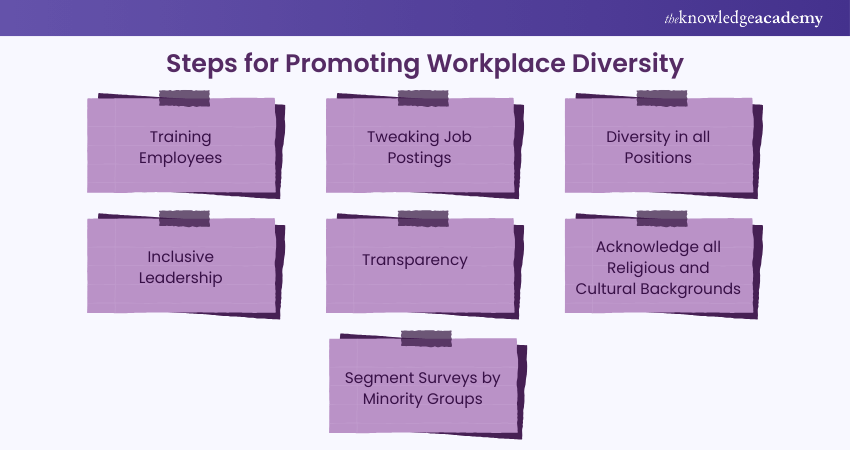
1) Training Employees
It’s vital that a company redefines the hiring process and ensures that the employees are on board with it. Training employees in diversity enables them to develop and improve the required skills to successfully hire more culturally diverse employees.
2) Tweaking Job Postings
Ideally, job postings should reflect the focus on promoting diversity in the workplace. For example, if a company is looking for female candidates, a gender-neutral job description can help. It’s also important to mention company values, such as equality, to attract underrepresented candidates.
3) Diversity in all Positions
Companies need to look at the senior leadership teams and assess how many of them come from underrepresented groups. Despite having hundreds of underrepresented employees, if only a couple of them are in leadership positions, it’s time to rethink the workplace diversity strategy.
4) Inclusive Leadership
Leaders shape their organisations in many ways. Inclusive leadership teams make better decisions and remind everyone of the company's values. For people from underrepresented backgrounds, seeing relatable leaders in top positions shows that they can succeed in your organisation.
5) Transparency
Don't try to build diversity alone. Be open about your efforts and involve your team. One person can't see or fix everything. Hold regular meetings and use feedback tools so your team can share what they see and suggest improvements. Discuss concerns in a neutral space and follow up by addressing them and making meaningful changes.
6) Acknowledge all Religious and Cultural Backgrounds
If the employees come from different religious and cultural backgrounds, it’s important to represent them by accommodating their cultural or religious practices. For example, different religious festivals can be celebrated in the office.
7) Segment Surveys by Minority Groups
Employee satisfaction & engagement surveys can be segmented by minority groups. This will highlight the unique experience that employees from minority groups have at the workplace, and spot problem areas that should be addressed.
Want to learn how to appreciate cultural differences and foster inclusivity? Sign up for our Diversity Training today!
Challenges of Achieving Diversity in the Workplace
Despite the overwhelming benefits of diversity in the workplace, there are a few challenges to achieving it:
Communication Issues
When people from different backgrounds work in the same place, communication can become difficult. From language barriers to age differences, these communication issues can lead to misunderstandings, resulting in decreased employee productivity.
Workplace Discrimination
No matter how much diversity is promoted in workplaces, some employees may still have cognitive biases. For example, in a male-dominated industry, some employees may doubt their female colleagues’ credibility.
This can result in discriminatory behaviour and hostility within the team. This is where diversity training programs for employees can help eliminate unconscious biases.
Weak Performer Retention
It's important that a company doesn’t hold on to employees just to increase diversity points. Underperforming or toxic employees don’t bring much value to a business.
For this reason, employees must be evaluated based on their performance, skills and qualifications, instead of the diversity factor alone.
Clash of Opinions
Because of their distinct upbringings, experiences, and mindsets, diverse employees may have conflicting opinions. Conflicting opinions can cause tension, and failure to find common ground can negatively affect a company’s decision-making processes.
Implementing Diversity Measures
Achieving diversity in the organisation can be a big challenge if a company lacks resources and support from the team. Crafting a detailed diversity implementation plan will require lots of time, thought and resources.
This plan should include current employee demographics, diversity vision and goals, as well as roles and responsibilities of each department.
Diversity in the Workplace Examples
Many companies are developing Diversity, Equity, and Inclusion (DEI) strategies. Here are some standout examples:
AT&T (Technology)
AT&T topped DiversityInc’s Top 50 Companies for Diversity in 2019. CEO and Chairman Randall Stephenson is a strong advocate for D&I. The company is praised for its unbiased recruitment and senior hiring practices, allowing managers to recommend candidates via an app. They also encourage open discussions about race, sexuality, religion, and more to foster understanding among employees.
Marriott International (Hospitality)
Marriott ranked second on DiversityInc’s list and launched the Serve 360 plan, investing $5 million to help women, the disabled, veterans, and refugees learn hospitality skills. While not every company can invest this much, it highlights the importance of investing in professional development.
Accenture PLC (Professional Services)
Accenture is frequently recognized for its DEI efforts. In 2018, Thompson Reuters ranked them as the most diverse company, largely due to their gender representation and inclusion of various groups. Their D&I training includes:
a) Diversity Awareness: Highlighting the benefits of a diverse organization.
b) Diversity Management: Helping leaders manage inclusive teams.
c) Professional Development: Assisting minority groups in building new skills.
Conclusion
We hope you have read and understood What is Diversity in the Workplace. Diversity in the workplace is about maintaining a workforce of people with varying backgrounds, mindsets, perspectives, Workplace Accessibility, abilities, and lifestyles. Not only is diversity a vital element of a strong company culture and easier recruitment, but it also drives profit and innovation.
Learn new strategies to boost morale and increase productivity in your workplace with our Employee Engagement Training – Register today!
Frequently Asked Questions
What are the Four Types of Workplace Diversity?

Workplace diversity includes four key types: Internal (race, age, gender identity, etc.), External (language, education, socioeconomic status), Organisational (job roles, expertise, responsibilities), and Worldview (cultural norms, beliefs, perspectives). Together, they shape a more inclusive and dynamic work environment.
What are the four C’s of Diversity?
The four C’s of diversity are:
a) Careers
b) Connections
c) Community
d) Capital
What are the Other Resources and Offers provided by The Knowledge Academy?
The Knowledge Academy takes global learning to new heights, offering over 3,000+ online courses across 490+ locations in 190+ countries. This expansive reach ensures accessibility and convenience for learners worldwide.
Alongside our diverse Online Course Catalogue, encompassing 19 major categories, we go the extra mile by providing a plethora of free educational Online Resources like Blogs, eBooks, Interview Questions and Videos. Tailoring learning experiences further, professionals can unlock greater value through a wide range of special discounts, seasonal deals, and Exclusive Offers.
What is The Knowledge Pass, and How Does it Work?
The Knowledge Academy’s Knowledge Pass, a prepaid voucher, adds another layer of flexibility, allowing course bookings over a 12-month period. Join us on a journey where education knows no bounds.
What are Related Courses and Blogs Provided by The Knowledge Academy?
The Knowledge Academy offers various Equality and Diversity Training Courses, along with Team Development training and Corporate Social Responsibility CSR Training. These courses cater to different skill levels, providing comprehensive insights into developing Employee Engagement Strategies.
Our Business Skills Blogs cover a range of topics related to Diversity in the workplace, offering valuable resources, best practices, and industry insights. If you are looking to implement diversity in your company, The Knowledge Academy's diverse courses and informative blogs have got you covered.

Amelia Williams


Senior Human Resources Consultant and Learning Specialist
Amelia Williams is a highly respected HR professional with over 12 years of experience in human capital management, talent development and workplace policy. She has worked across sectors including education, healthcare and corporate services, focusing on aligning people strategies with organisational goals. Amelia’s writing blends current HR trends with practical solutions for modern workplace challenges.

Upcoming HR Resources – Learn about Human Resources Batches & Dates
Date
 CMI Level 7 Award in Strategic Approaches to Equality, Diversity and Inclusion Training Course

 If you wish to make any changes to your course, please


