


 Top Rated Course


We may not have the course you’re looking for. If you enquire or give us a call on + 1-866 272 8822 and speak to our training experts, we may still be able to help with your training requirements.
What is API Integration and How It Works in Systems
Sienna Roberts 27 April 2026API Integration is the connection between two or more applications via their APIs to enable data sharing and automation of processes between systems. Ranging from retail, healthcare, education, finance to travel, API Integration plays an inevitable role. Based on its nature, its types are open API, partner API and private API.

Training Outcomes Within Your Budget!
We ensure quality, budget-alignment, and timely delivery by our expert instructors.
Table of Contents

Do you think it is possible to connect two different or unique software applications or systems to transfer a message or data? Have you ever imagined how efficient the work will be if there is an option like that? Please pause! The world has heard you if you’re thinking about it right now.
The implementation of API Integration from APIs will be the best choice for you in that case. In this blog, you will discover What is API Integration along with its types, real life usages and a lot more. Take a dip of reading to know and familiarise with API Integration before initiating to enable it for your system.
Table of Contents
1) What is API Integration?
2) The Importance of API Integrations
3) How does API Integration Work?
4) Types of API Integration
5) Use Cases for API Integration
6) Common API Integration Patterns
7) Benefits of API Integration
8) Leading API Management Tools
9) Real-world API Integration Examples
10) Best Practices for Effective API Integration
11) Conclusion
What is API Integration?
API Integration is an extended development of Application Programming Interfaces (APIs). In simple terms, API Integration is the process of combining two or more APIs installed software or systems to communicate and transfer data.
This integration streamlines workflows, reduces manual effort, and enhances the overall efficiency of digital systems. It’s widely used in industries like e-commerce, finance, and healthcare to automate tasks and provide real-time updates across platforms.

The Importance of API Integrations
The importance of API Integrations is crucial for businesses since they require a lot of maintenance and data transfer. Here the following are some of the key importance points for API Integrations:
a) Seamless Data Exchange: API integrations enable real-time communication between systems, ensuring that data flows smoothly without manual input or duplication.
b) Improved Efficiency and Automation: By connecting tools and platforms, businesses can automate repetitive tasks and streamline workflows, saving time and reducing human error.
c) Enhanced User Experience: Integrations allow applications to deliver more personalised and consistent experiences by pulling data from multiple sources.
d) Scalability and Flexibility: APIs make it easier to scale systems and adopt new technologies without overhauling existing infrastructure.
e) Better Collaboration Across Systems: Different departments and software tools can work in sync, fostering better coordination and faster decision-making.
How Does API Integration Work?
API Integration works depending on the needs and requirements of your business and Software Application. Below are the steps involved in the process of how API Integration works:
1) Determine Your Need: Before connecting the systems or software, you need to decide which applications are to be connected to share what form of data or functions.
2) Selection of Appropriate API: Choose the applicable API for each software or system that you’re planning to connect. Each software has its own specifications, and so does API.
3) Connect the Integration: Once APIs are finalised and set with the software, you can write codes or use integration tools to begin the connection. The API Integrations work in a way for the connected software to send data back and forth in real-time.
This is how API Integration works if you are setting it up for your applications. It follows the specific protocols that are designed for the APIs used in the software.
Expecting hands-on experiences with data sharing across various internet applications and platforms? Join our XML Course immediately!
Types of API Integration
Based on the protocols and intent, API Integrations are classified into various types. Those include Public (Open) APIs, Partner-based APIs, Private (Internal) APIs and Composite APIs. Let's have a quick look at each type.

1) Public (Open) APIs
Public or Open APIs are accessible to anyone, and they are open sourced to have it for your application or software. Most businesses and developers use these APIs to integrate with a company’s data. As per its nature, it is also referred to as external API.
2) Partner-based APIs
As per the title itself it is evident that it is something related to partnering. Yes, partner-based APIs are used in companies to connect with other organisations or companies to share and transfer their data. It is often a business to business (B2B) API Integration.
3) Private (Internal) APIs
Private or Internal APIs are used within a company or an organisation. It helps them to connect different systems and applications within their network thereby preventing any external actions. In most cases, they are hidden from those external users, making it secure and privatised.
4) Composite APIs
Composite APIs combine multiple APIs and integrate them into a single or unified interface. It reduces the complexity and helps to understand better with the unified version. It enhances efficiency and performance of the application.
Use Cases for API Integration
In our daily lives, there are several incidences where API Integrations are used either directly or indirectly. Would you like to know some of the common cases of API Integration? Below are some of the common lists for you:
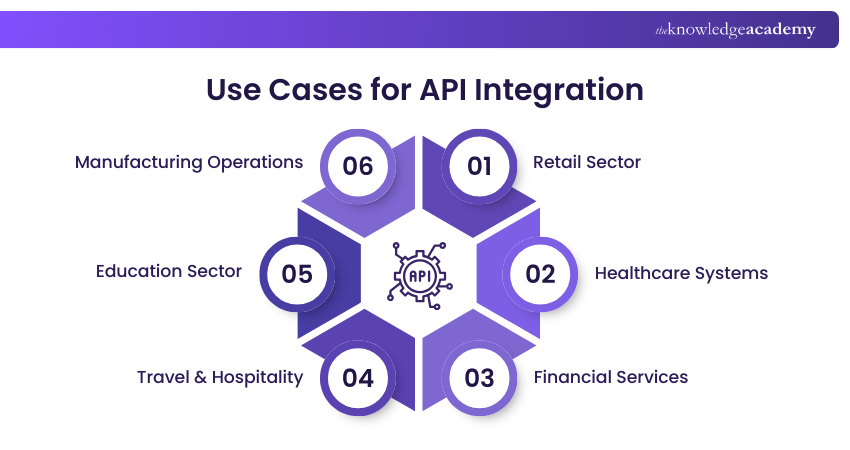
1) Retail Sector
The retail sector is a common and essential part of everyday life. Applying API integration to retail businesses helps them operate smoothly by enabling real-time connections between their online services, physical stores, and various systems. This includes providing up-to-date inventory information, managing orders and transactions, and enhancing the overall customer experience.
2) Healthcare Systems
Healthcare is one of the top priorities of daily life. It involves numerous documentations of patient’s records, treatments, lab results and more. API Integration will save healthcare systems in securing and sharing uncountable data with ease to multiple systems or sections of healthcare.
3) Financial Services
Money is around everywhere; just like the air we breathe, making API Integration essential in this sector. With API Integration, services like banking and payment systems are connected for seamless and secured payment options. It makes financial management and its records more efficient with real-time data storage.
4) Travel & Hospitality
API Integration with travel and hospitality is a boon to people who have moved to other cities for their job or studies. It monitors travel bookings and hotel management. It means you can get real-time updates about your trips, prices, room bookings, availabilities and seamless payment options.
5) Education Sector
Education never goes out of focus. So, with API Integrations too. Implementing API Integration with the educational sector aids in providing personalised learning for students. It is also used to manage student’s data and maintain a clear track of their progress. It focuses both on student information systems and learning management systems.
6) Manufacturing Operations
When there is a manufacturing, there happens the product or service availability. The role of API Integration in manufacturing operations is to provide real-time updates of production and inventory details. It also helps in knowing the requirements in the inventory and insights into its sales and customer interactions.
Common API Integration Patterns
There are certain patterns followed while connecting two API installed system or application. Let’s see what those patterns are.
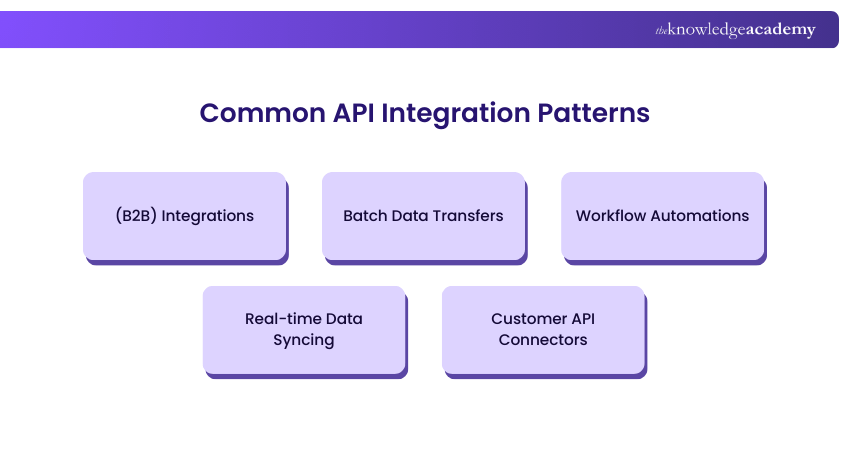
1) (B2B) Integrations
API Integrations are used as B2B integrations. This means that there will be a connection between two or more companies or organisations to share data and streamline their business process.
2) Batch Data Transfers
Batch data transfers involve processing large databases into multiple data batches. These are further aggregated or unified into a single data format for a comprehensive view and understanding.
3) Workflow Automation
API Integrations help to automate tasks and works of various systems or applications. It ensures the workflow without manual processing. It even streamlines the business processes. An example of how automated emails are received after placing an order would define this pattern.
4) Real-time Data Syncing
When there is a connection between systems or software, it is essential that they need to be in synchronisation. API Integrations ensure that every data transferred between them is properly synced.
Play with practical experiences of coding exercises and projects by registering for our Introduction to HTML Course today!
5) Custom API Connectors
Custom API connectors are used to provide bespoke (user) integrations between the connected systems or applications. The purpose of this is to meet specific integration needs.
Benefits of API Integration
So far, you’re taken into real world usage and patterns of API Integration. Now, it is time for you to know its benefits.
1) Automation Enablement
1) As discussed earlier, API Integrations help automate workflows
2) Monitors automated work for repetitive tasks, allowing you to focus on other tasks
3) Does automated data exchange between the connections
2) Smooth Data Exchange
1) Smoother data exchange without human intervention
2) Breaks down data silos for data transfer
3) Data accuracy with continuous data exchange
3) Enhanced System Scalability
1) APIs are designed in a modular architecture, enabling easy changes in protocols
2) Can make changes with required parts than changing whole API protocol
3) Flexible in adding or removing features
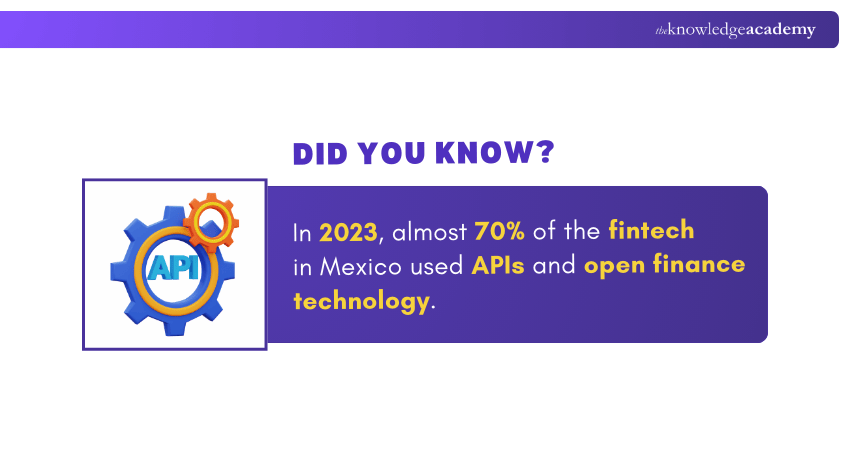
4) Operational Efficiency Boost
1) Attains operational efficiency with automated works and streamlining
2) Time-consuming tasks and critical workflows are more automated than manual
3) Increases productivity and saves time and effort
5) Unlocking AI Capabilities
1) Helps to unlock an AI model for your business without the need to build or train it
2) Delivers required data as they are integrated with APIs
3) Could be embedded into your applications for improvement
6) Improved End-user Experience
1) Reduces the work of combining data into a unified format
2) Creates personalised experiences, thereby crafting engaging interactions
3) Easy to interact with and access
7) Prolong Legacy System Utility
1) Gets modernised with the applications without changing the core systems
2) Can incorporate the existing legacy system with the modern workflows
3) No need to modernise the entire system; new techniques could be added
8) Unified Data and Experience
1) Helps in unifying the collected data and sharing it with its applications
2) Provides relevant data, thereby enhancing better decision-making
3) Decreases or requires no manual work
Master your knowledge to transform components into custom elements by joining our Angular Training anytime soon!
Leading API Management Tools
Here are some of the leading API management tools for your guidance.
1) Merge.dev
Merge.dev is a unified API platform that helps B2B companies to integrate their applications for varied purposes. It could range from integrating product and customers’ data to maintaining the integrations. It is most suitable for medium and large enterprises.
2) Kombo
Kombo is yet another unified API platform for Human Resources Information System (HRIS) that is used primarily for HR and payroll integrations. It reads and unifies data from HRIS systems. It is applicable for businesses that require seamless HR and payroll maintenance.
3) DreamFactory
DreamFactory is an open-source API management platform that helps business to quickly create an API from databases. It requires no code to generate an API. It offers instant deployment of generated API.
4) Kong
Kong is also an open-source API gateway, aimed in building and deploying APIs for sharing data between systems. It also manages microservices along with managing APIs.
5) Tray.ai
Tray.ai helps businesses to integrate the automatic workflows usings API with advanced customising options. Taking AI capabilities, it enables AI integration and automation of both internal and external systems. It is preferred by businesses that focus on high workflow automation.
Real-world API Integration Examples
There are multiple ways to find API Integration in the real world. However, here are some common examples of it.
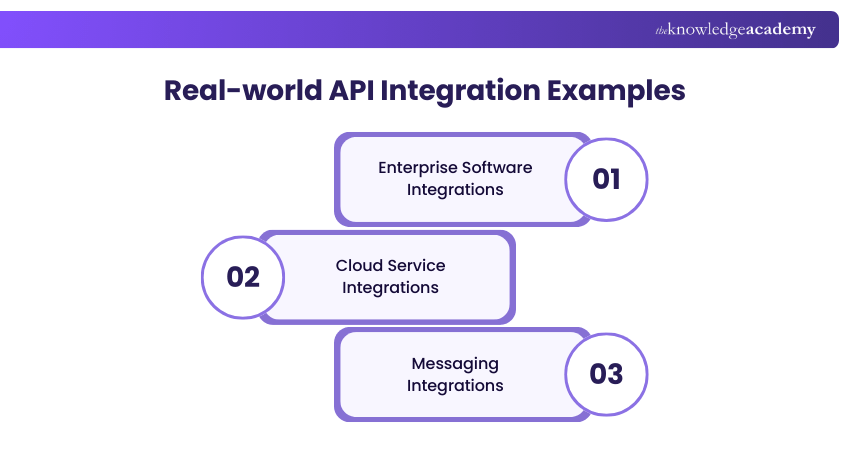
1) Enterprise Software Integrations
API Integration has been widely used by the organisations for automatic works across their systems. Some of its examples include integration of your Customer Relationship Management (CRM) software with inventory tracking software, email marketing systems and so on.
2) Cloud Service Integrations
Different cloud services are now integrated with the help of APIs and API Integrations to exchange data and automate works. Cloud service integrations enhance data transfer within varied environments and geographies.
3) Messaging Integrations
API Integration helps in connecting messaging platforms with other systems or applications to share and collaborate. It helps to upload and share a file from cloud storage directly with the applications and you won’t be leaving the application while sharing a file.
Best Practices for Effective API Integration
Performing some best practices will ensure that your API Integration is effective and robust. Those practices include the following:
1) Detailed Understanding of an API: Before choosing which kind of API you would like to use, you need to read and understand its usage, limitations and integration details.
2) Prefer Relevant API: Once you get an idea of which specification of API suits your system or software, you can select a reliable and relevant API.
3) Security and Scalability: Before making any final decisions, it is always better to check the security features of strong protection and encryption. It should also be flexible with changes and growth.
Conclusion
Data transfer and communication between systems and applications have never been this effective before API Integrations. With this blog on What is API Integration, you might have got ideas on how it actually helps you. Get started now, save your time with APIs and implement API Integrations for productive workflow and efficiency while working in collabs.
Unlock your effective coding practices with our Systems Development Essentials Training – Sign up now!
Frequently Asked Questions
What Is the Difference Between API and API Integration?

API is a set of rules and protocols designed for applications or systems to communicate and transfer data. On the other side, API Integration is the process of connecting different API installed systems or applications.
What Does an API Integration Specialist Do?
The role of an API Integration specialist is to develop and maintain the integrations between systems or software. They also check communication and data exchange between the systems.
What are the Other Resources and Offers Provided by The Knowledge Academy?
The Knowledge Academy takes global learning to new heights, offering over 3,000 online courses across 490+ locations in 190+ countries. This expansive reach ensures accessibility and convenience for learners worldwide.
Alongside our diverse Online Course Catalogue, encompassing 17 major categories, we go the extra mile by providing a plethora of free educational Online Resources like Blogs, eBooks, Interview Questions and Videos. Tailoring learning experiences further, professionals can unlock greater value through a wide range of special discounts, seasonal deals, and Exclusive Offers.
What is The Knowledge Pass, and How Does it Work?
The Knowledge Academy’s Knowledge Pass, a prepaid voucher, adds another layer of flexibility, allowing course bookings over a 12-month period. Join us on a journey where education knows no bounds.
What are the Related Courses and Blogs Provided by The Knowledge Academy?
The Knowledge Academy offers various App & Web Development Training, including API Crash Course, Systems Engineering Training and XML Course. These courses cater to different skill levels, providing comprehensive insights into REST API.
Our Programming & DevOps Blogs cover a range of topics related to API Integration, offering valuable resources, best practices, and industry insights. Whether you are a beginner or looking to advance your Programming and DevOps skills, The Knowledge Academy's diverse courses and informative blogs have got you covered.

 If you wish to make any changes to your course, please


