


 Top Rated Course

We may not have the course you’re looking for. If you enquire or give us a call on + 1-866 272 8822 and speak to our training experts, we may still be able to help with your training requirements.
Project Management Timelines: Templates, Tools and Expert Tips
David Evans 14 July 2026A Project Management Timeline helps keep your project on track by mapping out every step from initiation to delivery. It provides a clear structure, aligns teams, and ensures objectives are met within scope, time, and budget. Lear provides n how adopting one improves coordination, minimises risks, and leads to consistent project success.

Training Outcomes Within Your Budget!
We ensure quality, budget-alignment, and timely delivery by our expert instructors.
Table of Contents

Ever feel like your projects keep going off track no matter how carefully you plan? It’s a common challenge faced by teams of all sizes. A well-structured Project Management Timeline can be the game changer you need. It provides a clear roadmap, aligns your team, and helps prevent last-minute surprises. Whether you're managing a simple task or a large campaign, the right timeline brings clarity and structure to every step.
In this blog, we’ll explore practical Project Management Timeline templates, user-friendly tools, and expert tips to help you plan smarter. With the right approach, you can boost productivity, stay on schedule, and deliver your projects with greater confidence and control.
Table of Contents
1) What is a Project Management Timeline?
2) Why are Project Timelines Important?
3) Benefits of Creating Project Management Timeline
4) How to Create a Project Management Timeline?
5) Project Timeline Examples
6) What Is the Difference Between a Project Roadmap and a Project Timeline?
7) What are the Stages of the Project Timeline?
8) Conclusion
What is a Project Management Timeline?
A Project Management Timeline, also termed a Project Schedule, is essentially a graphical depiction of tasks, deadlines, and milestones arrayed in a temporal sequence, forming a blueprint for the Project’s Execution from start to finish. It presents an organised snapshot of the expected completion times for each task or activity throughout the project’s duration. Its primary function is to aid in planning, tracking, and ensuring the project stays on course.
Not only are these Timelines crucial for team members to remain aligned, but they also serve as a tool for clients to monitor real-time progress and provide feedback. Crafting a Timeline is a critical task for every Project Manager and is pivotal for the efficacy of Project Management. A multitude of practices and tools exist to construct a Project Management Timeline, each offering diverse features and capabilities to streamline the project tasks and facilitate a smoother workflow.

Why are Project Timelines Important?
A well-defined project timeline brings structure to your work. Here’s why it matters:
1) Clear Project Overview
When everyone can see the full picture, it’s easier to stay on the same page. A timeline shows what’s coming up and what needs attention. It keeps things clear and avoids confusion across the team.
2) Efficient Resource Use
With a timeline, you know where your time, tools, and people are going. It helps you plan smarter, avoid burnout, and keep things moving without unnecessary delays. It’s all about working better, not just harder.
3) Manageable Workload
Big projects can be intimidating, but timelines make them easier to handle. Breaking things into smaller steps helps your team focus on what’s next. It keeps the work flowing and stress levels low.
4) Stay on Schedule
A good timeline keeps your project from veering off course. You’ll spot delays early and know exactly when to adjust. That way, you hit your deadlines and deliver without last-minute scrambles.
Benefits of Creating Project Management Timeline
A Project Management Timeline delivers numerous advantages that boost Project efficiency and success. Here are the key benefits:
a) Better Planning and Structure: A Timeline acts as a detailed roadmap, clearly outlining tasks, priorities and deadlines. This promotes organised Project planning and efficient resource allocation.
b) Stronger Communication and Teamwork: A defined Timeline ensures all team members are aligned on milestones, due dates, and task dependencies. This clarity encourages effective collaboration and minimises misunderstandings.
c) Optimised Resource Use: Project Timelines enable precise resource planning by mapping tasks against deadlines. This helps identify constraints early and ensures smooth execution without unnecessary delays.
d) Greater Accountability: Timelines It allows to assign specific deadlines to individual responsibilities, making team members more accountable. This clear ownership drives focus and enhance productivity.
e) Proactive Risk Management: Project managers can detect potential risks in advance and take corrective action before issues escalate with a clear view of task dependencies and the critical path
f) Higher Client Confidence: Sharing Timelines with clients provides visibility into progress and deliverables. This transparency fosters trust and improves overall satisfaction.
g) Better Decision-making: Timelines It provides up-to-date insights into Project status, enabling managers to make informed decisions, stay within budget and ensure timely delivery.
Register for our Project Management Office Fundamentals Certification now to elevate your Project Management skills!
How to Create a Project Management Timeline?
Building a solid Project Management Timeline is key to keeping your project on track. A delay in one task can cause a chain reaction, pushing other dependent activities behind schedule. You can also refer to a Project Management Planning Guide to guide your timeline creation. To avoid that, here’s how to create a timeline that works in real-world project settings:
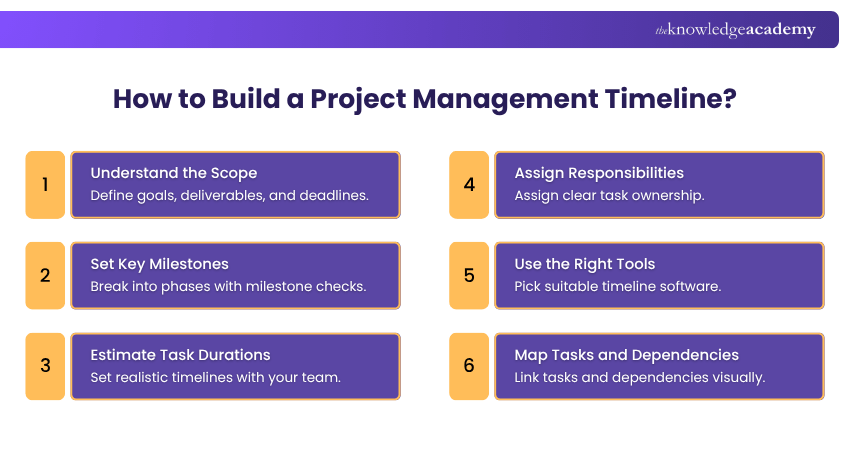
1) Understand the Project’s Scope
Start by defining what the project aims to achieve. Outline the deliverables, deadlines, key resources, and the team required. A clear scope document gives you structure, ensuring everyone understands what needs to be done and what success looks like.
2) Define Key Milestones
Break the project into major phases and set milestones for each one. These aren’t just deadlines, they’re checkpoints that help you track progress and keep momentum. Milestones also make it easier to report updates and spot issues early.
3) Estimate Task Durations
Work with your team to understand how long each task will take. Be realistic, especially for tasks with unknowns. Getting accurate estimates early helps prevent surprises later and gives your timeline a solid foundation.
4) Assign Tasks Clearly
Once tasks are listed and time is estimated, assign them to the right people. Make sure responsibilities are clear and documented in your project timeline tool. This keeps everyone accountable and gives you a clear view of who’s doing what.
5) Choose the Right Timeline Tool
Use a tool that fits your project needs, whether it’s Excel, Asana, or a specialised Project Management platform. Look for features like task dependencies, drag-and-drop rescheduling, and real-time progress tracking.
6) Plot Tasks and Dependencies
Now it’s time to build out the full timeline. Add your tasks, link dependencies, assign dates, and document ownership. Make the timeline accessible to the team so they can follow along and update their progress as things move forward.
Learn how to create efficient timelines – join our Project Management Office Green Belt Course now!
Project Timeline Examples
Project Timelines are important for organising and managing various endeavours, ensuring tasks are completed efficiently and deadlines are met. Below are the examples for different scenarios, illustrating the structured approach to planning and executing projects effectively. Let's have a detailed look at them:
1) Website Development Project Timeline Example
In Website Development, a Project Timeline outlines the key milestones and tasks involved in creating a functional and visually appealing website. The Timeline typically begins with the initial planning phase, where objectives, target audience, and technical requirements are identified. This phase is followed by design, where wireframes and mock-ups are created to visualise the layout and user interface.
Once the design is approved, development begins, involving coding, programming, and integrating features and functionalities. Regular testing and debugging throughout this phase ensure the website functions smoothly across different devices and browsers. Finally, the website undergoes a review and refinement process before being launched to the public.
2) Advertising Project Timeline Example
In advertising, Project Timelines are crucial in effectively orchestrating campaigns and promotions to reach target audiences. The Timeline begins with the strategic planning phase, where campaign objectives, messaging, and target demographics are defined. This phase is followed by Creative Development, where concepts, visuals, and copywriting are crafted to convey the desired message.
Once the creative elements are finalised, production commences, including creating advertisements for various channels such as print, digital, and broadcast. Concurrently, media planning and buying take place to determine the optimal placement and timing of ads to maximise exposure and impact. Monitoring and analysing performance metrics throughout the campaign inform adjustments and optimisations to enhance effectiveness.
3) Meeting Timeline Example
A Timeline can ensure productivity and Time Management, even within a single meeting. A meeting Timeline example outlines the agenda, duration, and sequence of topics to be discussed, providing clarity and structure for participants.
The Timeline typically begins with an agenda-setting phase, where meeting objectives and topics are identified and prioritised based on importance and time constraints. This is followed by scheduling, where the meeting date, time, and location are determined, considering the availability of participants.
During the meeting, the it serves as a guide, allocating specific time slots for each agenda item to prevent overruns and ensure all topics are adequately addressed. Time Management techniques such as timeboxing and prioritisation help keep discussions focused and productive.
What Is the Difference Between a Project Roadmap and a Project Timeline?
A project roadmap outlines high-level goals and strategic direction, focusing on the big picture. A project timeline details specific tasks, deadlines, and dependencies, helping teams track execution and stay on schedule throughout the project lifecycle.
What are the Stages of the Project Timeline?
The stages include initiation, planning, execution, monitoring, and closure. Each stage helps structure the project, starting from defining goals to executing tasks, tracking progress, and finally completing the project with clear deliverables and learnings.
Conclusion
Project Management Timeline tools and techniques have revolutionised the management of both simple and complex projects. It has made the whole process easier by eradicating the numerous manual tasks. It assists the team members in boosting their productivity. Also, it helps to improve the collaboration between top management, team members, and stakeholders.
Understand complex programme coordination and Resource Management. Join our PgM (Programme Management) Course now!
Frequently Asked Questions
How does a dynamic Project Timeline boost team collaboration?

A dynamic Project Timeline fosters collaboration by providing real-time updates and clear visibility into tasks, deadlines, and dependencies, enabling team members to coordinate efforts effectively. It promotes communication and accountability, as team members can easily track progress and adjust plans as needed.
What career paths are available for Project Management Timeline professionals?
Professionals skilled in Project Management Timelines can pursue careers as Project Managers, Scheduling Coordinators, or Program Managers in various industries such as IT, construction, and healthcare. They can also specialise in roles such as Project Scheduler, Resource Planner, or Project Control Analyst.

David Evans


Certified Project Trainer and Agile Delivery Expert
David Evans brings over a decade of hands-on experience in project delivery, Agile transformation, and team leadership. With a background in technology and business consulting, David has led cross-functional teams through Agile and Waterfall projects in both public and private sectors. He combines technical knowledge with practical insights to help readers navigate the challenges of modern project environments.


 If you wish to make any changes to your course, please


