


 Top Rated Course

We may not have the course you’re looking for. If you enquire or give us a call on + 1-866 272 8822 and speak to our training experts, we may still be able to help with your training requirements.
Music Production: A Complete Guide to Becoming a Producer
The Knowledge Academy 03 March 2026Music Production is the process of turning musical ideas into finished recordings through creativity, recording, mixing, and mastering. It combines creativity with technical skills to shape how music sounds and feels. From building beats to managing recording sessions, Music Producers turn musical ideas into professional releases.

Training Outcomes Within Your Budget!
We ensure quality, budget-alignment, and timely delivery by our expert instructors.
Table of Contents

Have you ever listened to a song and wondered how every beat, voice, and sound fit together perfectly? It is the result of Music Production, where creativity meets technology to transform simple ideas into powerful, polished tracks. From bedroom studios to professional recording rooms, it brings sound to life and shapes the music we hear every day.
Whether you dream of producing chart-topping hits, recording artists, or simply making music for fun, understanding the process is the beginning of the journey. In this blog, you will learn about What is Music Production, its components, equipment, and more. Keep reading to learn more!
Table of Contents
1) What is Music Production?
2) What Does a Music Producer Do?
3) Core Components of Music Production
4) How is Music Produced?
5) Music Production in the Digital Age?
6) Common Equipment in Music Production
7) What Skills Do Producers Need?
8) Conclusion
What is Music Production?
Music Production is the process of creating songs and preparing them for distribution. Every track you hear, from timeless classics to modern chart toppers, is the result of this process. It turns ideas, melodies, and lyrics into a complete and polished piece of music that can be shared with listeners across different platforms.
Music Production is not only about creativity, as it involves technical work at every stage of a song’s lifecycle. It brings together multiple people and processes, requiring strong organisation, collaboration, and leadership to deliver a high-quality final product. This ensures that musical ideas are transformed into professional recordings.

What Does a Music Producer Do?
A Music Producer’s role is diverse and dynamic. They may create beats, oversee projects, handle collaborations with labels, play instruments, co-write songs, or even step in to resolve conflicts within a band. So, a producer wears many hats, but the following key responsibilities define the role:
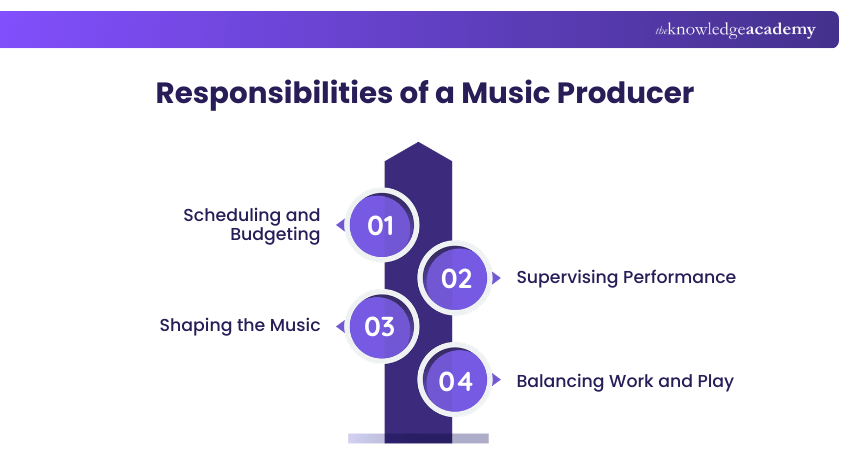
1) Scheduling and Budgeting
Producers manage recording, schedules and budgets, ensuring projects are completed on time and within financial limits. They guide musicians through the process efficiently, overseeing both the technical and artistic aspects. For major or indie projects alike, a producer ensures the record is delivered as planned on time and on budget.
2) Shaping the Music
Producers turn raw songs into polished recordings. Their job blends artistry and commercial vision, shaping music to reflect the artist’s intent while appealing to audiences. As George Martin put it, the producer frames the work and presents it to the world.
3) Supervising Performance
A producer brings out the best in every musician. They trust their instincts to identify the strongest performances from backing tracks to solos. They have to make critical decisions throughout the recording process to capture the right energy and sound.
4) Balancing Work and Play
Great producers maintain a balance between creative flow and structured work. By setting a positive vibe and keeping sessions moving, they create an environment where music flourishes. Recording is both serious work and a joyful creative experience, and skilled producers make sure both are balanced seamlessly.
Explore what you love and transform your time into something meaningful with the Hobbies & Interests Course – Sign up today!
Core Components of Music Production
Music Production is a broad field that requires the blend of both creative expression and technical precision. Let’s look at its core components that form its foundation below:
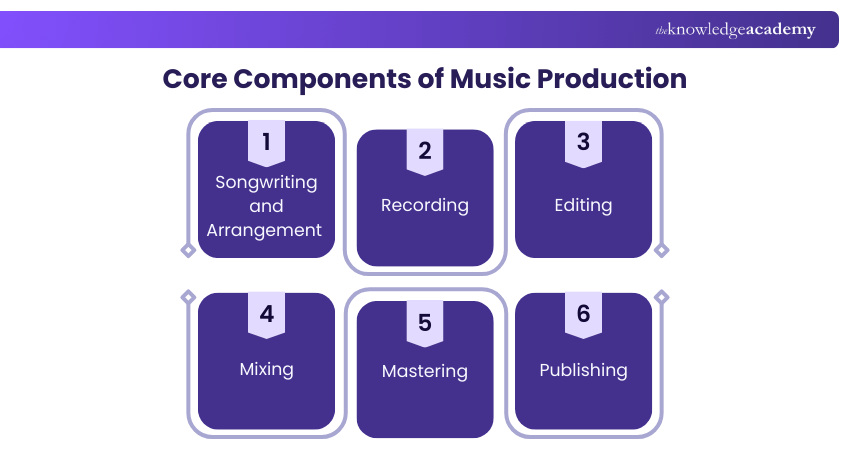
1) Songwriting and Arrangement
Songwriting involves developing melodies, lyrics, and musical ideas that connect with listeners. Arrangement focuses on how these elements are structured, including the order of verses, choruses, and instrument layers to create a compelling track. Creativity is the primary driving force at this stage.
2) Recording
Once the song is completed, the recording process captures the vocals and instruments using microphones and audio equipment. Multiple takes are often recorded to capture different variations and performances. Then, Producers select the best recordings to use in the final version.
3) Editing
Editing polishes the recorded material to improve its quality and consistency. This stage involves adjusting timing, pitch, and rhythm, removing unwanted noise, and rearranging song sections to enhance flow. The main goal is to ensure the track sounds clean and cohesive.
4) Mixing
Mixing combines every individual element, such as vocals and instruments, into a balanced and cohesive sound. Producers adjust the volume levels, effects, and tonal balance to make every part work together smoothly and ensure nothing overpowers the other in the track.
5) Mastering
Mastering comes at the final stage of polishing the music. It prepares the finished track for distribution by improving sound quality, maintaining consistency, and bringing clarity. It may require collaboration with experienced sound engineers or mastering professionals.
6) Publishing
Publishing focuses on promoting and distributing the music while ensuring it reaches the right audience. This may include self-publishing, networking with industry professionals, attending events, and working with publishers who support your style and genre. It is also an important step for monetising your work and building your presence in the music industry.
Learn the strings and start creating music that resonates with Guitar Course – Join now!
How is Music Produced?
From a simple rhythm to a fully formed song with melodies and lyrics, the final sound depends on how the music is arranged and the tools used to shape it. Music Production follows a structured process that transforms an idea into a finished track.

1) Musical Ideas: Every production starts with a musical idea. At this stage, the Music Producer decides the arrangement, instruments, and performers involved, shaping how the track will take form.
2) Recording: Here, the performances are recorded using tools. Vocals and instruments are captured as audio, creating the raw material that will be shaped into the final track.
3) Editing: Now, producers refine the performances through editing. They adjust timing, pitch, and structure to improve flow and quality. Editing ensures the track sounds consistent and polished.
4) Mixing: Mixing combines the recorded tracks into a balanced and cohesive sound. Music Producers adjust levels, apply effects, and fine-tune the audio to create a clear and engaging mix.
5) Mastering: In the final stage, the completed mix is prepared for distribution. Producers make the final adjustments to sound quality and ensure the track is ready to be released.
Learn the secrets to polish your tracks like a pro with our Mixing and Mastering Course - Sign up now!
Music Production in the Digital Age
The digital revolution has redefined the Music Production landscape by offering unprecedented tools, connectivity, and possibilities. In this era, Music Production is characterised by innovation, democratisation and global exchange of creative ideas that transcend geographical boundaries.
1) Virtual Instruments and MIDI Production
The digital age brought virtual instruments and Music Instrument Digital Interface (MIDI) technology, revolutionising music creation. Producers now access various virtual synthesisers, samplers, and realistic instrument emulations. MIDI allows for precise control and manipulation of musical elements, enabling producers to craft intricate compositions easily.
2) Seamless Collaboration and File Sharing Online
The digital age has connected creators worldwide, fostering collaborative efforts that were once hindered by physical distance. Online platforms enable artists, producers, and engineers to collaborate in real time, sharing files, ideas, and feedback instantaneously. This interconnectedness has transformed Music Production into a global community, enriching projects with diverse perspectives.
3) The Impact of Streaming on Music Production
The rise of streaming platforms has reshaped the music industry and influenced production strategies. The need for tracks to translate well across various listening environments has become paramount, driving mastering and mixing decisions. Moreover, producers now consider the sequencing of tracks within albums to optimise listener engagement in the context of playlist-based consumption.
4) Incorporating AI and Automation
AI Music Production Tools has assisted producers in generating chord progressions, suggesting arrangements, and even creating basic compositions. Automation features in DAWs streamline repetitive tasks, allowing producers to focus on creative decisions rather than mundane technicalities.
5) Visual and Immersive Elements
The digital age has blurred the lines between music and visual art. Producers often collaborate with visual artists to create immersive experiences through music videos, Virtual Reality (VR) environments, and interactive installations. These collaborations enhance the emotional impact of music, offering audiences a multisensory journey.
Turn your passion into melody and play confidently with Piano Course – Sign up now!
Common Equipment in Music Production
Music Production relies on a range of tools to record, edit, and refine sound. These tools help Music Producers capture audio, control digital instruments, and achieve professional sound quality. Let’s look at them below:
1) Computers: A computer is the central hub of Music Production. It runs Digital Audio Workstations (DAWs) and other software to record, edit, mix, and polish music.
2) Audio Interface: They convert sound between analogue and digital formats, allowing microphones and instruments to connect to your computer for recording and playback.
3) Microphones: They capture vocals and instruments, turning sound waves into signals that can be recorded and processed during production.
4) Studio Monitors: These are high-quality speakers designed to deliver accurate sound, helping producers analyse audio clearly and make precise mixing decisions.
5) Headphones: They enable detailed and focused listening, making it easier to spot subtle changes, background noise, and fine sound adjustments.
6) MIDI Controllers: They allow producers to play and control virtual instruments and software, making it easier to create melodies, beats, and sound effects digitally.
What Skills Do Producers Need?
A Music Producer needs a range of skills to thrive in this field. The must-have skills include:
1) Technical Ability: Using production software, equipment, and recording tools effectively to create and refine sound.
2) Musical Knowledge: Understanding rhythm, melody, harmony, and song structure to shape high-quality music.
3) Creative Flair: Bringing original ideas and artistic vision to make music unique and engaging.
4) Communication and Collaboration: Working clearly and effectively with artists, engineers, and other professionals.
5) Project Management: Planning, organising, and managing timelines and tasks to complete projects successfully.
6) Marketing and Networking: Promoting music and building industry connections to grow opportunities.
7) Adaptability and Resilience: Adjusting to changes, handling feedback, and staying motivated through challenges.
8) Attention to Detail: Noticing small sound elements and refining them to achieve a polished result.
9) Financial Awareness: Managing budgets, costs, and revenue related to music production work.
10) Continuous Learning: Keeping up with new tools, trends, and techniques to stay relevant in the industry.
Conclusion
Music Production is where creativity, technology, and passion come together to turn ideas into powerful sound experiences. It shapes the music that connects listeners around the world. Learning the process opens endless opportunities to express yourself and grow your skills. With the right knowledge, tools, and dedication, your journey can transform inspiration into sound that truly makes an impact.
Turn your emotions into melodies, your ideas into memorable music. Sign up for our Music Composition Course now!
Frequently Asked Questions

The Knowledge Academy


Global Training Provider
The Knowledge Academy is a world-leading provider of professional training courses, offering globally recognised qualifications across a wide range of subjects. With expert trainers, up-to-date course material, and flexible learning options, we aim to empower professionals and organisations to achieve their goals through continuous learning.

Upcoming Business Skills Resources Batches & Dates
Date
 Music Production Course

 If you wish to make any changes to your course, please


