


 Top Rated Course

We may not have the course you’re looking for. If you enquire or give us a call on + 1-866 272 8822 and speak to our training experts, we may still be able to help with your training requirements.
Information Security Analyst Salary: Guide by Role and Experience
The Knowledge Academy 13 February 2026Information Security Analyst salaries average £44k in the UK, rising in tech hubs and with senior certifications and advanced security expertise. Professionals with skills in cloud security, risk management, and incident response often earn more across the UK. Strong demand across industries continues to push salaries upward.
Home
 Resources
IT Security & Data Protection
Information Security Analyst Salary: Guide by Role and Experience
Resources
IT Security & Data Protection
Information Security Analyst Salary: Guide by Role and Experience
Resources
IT Security & Data Protection
Information Security Analyst Salary: Guide by Role and Experience

Training Outcomes Within Your Budget!
We ensure quality, budget-alignment, and timely delivery by our expert instructors.
Table of Contents
From online banking to remote work and cloud platforms, digital security touches almost every part of our daily lives. Behind the scenes, Information Security Analysts work constantly to protect important data from cyber threats, making this role both highly impactful and increasingly in demand across industries.
In this blog, we explore who an Information Security Analyst is and their key responsibilities. We also discuss Information Security Analyst Salary by location and experience, along with the factors that influence earning potential. Let’s get started!
Table of Contents
1) Who is an Information Security Analyst?
2) Responsibilities of an Information Security Analyst
3) Information Security Analyst Salary by Location
4) Information Security Analyst Salary by Experience
5) Factors Affecting Information Security Analyst Salaries
6) How to Become an Information Security Analyst?
7) Is Cyber Security a Stressful Job?
8) Conclusion
Who is an Information Security Analyst?
An Information Security Analyst is a guardian of the digital domain, tasked with the critical role of shielding an organisation’s computer systems from cyber threats and unauthorised access. These experts are pivotal in protecting sensitive information, such as bank details and passwords, which are increasingly stored online.
They deploy and oversee robust security measures like firewalls and encryption software, craft comprehensive security protocols, and remain vigilant against potential vulnerabilities within a company’s network. Additionally, they investigate any incidents of security breaches, ensuring the digital safety of the organisation’s data. Their expertise is a key defence line in the ever-evolving landscape of Cyber Security.

Responsibilities of an Information Security Analyst
An Information Security Analyst protects an organisation’s systems and data from cyber threats, with a strong focus on prevention to reduce risk and recovery costs. Key responsibilities include:

1) Incident Analysis: Document security breaches and assess their impact
2) Security Controls: Manage firewalls, encryption, and protection tools
3) Threat Monitoring: Track emerging cybersecurity risks and trends
4) Risk Assessment: Identify vulnerabilities and root causes
5) Security Improvements: Recommend enhancements to IT and management teams
6) Audits: Conduct internal and external security audits
7) Vendor Security: Ensure third-party compliance with security standards
8) Disaster Recovery: Maintain data backup and system recovery plans
Learn to develop security policies and procedures with our CISM Certified Information Security Manager Training – join today!
Information Security Analyst Salary by Location
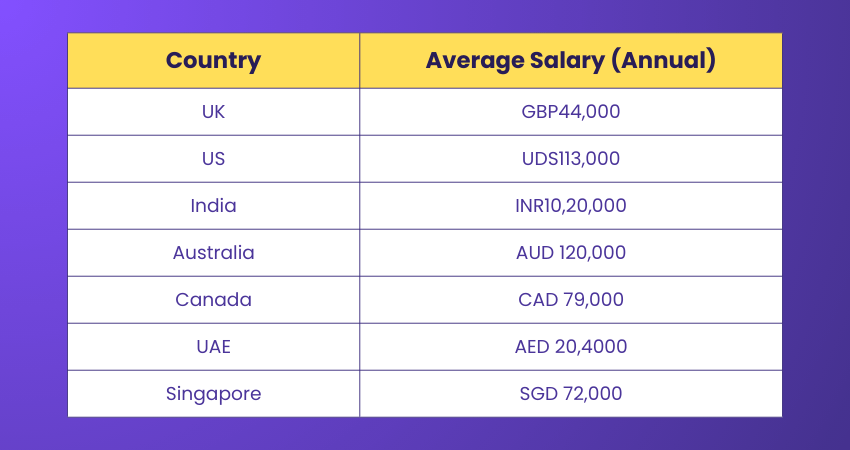
Information Security Analyst Salary by Experience

Factors Affecting Information Security Analyst Salaries
The salary of an Information Security Analyst is influenced by several key factors, including the sector they work in, their geographical location, their educational background, and their level of experience. Here is a closer look at how these elements shape their earnings:
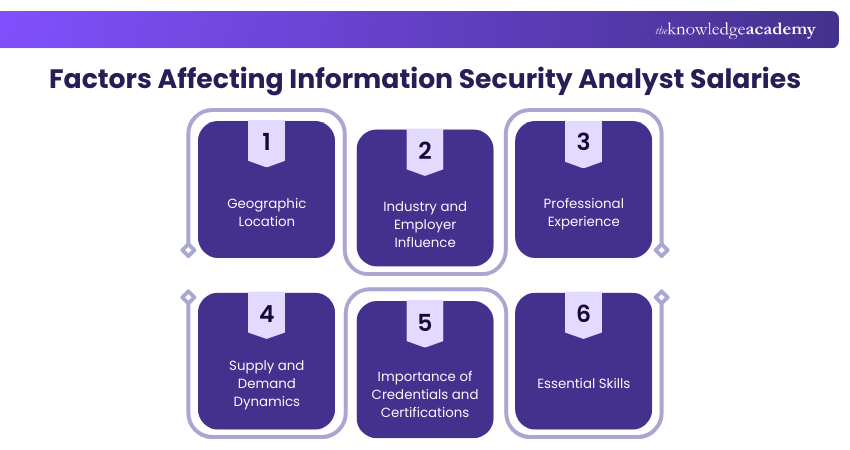
1) Geographic Location
The Geographic location where an Information Security Analyst lives is important in deciding their salary. Metropolitan areas often have a higher cost of living and a booming tech industry, which can lead to higher wages. Conversely, areas with a smaller tech footprint tend to offer lower compensation.
2) Industry and Employer Influence
Information Security Analysts are needed across various sectors, but demand is particularly high in fields like computer systems design, management, and financial services. However, the top-paying industries for these professionals are typically found in e-commerce, information services, and electronics manufacturing, reflecting the premium placed on security in these high-stakes areas.
3) Professional Experience
In the field of Cyber Security, experienced professionals typically receive higher remuneration. The value placed on experience by employers stems from its role in providing analysts with the hands-on expertise necessary to strengthen data defence and enhance security measures. The Cyber Security Analyst Salary tends to increase with experience, certifications, and continued professional development. Given the ever-evolving nature of Cyber Safety, analysts who are committed to ongoing education, obtaining certifications, and advancing their knowledge are well-equipped to stay abreast of emerging trends and technologies.
4) Supply and Demand Dynamics
The Cyber Security industry often experiences a higher demand for skilled Information Security Analysts than the available supply. As cyber threats evolve and businesses prioritise digital safety, the call for certified experts is expected to grow, influencing salary trends accordingly.
5) Importance of Credentials and Certifications
In Cyber Security, professional credentials like the Certified Information Systems Security Professional (CISSP) or Certified Ethical Hacker (CEH) can enhance one’s earning prospects. These certifications not only validate skills but also align with the Information Security Analyst Job Description, signifying a professional’s commitment and expertise, which employers may reward with higher salaries.
6) Essential Skills
Specialised skills in areas like threat detection, incident response, and penetration testing bolster an Information Security Analyst's value and salary potential. As professionals develop their abilities and stay current with new trends and technologies, their compensation can increase.
Learn how to protect systems, sensitive data, and networks from threats. Join our CISSP Training now!
How to Become an Information Security Analyst?
An Information Security Analyst follows various pathways, each offering a special blend of education and practical experience. Here’s a streamlined guide:
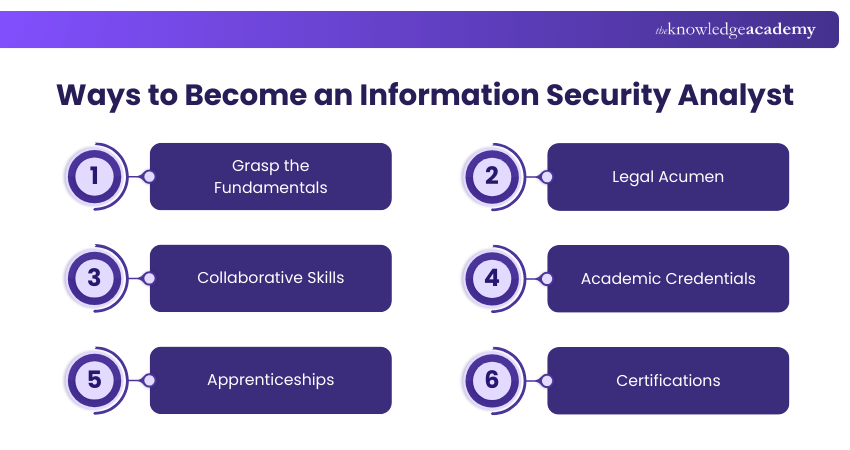
a) Grasp the Fundamentals: A strong foundation in Information Security is essential. This covers a thorough understanding of security infrastructure like firewalls and routers, as well as risk management principles. Gaining experience in ethical hacking or penetration testing can be a plus.
b) Legal Acumen: Proficiency in data privacy laws, especially those pertinent to a particular region, is crucial. Specialised knowledge of privacy regulations in sectors such as healthcare or finance is often required.
c) Collaborative Skills: Effective communication and teamwork are vital, as identifying and responding to security threats is a collaborative effort.
d) Academic Credentials: A university degree in fields such as computing, Project Management, business management, or information systems lays the groundwork for acquiring industry-relevant knowledge.
e) Apprenticeships: Engaging in apprenticeships like Cyber Technologist Higher Apprenticeships or Cyber Security Technical Professional Degree Apprenticeships can be an excellent way to learn while honing technical skills. Entry requirements typically include a set of GCSEs and possibly A levels for more advanced programs.
f) Certifications: Obtaining IT certifications in Cyber Security can solidify your knowledge base and provide recognised credentials that show the expertise to potential employers. Starting with certifications focused on security or networks is recommended.
Is Cyber Security a Stressful Job?
Cyber Security can be a stressful job role, especially during security incidents, cyberattacks or data breaches that require quick decisions and long hours. The responsibility of safeguarding sensitive data and systems adds pressure, particularly in high-risk industries.
However, stress levels vary by role and organisation. Many positions focus on planning, monitoring, and prevention. Also, offering structured work, better income, strong career growth, and high job satisfaction for those who enjoy problem-solving.
Conclusion
Information Security Analyst Salary reflects strong demand for skilled professionals across industries. Pay increases with experience, certifications, and expertise in areas like cloud security and risk management. As cyber threats grow, organisations continue to invest in security talent, making this role a stable, well-paid, and future-focused career choice.
Learn Cyber Security management with our Chief Information Security Officer Training – join today!
Frequently Asked Questions
Do Information Security Analysts Earn More Than Other IT Professionals?

Information Security Analysts often earn more than many other IT professionals due to the high demand for their skills and the critical nature of their work. Their salaries can be higher, especially in industries that prioritise data protection.
Is it Hard to Become an Information Security Analyst?
Becoming an Information Security Analyst can be challenging because it requires specialised knowledge, certifications, and experience in IT Security. However, with the right education and dedication, it is a rewarding and attainable career.
What are the Other Resources and Offers Provided by The Knowledge Academy?
The Knowledge Academy takes global learning to new heights, offering over 3,000+ online courses across 490+ locations in 190+ countries. This expansive reach ensures accessibility and convenience for learners worldwide.
Alongside our diverse Online Course Catalogue, encompassing 19 major categories, we go the extra mile by providing a plethora of free educational Online Resources like Blogs, eBooks, Interview Questions and Videos. Tailoring learning experiences further, professionals can unlock greater value through a wide range of special discounts, seasonal deals, and Exclusive Offers.
What is The Knowledge Pass, and How Does it Work?
The Knowledge Academy’s Knowledge Pass, a prepaid voucher, adds another layer of flexibility, allowing course bookings over a 12-month period. Join us on a journey where education knows no bounds.
What are the Related Courses and Blogs Provided by The Knowledge Academy?
The Knowledge Academy offers various CISSP Training, including the ISSMP Training, ISSAP Training, and the Chief Information Security Officer Training. These courses cater to different skill levels, providing comprehensive insights into IP Spoofing.
Our IT Security & Data Protection Blogs cover a range of topics related to Information Security Analyst, offering valuable resources, best practices, and industry insights. Whether you are a beginner or looking to advance your IT Security & Data Protection skills, The Knowledge Academy's diverse courses and informative blogs have got you covered.

The Knowledge Academy


Global Training Provider
The Knowledge Academy is a world-leading provider of professional training courses, offering globally recognised qualifications across a wide range of subjects. With expert trainers, up-to-date course material, and flexible learning options, we aim to empower professionals and organisations to achieve their goals through continuous learning.

Upcoming IT Security & Data Protection Resources Batches & Dates
Date
 ISSMP Training
ISSMP Training
Mon 6th Apr 2026
ISSMP Training
Fri 10th Apr 2026
ISSMP Training
Fri 29th May 2026
ISSMP Training
Fri 31st Jul 2026
ISSMP Training
Mon 14th Sep 2026
ISSMP Training
Fri 20th Nov 2026
ISSMP Training
Mon 21st Dec 2026

 If you wish to make any changes to your course, please


