


 Top Rated Course

We may not have the course you’re looking for. If you enquire or give us a call on +971 8000311193 and speak to our training experts, we may still be able to help with your training requirements.
The Sales Process: From Prospecting to Closing the Deal
Charlotte Wilson 15 July 2026Sales Process defines the key stages sales teams follow to attract leads, engage prospects, close deals and build lasting customer relationships. It provides structure, improves consistency, supports forecasting, and helps teams align actions with customer needs to achieve predictable revenue growth and stronger long-term business performance.

Training Outcomes Within Your Budget!
We ensure quality, budget-alignment, and timely delivery by our expert instructors.
Table of Contents

A well-structured Sales Process helps businesses move potential customers from initial interest to a successful purchase. It provides a clear framework for sales teams, ensuring every interaction with a prospect is purposeful, consistent, and aligned with business goals.
By understanding how each stage works, organisations can improve efficiency, strengthen customer relationships, and close deals more effectively. In this blog, we will explore the key stages involved and how they contribute to successful selling.
Table of Contents
1) What is a Sales Process?
2) What are the Stages of a Sales Process?
3) Why is a Sales Process Important?
4) What are the Sales Process Challenges?
5) Best Practices for Creating Your Sales Process
6) Conclusion
What is a Sales Process?
A Sales Process is an end-to-end model that companies employ in transforming prospective buyers into paying customers. It contains such steps as lead generation, qualification, pitching, managing objections, and making Sales. This process gives the sales departments a clear pattern to follow and thus it is easier to determine the progress made.
In the case of B2B businesses specifically, the Sales Process is important. It makes the management of complex buying decisions easier, enhances efficiency, and maximises possibilities of transforming leads into loyal customers.

What are the Stages of a Sales Process?
Every organisation follows a slightly different Sales Process based on its products, market, and customers. However, most successful Sales Processes share common stages that help teams identify opportunities, build relationships, and convert prospects into long-term customers. These stages provide a structured approach that can be documented, refined, and scaled across the business.
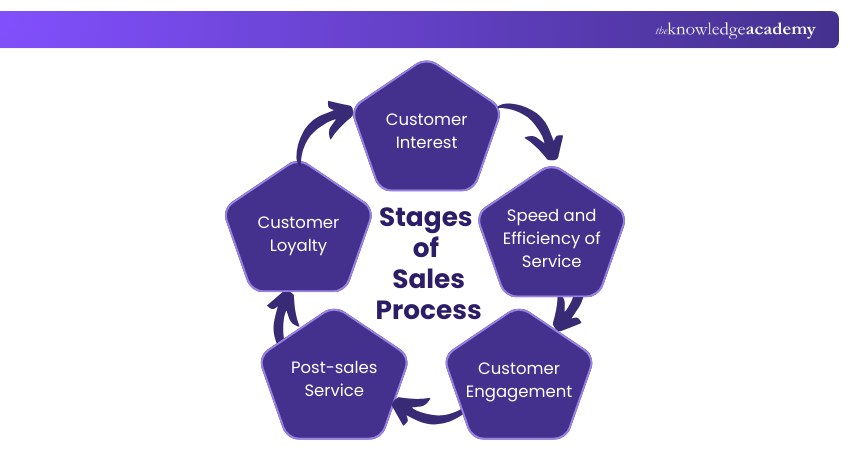
1) Customer Interest
Customer interest is the first stage of the Sales Process, where a business attracts potential buyers and makes them aware of its product or service. This is often achieved through marketing activities such as advertising, promotions, branding, and public relations. Sales staff with strong product knowledge can also spark interest by clearly explaining features and benefits to customers.
2) Speed and Efficiency of Service
Providing quick and efficient service helps create a positive customer experience and encourages purchases. Businesses must be able to take orders, process payments, and deliver products promptly while reducing delays such as long queues or complicated ordering systems. Efficient processes and flexible delivery options help meet customer expectations.
3) Customer Engagement
Customer engagement involves interacting with customers during the buying process to understand their needs and build trust. Businesses may communicate regularly with customers, provide updates, answer questions, and offer personalised advice. This interaction helps customers feel valued and increases the likelihood of completing a purchase.
4) Post-sales Service
Post-sales service refers to the support provided after a customer has purchased a product or service. This may include handling complaints, offering repairs or servicing, providing warranties, or assisting customers with product usage. Good post-sales support ensures customer satisfaction and strengthens the relationship between the business and the buyer.
5) Customer Loyalty
Customer loyalty occurs when satisfied customers continue to purchase from the same business and recommend it to others. Businesses build loyalty by maintaining strong relationships, communicating with customers, and consistently delivering quality products and service. Loyal customers often lead to repeat sales and positive word-of-mouth promotion.Learn customer engagement strategies with our Online Sales Training – Register now!
Why is a Sales Process Important?
A clearly defined Sales Process gives sales teams a structured roadmap to follow when engaging with potential customers. It outlines the key steps needed to move prospects through the buying journey in a consistent and organised way, often supported by proven sales methodologies that guide effective selling strategies.
It also helps sales representatives focus on the most effective actions at each stage of the customer journey. By following a structured approach, teams can improve efficiency, prioritise the right opportunities, and increase the chances of closing deals.
In addition, well-established Sales Processes allow managers to track performance and identify areas for improvement. Analysing each stage helps businesses refine their strategies and strengthen overall sales outcomes.
What are the Sales Process Challenges?
A strong Sales Process can drive consistent results, but common mistakes often undermine its effectiveness. Avoid these pitfalls to improve performance and team alignment.
1) Vague Sales Process Steps: This might cause your team to become confused and act inconsistently without defining each of the steps. Record intact actions and keep practicing them with sales reps.
2) Relying on One Sales Methodology: There is not one correct approach that applies to all situations. Combine effective methods and be flexible to change customer behaviours and sales trends to get the best.
3) Treating the Sales Process as Static: Your Sales Process must advance. Make sure to evaluate its performance periodically, collect feedback from reps, and implement enhancements.
4) Misaligned Sales Plays: Failure to tailor your sales effort to every stage of the process means that you will lose deals. Orchestrate strategies and activities within the same playbook in order to keep your team together.
5) Excluding Marketing: Marketing and sales have to go hand in hand. Insights Would better leads, material, and assistance be produced throughout the entire sales life cycle?
6) Focusing Only on Closing: It should not be your objective to close. Be a value adder by knowing the needs of customers and providing solutions that are of value and are personalised to them.
7) Not Tracking KPIs: You cannot improve, unless you track the key metrics. Keep track of KPIs, such as conversion rates, pipeline speed, and deal closings via dashboards to set the course of optimisation.
Elevate your Sales game with our Sales Analytics Training today!
Best Practices for Creating Your Sales Process
Creating a successful Sales Process takes more than simply copying templates. These four expert-backed practices will help you build a customer-focused and effective system that delivers results.
1) Start with the Customer in Mind, Not the Tools
Avoid designing your Sales Process around existing tools. Begin by understanding your ideal customer’s needs, concerns, and decision triggers. Build a process that supports their journey from awareness to confidence in a natural, helpful way.
2) Then Design the Steps you Take Around the Path They Must Follow
Consider how customers think and feel at each stage of the buying journey. Each interaction should build trust and clarity, guiding them smoothly towards a decision rather than forcing them through fixed, activity-based steps.
3) Map Your Actions to the Customer's Journey
Every sales action should help the customer move forward. Align discovery calls, follow-ups, and discussions with the buyer’s emotional and informational needs to create a credible, value-driven experience.
4) Map Your Actions to the Tools Needed to Execute Them
Select tools only after defining your actions. CRMs, call scripts, and forms should simplify workflows and support consistent execution, making it easier for sales teams and more reassuring for customers.
5) Measure and Improve Over Time
No Sales Process is perfect at launch. Track key metrics such as response rates, conversions, and deal closures. Use real data to refine each stage and continuously improve effectiveness and customer experience.
Conclusion
A clear Sales Process helps businesses manage selling activities with greater consistency and direction. It enables teams to understand customer needs, guide prospects effectively, and create better buying experiences. By refining each stage, organisations can strengthen relationships and achieve more consistent sales results.
Learn Sales marketing strategies with our Sales Management Training – Register today!
Frequently Asked Questions
How can Technology Enhance the Sales Process?

Technology enhances the Sales Process by automating routine tasks, improving lead tracking, enabling data-driven insights, and personalising customer interactions. Tools like CRMs, analytics, and automation help sales teams work efficiently, respond faster, and close deals more consistently.
What are Common Sales Process Mistakes?
Common Sales Process mistakes include poor preparation, skipping discovery calls, or focusing too much on talking rather than listening to prospects. Sales representatives may also struggle when they are unprepared to handle objections or delay follow-ups after initial conversations.

Charlotte Wilson


Soft Skills and Business Training Manager
Charlotte Wilson is an expert in soft skills development, with over 14 years of experience helping individuals and teams improve communication, productivity and emotional intelligence in the workplace. Her training content is focused on enhancing interpersonal effectiveness and fostering positive, collaborative environments across all levels of an organisation.
View Detail

 If you wish to make any changes to your course, please


