
Hobbies & Interests

Online Instructor-led (1 days)

Online Self-paced (8 hours)

Cake Decorating Getting Started Workshop Outline

Module 1: Essential Tools for Cake Decorating

  • Piping Bags
  • Piping Tips
  • Parchment Paper
  • Cake Boards and Drums
  • Palette Knife
  • Turntable
  • Fondant Roller
  • Fondant Smoother
  • Shortening

Module 2: Sugar Pasting Techniques

  • Introduction to Sugar Pasting
  • Uses of Sugar Paste
  • Sugar Pasting Techniques
  • Issues in Sugar Pasting

Module 3: Decorating Your Cake

  • Introduction
  • Buttercream
  • Piping
  • Ganache
  • Glazing

Module 4: Appropriate Decorations for Occasions

  • Introduction
  • Occasion Cakes
  • Birthday Cakes
  • Easter
  • Christmas Cake
  • Christenings
  • Graduation

Module 5: Cake Decorating Ideas

  • Bunting Cake
  • Pull-Apart Cake
  • Watercolour Icing Effect
  • Crumb Coating

Show moredown

Who should attend this Cake Decorating Getting Started Workshop?

The Cake Decorating Getting Started Workshop is designed for individuals who are looking forward to learning the art of Cake Decoration and Design. This course will benefit the following professionals:

  • Bakers
  • Pastry Chefs
  • Home Bakers
  • Artists and Creatives
  • Cake Decorators
  • Culinary Students
  • Cake Shop Employees

Prerequisites of the Cake Decorating Getting Started Workshop

There are no formal prerequisites to attend this Cake Decorating Getting Started Workshop.

Cake Decorating Getting Started Workshop Overview

Hobbies and Interests Training has gained immense popularity, with individuals seeking avenues for creative expression. In this context, the Cake Decorating Getting Started Workshop emerges as a delightful choice, offering a hands-on exploration of a skill that combines artistry and gastronomy.

To master Hobbies and Interests Courses like Cake Decorating are crucial, especially for culinary enthusiasts and aspiring bakers. Acquiring this skill is a valuable asset for professionals in the baking industry, enhancing their creative repertoire and marketability.

To cater to this demand, The Knowledge Academy presents a 1-day Cake Decorating Getting Started Workshop. This intensive training aims to equip delegates with foundational skills, teaching the art of cake decoration, and instilling confidence in creating visually stunning and delicious confections.

Cake Decorating Getting Started Workshop Course Objectives

  • To introduce fundamental cake decorating techniques
  • To familiarise delegates with essential tools and materials
  • To teach the principles of colour and design in cake decoration
  • To guide participants in creating basic cake designs
  • To provide hands-on practice for skill reinforcement
  • To offer tips and tricks for troubleshooting common decoration challenges

Upon completion of the workshop, delegates will benefit from a newfound proficiency in cake decorating, gaining the ability to turn simple cakes into visually impressive works of edible art. This Hobbies and Interests Course opens doors to creative expression and potential opportunities in the culinary arts.

Show moredown

What’s Included in this Cake Decorating Getting Started Workshop?

  • World-Class Training Sessions from Experienced Instructors   
  • Cake Decorating Certificate
  • Digital Delegate Pack

Show moredown

Online Instructor-led (1 days)

Online Self-paced (8 hours)

Bag Making Course Outline

Module 1: Introduction

  • Introduction to Bags
  • Brief History of Bags
  • Categories of Bags
  • What you Will Need to Make a Bag

Module 2: Fabric and Design

  • Pattern Vs Plain Fabric
  • Interfacing
  • Interfacing – How to Apply?
  • Useful Tips for Designing a Strong Bag

Module 3: Provided Patterns

  • Introduction to Patterns
  • Kinds of Totes Bag
  • Clutch Making
  • Steps to Make the Bag

Module 4: Strap Options

  • Introduction to Strap Options
  • Types of Straps
    • Open-Ended
    • Close-Ended Straps
    • Integrated Straps
    • Drawstring

Module 5: Clasp and Frame Options

  • Types of Clasp Options for Bags
  • Clasp Options
  • How to Install a Magnetic Clasp?

Module 6: Detail and Decorations

  • Introduction to Detail and Decorations
  • Embellishment
  • Fabric Paint/Markers
  • Bias Binding
  • Embroidery
  • Spray-Dyeing
  • Photography

Show moredown

Who Should Attend this Bag Making Course?

This Bag Making Training Course is designed for individuals who are interested in learning the basics of Bag Making and designing it. This course will benefit the following professionals:

  • Handbag Makers
  • Professionals from the Fashion Industry
  • Textile Students
  • Sewing Enthusiasts
  • Creative Artists
  • Crafters
  • Sustainability Advocates

Prerequisites of the Bag Making Course

There are no formal prerequisites to attend this Bag Making Training Course.

Bag Making Course Overview

Bag Making Training explores the creative and technical skills required to design and construct high-quality bags. Delegates learn essential techniques such as pattern creation, material selection, stitching, and professional finishing.

This training helps delegates develop craftsmanship, creativity, and attention to detail in bag construction.By strengthening practical design and assembly skills, delegates improve the quality and structure of handmade bags.

This 1-Day course offered by The Knowledge Academy enables delegates to apply bag making techniques confidently. Delegates gain practical guidance in construction, material handling, and finishing to create durable, well-structured bags.

Bag Making Course Objectives

  • To acquaint delegates with fundamental Bag Making techniques
  • To explore diverse materials and styles for crafting unique bags
  • To impart knowledge on the business aspects of Bag Making
  • To provide hands-on experience with essential tools and sewing techniques
  • To instill confidence in designing various types of bags
  • To offer practical insights into turning Bag Making into a potential business

Upon completion of the course, delegates will emerge with a comprehensive understanding of bag design and production. Armed with practical skills and business acumen, delegates will be well-equipped to pursue their passion professionally, whether as a hobbyist or an aspiring entrepreneur in the field of Bag Making.

Show moredown

What’s Included in this Bag Making Course?

  • World-Class Training Sessions from Experienced Instructors
  • Bag Making Certificate
  • Digital Delegate Pack

Show moredown

Online Instructor-led (1 days)

Online Self-paced (8 hours)

Cake Decorating Course Outline

Module 1: Introduction to Textured Designs

  • Brief History of Cake Decoration
  • Types of Cakes that are Good for Decorating
  • Recipe Ingredients for the Ideal Cake Base
  • Icing Types and Texture Designs
  • List of Texture Design Ideas
  • Cake Design Tips

Module 2: Sugar and Gum Paste

  • Roll-over Fondant
  • Sugar Paste Designs
  • Gum Paste
  • Tips for Using Sugar and Gum Paste

Module 3: Cut Outs and Cake Toppers

  • Introduction to Cut Outs and Cake Toppers

Module 4: Borders

  • Fabric Borders
  • Icing Borders

Module 5: Piping

  • What is Piping?
  • Types of Piping Nozzles
    • Open and Closed Star Nozzles
    • Plain Round Star Nozzles
    • Petal or Ruffle Piping Nozzles
    • Leaf Piping Nozzles
    • Speciality Piping Nozzles
    • Lattice Work Nozzles
  • Top Tips to Remember When Piping

Module 6: Glazes and Ganache

  • Understand Glazes
  • Types of Glazes
  • Tips for Making a Mirror Glaze
  • How to Make Mirror Glaze?
  • What is Ganache?
  • How to Make a Ganache?

Module 7: Chocolate and Sugar Work

  • How to Make a Spun Sugar Work?
  • Tips for Using Chocolate Work
  • How to Make a Chocolate Collar?

Module 8: Savoury Decorations

  • What are the Savoury Decorations?
  • How to Make a Tomato/Vegetable Flower?

Module 9: Inside Decoration

  • Geode Cake
  • Hidden Chocolate/Piñata Cake
  • Rainbow Cake
  • Illusion Cakes

Module 10: Celebration Cakes

  • Christmas Cake
  • Chinese Mooncake

Show moredown

Who Should Attend this Cake Decorating Course?

This Cake Decoration Course is designed for individuals who are interested in learning the basics of Cake Decoration and design. This course will benefit the following professionals:

  • Bakers
  • Home Bakers
  • Pastry Chefs
  • Professional Cake Decorators
  • Culinary Students
  • Cake Shop Employees
  • Restaurateur

Prerequisites of the Cake Decorating Course

There are no formal prerequisites to attend this Cake Decorating Training Course.

Cake Decorating Course Overview

Cake Decorating Training introduces creative techniques for transforming cakes into visually appealing designs. It covers essential decorating methods that enhance presentation for personal, professional, or celebratory use.

This training builds creative confidence, practical decorating skills, and attention to detail. Delegates develop readiness to apply techniques consistently and adapt designs for different occasions.

This 1-Day course offered by The Knowledge Academy helps delegates apply Cake Decorating techniques confidently. Delegates gain hands-on experience to create attractive, well-finished cakes for real-world use.

Cake Decorating Course Objectives

  • To master basic cake decorating techniques
  • To understand the use of various icing and frosting types
  • To explore creative designs for different occasions
  • To learn how to work with fondant and edible decorations
  • To gain insight into colour theory for aesthetically pleasing cakes
  • To develop the skills to troubleshoot common decorating challenges

Upon completing this course, delegates will possess a repertoire of Cake Decorating skills and the confidence to turn any baked creation into a visually stunning masterpiece.

Show moredown

What’s Included in this Cake Decorating Course?

  • World-Class Training Sessions from Experienced Instructors
  • Cake Decorating Certificate
  • Digital Delegate Pack

Show moredown

Online Instructor-led (1 days)

Online Self-paced (8 hours)

Photography Course Outline

Module 1: Key Camera Controls

  • Shutter Settings
  • Depth of Field
  • Image Analysis
  • Quality and Colour Settings
  • Image Sharpness

Module 2: Exposure Control

  • Auto-Exposure and Mid-Tones
  • Under-Exposure
  • Over-Exposure
  • Using Exposure Meters

Module 3: Tonality and Contrast

  • Increasing Contrast
  • Dynamic Range
  • Reflectors and Fill-In

Module 4: Obtaining the Best Image

  • Lens Qualities
  • Methods of Focusing
  • Zoom and Perspective
  • Zoom or Prime Lenses
  • Aperture and Working Distance

Module 5: Obtaining Ideal Colour

  • Seeing Colour
  • White Balance
  • Key Colours
  • Saturated Colour

Module 6: Mastering Composition

  • Format and Proportion
  • Balance and Imbalance
  • Shapes Within the Image
  • Suggesting Movement
  • Working with Picture Planes
  • Position and Perspective
  • Composing with Colour

Module 7: Perfecting Your Timing

  • Catching the Moment
  • Time of Day
  • Waiting Game
  • Low Light Levels
  • Hard and High Light
  • Direction of Light
  • Using Shadows
  • Full and Fill Flash
  • Off-Camera Lighting
  • Multiple Lights

Module 8: Perfecting the Image

  • Shape and Crop
  • Histograms
  • Curves and Tone
  • Burn and Dodge
  • White Balance Correction
  • Hue and Saturation
  • Noise and Dust
  • Sharpness and Blur
  • Processing Raw Images

Module 9: Manipulating the Image

  • Colour to Black and White
  • Toning the Image
  • Duotone and Multitone
  • Step by step: Converting to Monochrome
  • Removing Distractions
  • Practical Filters
  • Filters Effects
  • Step by Step : Recasting an image

Module 10: Advanced Manipulation

  • Power of Layers
  • Layer Blend Modes
  • Masks and Selections
  • Step by step :Hand Colouring
  • Highlights and Shadows
  • High Dynamic Range
  • Step by Step: Elaborating the Landscape
  • Step by Step : Portrait Makeover   

Module 11: Types of Photography

  • Travel Photography
  • Portrait Photography
  • Documentary Photography
  • Landscape and Nature Photography
  • Sports Photography
  • Architecture Photography
  • Wildlife Photography
  • Fine Art Photography

Show moredown

Who Should Attend this Photography Course?

The Photography Course is crafted to cater to a wide array of individuals who share an enthusiasm for Photography, from novices to advanced practitioners. The following professionals who will benefit from this course are:

  • Aspiring Photographers
  • Photojournalists
  • Commercial Photographers
  • Bloggers
  • Influencers
  • Videographers
  • Photography Enthusiasts

Prerequisites of the Photography Course

No formal prerequisites are required for the Photography Course. However, a basic understanding of camera operations and Photographic terminology is beneficial. Owning a DSLR, mirrorless, or advanced smartphone camera is recommended for effective hands-on practice.

Photography Course Overview

Photography Training introduces delegates to the technical and creative foundations of photography, covering camera controls, lighting, composition, and visual storytelling. It focuses on building the skills required to capture impactful images across different contexts.

This course enhances delegates’ creative and technical abilities by improving visual communication and image composition skills. It builds readiness to produce professional-quality photographs that support branding, marketing, and digital content objectives.

This 1-Day Photography Course offered by The Knowledge Academy enables delegates to apply photography techniques confidently in real-world situations. Guided learning helps delegates translate theory into practice, producing compelling visuals using effective camera settings and lighting techniques.

Photography Course Objectives

  • To gain a thorough understanding of camera functions and settings for optimal use
  • To master the principles of composition and lighting to enhance photographic quality
  • To learn post-processing techniques for professional-grade photo editing
  • To develop skills in various photography genres for diverse applications
  • To enhance creative expression and storytelling through visual imagery

Upon completion of the Photography Training Course, delegates will be equipped with a robust set of skills that enable them to confidently handle various photographic scenarios. They will have a deeper appreciation of the art and science of photography, enabling them to produce compelling, high-quality images for both personal and professional purposes.

Show moredown

What’s Included in this Photography Course?

  • World-Class Training Sessions from Experienced Instructors
  • Photography Certificate
  • Digital Delegate Pack

Show moredown

Online Instructor-led (1 days)

Online Self-paced (8 hours)

Mixing and Mastering Course Outline

Module 1: Introduction to Mixing

  • Evolution of Mixing
  • Different Mixing Styles
  • How Studio Mixing is Different from Live Music?
  • How to Mix?

Module 2: Monitoring

  • Listening Environment
  • Overcoming Potential Acoustic Problems
  • Basic Monitor Setup
  • Mixing on Headphones
  • How Loud (or Soft) Should Listen?
  • Listening Techniques

Module 3: Mix Preparations

  • Prepping Sessions
    • Make a Session File Copy
    • Tweak the Track Timing
    • Check the Fades
    • Eliminate Noises
    • Compose Tracks
    • Tune Tracks
    • Arrange Tracks
    • Make Decisions
    • Insert Section Markers
    • Create Groups and Subgroups
    • Create Effects Channels
    • Insert Compressors and Limiters
  • Personal Preparation
    • Calibrate Your Hearing
    • Get Your Listening Reference Point
    • Prepare for Note-Taking
    • Make Yourself Comfortable
    • Take Frequent Breaks
    • Stay Focused on the Mix

Module 4: Mechanics of Mixing

  • Conceptualising the Mix
  • Overall Approach
  • Dimensions
  • Signs of an Amateur Mix
  • Elements of a Mix
  • Intangibles of a Mix
  • Arrangement
  • Performances
  • Point of Interest

Module 5: Balance Element: The Mixing Part of Mixing

  • Arrangement: Where It All Begins
    • Tension and Release
    • Conflicting Instruments
    • Arrangement Elements
    • Arrangement Examples
    • Rules for Arrangements
  • Where to Build the Mix From
    • What is the Genre?
  • Level-Setting Methods

Module 6: Placing the Audio in the Soundfield

  • Stereo Picture
  • Phantom Center
  • Major Panoramic Areas in a Mix
  • Big Mono
  • Panning outside the Speakers
  • Beyond Panning for Placement
  • Panning in Surround Sound
  • LFE Channel
  • Surround-Sound Formats
  • Differences between Surround for Picture and Music
  • Surround Mixing Schools of Thought

Module 7: Using the Equaliser

  • Goals of Equalisation
  • Frequency Bands and What They Do?
  • EQ Methods
    •  Equalise for Definition
    •  Equalise for Size
    •  Juggling Frequencies
  • Finding an Offending Frequency
  • Magic High-Pass Filter
  • Magic Frequencies
  • Relationship between Bass and Drums
  • EQ Techniques

Module 8: Adding Effects

  • Principles for Adding Effects
  • Using Delays
    • Types of Delays
    • Timing Delays to the Track
    • Setting the Repeats
    • Typical Delay Setups
    • Delay Techniques
  • Using Reverb
    • Types of Reverb
    • Timing Reverbs to the Track
    • Typical Reverb Setups
    • Reverb Techniques
  • Using Modulation
    • Types of Modulation
    • Typical Modulation Setups
    • Modulation Techniques
  • EQing Effects on
    • Vocals
    • Instruments
    • Drums
  • Layering Effects
  • Reamping

Module 9: Dynamics Element: Compression, Limiting, Gating, and De-Essing

  • Types of Dynamics Control
  • Compression
  • Using Compression
  • Using a De-Essing
  • Gating Techniques

Module 10: Key to Great Mix

  • Direction of the Song
  • Groove
    • Develop
    • Finding
    • Building
  • Find the Most Important Element and Emphasise It
  • Steps to a Better Mix

Module 11: Advanced Techniques

  • Cleanup
  • Adjust the Timing
  • Pitch Correction Techniques
  • Sound Replacement
    •  Keeping the Sound Natural
    •  Sound-Replacement Techniques
  • Automation
  • Gain Staging

Module 12: Master Mix

  • Indicators that Mix is Finished
  • Competitive Level
  • Hypercompression
  • Tips for Hot Levels
  • Mastering
  • Mixing for Internet Distribution
  • MP3 Encoding
  • Mastered for iTunes
  • Alternate Mixes
  • Different Types of Alternate Mixes
  • Stems

Show moredown

Who Should Attend this Mixing and Mastering Course?

This course is designed for individuals who wish to master their skills in Audio Mixing and Production. This training course is especially beneficial for the following professionals:

  • Audio Engineers
  • Musicians
  • Music Producers
  • Sound Designers
  • Podcasters
  • YouTubers and Content Creators
  • Video Creators

Prerequisites for the Mixing and Mastering Course

There are no formal prerequisites for this course. However, a basic understanding of Music Theory and familiarity with audio equipment would be beneficial for the delegates.

Mixing and Mastering Course Overview

Mixing and Mastering Training introduces delegates to the core principles of mixing sound for music and media. It explains how balance, clarity, and creative control shape high-quality audio, building a strong foundation in this essential production skill.

This training supports musicians, aspiring producers, and sound engineers in refining their craft. It develops the ability to enhance sound quality, apply mixing techniques effectively, and transform raw recordings into polished audio outputs.

This 1-Day Mixing and Mastering Course offered by The Knowledge Academy enables delegates to apply audio mixing techniques with confidence. Through focused learning and hands-on practice, delegates gain the skills to mix tracks effectively and elevate their music production capabilities.

Mixing and Mastering Course Objectives

  • To comprehend the fundamentals of audio mixing in music production
  • To explore advanced techniques for achieving a polished and balanced sound
  • To understand the role of different tools and software in the mixing process
  • To practice hands-on exercises for real-time application of mixing principles
  • To develop an ear for identifying and correcting common mixing issues
  • To gain insights into the creative aspects of mixing for diverse musical genres

Upon completion, delegates will emerge with a refined skill set in audio mixing, enhancing their Hobbies and Interests in music production. This course not only provides technical expertise but also fosters a deeper appreciation for the art of mixing, empowering delegates to produce professional-grade audio content in line with their passion.

Show moredown

What’s Included in this Mixing and Mastering Course?

  • World-Class Training Sessions from Experienced Instructors
  • Mixing and Mastering Certificate
  • Digital Delegate Pack

Show moredown

Online Instructor-led (1 days)

Online Self-paced (8 hours)

Guitar Course Outline

Module 1: Introduction to Guitar

  • Parts of Guitar
  • Basic Guitar Definition
  • Musical Terms
  • Body Styles

Module 2: Guitar Tuning

  • How to Tune a Guitar in:
    • Standard Tuning
    • E, A, D, G, B, E
  • Guitar Tuning with an Electronic Guitar Tuners
  • Types of Electronic Tuner
  • Guitar Tuning with a Smartphone App
  • How to Tune a Guitar Using
    • Other Instruments
    • Its Strings

Module 3: Introduction to E Major Chord

  • E Major Chord
  • Steps to Play E Major Chord on Guitar
  • Songs that Use E Chord
  • Chords in the Key of E Major

Module 4: Strumming

  • Techniques
  • Strumming Patterns
  • Popular Strum Patterns

Module 5: Guitar Tabs

  • What are Guitar Tabs?
  • How to Read Guitar Tabs?
  • Muting Guitar Notes
  • Bending Guitar Strings
  • Sliding Guitar Notes
  • Playing
    • Hammer-Ons
    • Playing Pull-Offs
    • Vibrato
  • Tapping Guitar
  • Strumming Guitar Notes

Show moredown

Who Should Attend this Guitar Course?

This Guitar Training Course is open to individuals of all skill levels who have a passion for playing the guitar and want to enhance their abilities. This course can benefit a wide range of professionals, including:

  • Music Educators
  • Music Students
  • Guitar Teachers
  • Intermediate Guitarists
  • Amateur Guitarists
  • Professional Musicians

Prerequisites for the Guitar Course

There are no formal prerequisites for this Guitar Training Course.

Guitar Course Overview

Guitar Training introduces delegates to the fundamentals of playing guitar, covering rhythm, melody, and core techniques. It explains how basic chords and strumming patterns develop into expressive musical performances across different styles.

This training builds technical ability, confidence, and creative expression. It helps delegates develop finger techniques, rhythm control, and musical awareness, supporting personal growth and the ability to perform with clarity and passion.

This 1-Day Guitar Course offered by The Knowledge Academy enables delegates to apply guitar skills with confidence. Through focused learning and guided practice, delegates gain the ability to play effectively, understand musical structure, and enjoy performing across styles.

Guitar Course Objectives

  • To equip delegates with foundational and advanced guitar techniques
  • To enhance their ability to play diverse musical genres
  • To provide insights into guitar maintenance and equipment
  • To foster a deeper understanding of music theory related to guitar playing
  • To offer practical tips for effective practice and skill development
  • To create a supportive learning environment for skill enhancement

Upon course completion, delegates will benefit by gaining profound mastery of the guitar, enabling them to confidently express themselves through music within their Hobbies and Interests. This course ensures a transformative experience, seamlessly integrating guitar playing into their creative pursuits.

Show moredown

What’s Included in this Guitar Course?

  • World-Class Training Sessions from Experienced Instructors
  • Guitar Certificate
  • Digital Delegate Pack

Show moredown

Online Instructor-led (1 days)

Online Self-paced (8 hours)

Music Production Course Outline

Module 1: Introduction to Music and Sound

  • What is Music?
  • Importance of Music
  • Benefits of Music
  • What is Sound?
  • Characteristics of Sound
  • Other Periodic Waveform Types
  • Noise

Module 2: EQ Points of Interest and Frequencies

  • Equalisation (EQ) and Frequency
  • General EQ Areas
  • EQ Points of Interest

Module 3: People Skills in Recording

  • No Knobs or Faders Required
  • Word of Mouth
  • Vibe
  • Insecure Artist
  • Patience
  • Communication Skills
  • Song Structure
  • Body Language
  • Scheduling, Time Management, and Organisation Skills

Module 4: Microphone Guide and Uses

  • Microphone Basics
  • Microphone Placement
  • Microphone and Uses

Module 5: Mixing Consoles

  • Mixing Console
  • Other Console Functions
    • Monitoring Sound
    • Patchbay
  • Introduction to Mixing
    • All Mixed Up
    • How to Improve Mixing?
    • Skills

Module 6: Signal Processors

  • What are Signal Processors?
  • Controlling Dynamic Range
  • Creating Sound FX
    • Reverb
    • Delay
    • More Time-Based FX
  • Plug-ins Vs the Real Deal

Module 7: Signal Flow

  • What is Signal Flow?
  • Important to Understand
  • Setting Levels and Gain Structure
  • A/D Converters and Audio Interfaces
  • Analogue Model of Signal Flow
  • Video 6 Signal Flow
  • Applying Signal Flow

Module 8: Studio Session Procedures

  • Seven Stages of Recording
    • Preproduction
    • Setup
    • Basic or Rhythm Tracks 
    • Overdubs
    • Rough Mixes 
    • Mixing 
    • Mastering

Module 9: Introduction to Basic Acoustics

  • Basic Acoustic Terms
  • Dealing with Acoustics
  • DIY Projects

Module 10: History of Audio

  • Audio History
  • Analogue and Digital Audio
  • Pros and Cons of Analogue and Digital
  • Computers and Audio

Show moredown

Who Should Attend this Music Production Course?

The Music Production Training is suitable for a wide range of individuals who have an interest in music production and a desire to enhance their skills in this field. This course can benefit a wide range of professionals, including:

  • Music Producers
  • Audio Engineers
  • Composers
  • Sound Designers
  • Musicians
  • Arrangers
  • Songwriters
  • DJs (Disc Jockeys)

Prerequisites of the Music Production Course

There are no formal prerequisites for this Music Production Courses.

Music Production Course Overview

Introduces delegates to the principles of creating, recording, and refining sound into professional-quality music. It explains how creative ideas are shaped using technical tools and production techniques to achieve polished musical compositions.

This training supports aspiring musicians and creative professionals in developing audio production skills. It builds the ability to enhance sound quality, apply industry-relevant techniques, and express creativity through structured music production workflows.

This 1-Day course offered by The Knowledge Academy enables delegates to apply music production concepts with confidence. Through focused learning and hands-on practice, delegates gain practical experience using professional tools and modern production methods.

Music Production Course Objectives

  • To understand the fundamentals of Music Production
  • To explore various music genres and their production techniques
  • To gain proficiency in using industry-standard Music Production software
  • To learn the art of arranging and mixing music tracks effectively
  • To comprehend the basics of sound engineering and editing
  • To create a complete music production project from start to finish

Upon completion, delegates gain the skills to produce high-quality music independently. This expertise expands creative possibilities and elevates both personal and professional audio projects.

Show moredown

What’s Included in this Music Production Course?

  • World-Class Training Sessions from Experienced Instructors
  • Music Production Certificate
  • Digital Delegate Pack

Show moredown

Online Instructor-led (1 days)

Online Self-paced (8 hours)

Piano Course Outline

Module 1: Piano Learning Methods

  • Traditional Lessons
  • Video Tutorials
  • App Learning

Module 2: Proper Piano Technique

  • Bench and Lower Body Position
  • Exact Posture and Upper Body Position
  • Perfect Key Method

Module 3: Starting to Play the Piano

  • Initial Position and Orientation
  • Starting to Play

Module 4: Reading Piano Sheet Music

  • Musical Notation
  • Another Approach - Chord Notation

Module 5: Piano Pedals

  • Kinds of Pedals on a Piano
  • Ways to Practice the Pedals
  • Method to Read Pedal Notation

Show moredown

Who Should Attend this Piano Course?

This Piano Course is designed for individuals of varying skill levels who are passionate about enhancing their Piano playing abilities. This Piano Lessons Course can benefit a wide range of professionals, including:

  • Music Educators
  • Music Students
  • Piano Teachers
  • Intermediate Pianists
  • Amateur Pianists
  • Professional Musicians

Prerequisites for the Piano Course

There are no formal prerequisites for this Piano Course.

Piano Course Overview

Piano Training introduces delegates to the fundamentals of piano performance, focusing on technique, rhythm, and musical expression. It explains how structured practice transforms basic skills into confident, expressive playing across musical styles.

This certification supports musicians seeking to refine their craft and deepen their musical understanding. It builds technical control, interpretation, and musicality, enabling delegates to elevate performance quality and confidence at the piano.

This 1-Day Piano Course offered by The Knowledge Academy enables delegates to apply piano techniques with confidence. Through focused learning and guided practice, delegates gain the skills to improve proficiency quickly and enjoy performing with clarity and control.

Piano Course Objectives

  • To refine piano-playing techniques
  • To grasp advanced music theory concepts
  • To enhance musical expression and interpretation
  • To acquire performance confidence
  • To develop efficient practice routines
  • To deepen understanding of the piano repertoire

Upon completion of this Piano Course, delegates will emerge with refined piano-playing skills, a heightened appreciation for musical nuances, and the confidence to showcase their talent in various settings. Our Hobbies and Interests Courses ensure that delegates leave with a strengthened foundation and a renewed passion for Piano playing.

Show moredown

What’s Included in this Piano Course?

  • World-Class Training Sessions from Experienced Instructors
  • Piano Certificate
  • Digital Delegate Pack

Show moredown

Online Instructor-led (1 days)

Online Self-paced (8 hours)

Fashion Designing Training​ Course Outline

Module 1: Introduction

  • Learn Fashion Design Skills
    • Creativity and Proactivity
    • Interpersonal Skills
    • Visualisation and Sketching Skills
    • Communication Skills
  • Working Out Which Fashion is Your Passion
    • Decide which Designing Field is your Principal Interest
    • Downsize Ego
    • Ask Customers what they Need
  • Make Concessions

Module 2: Become a Successful Fashion Designer

  • Highly Creative and Design Skills
  • Mastering in Fashion Design Software and Technology
  • Create the Best Portfolio
  • Excellent Communication and Interpersonal Skills
  • Interest in Current Fashion Trends

Module 3: Start a Business as a Fashion Designer

  • Think Like an Entrepreneur
  • Know Who your Clients are
  • Start Small with One Product
  • Set Right Prices
  • Put Everything on a Website
  • Vision for Brand Identity
  • Promote the Brand on Social Media
  • Distribute Flyers and Brochures

Module 4: Design Clothes

  • Learn about Fabrics and Textures
  • Explore Colour Theory
  • Use CAD for Fashion Design
  • Use Design Software
  • Pattern-Making
  • Get Inspiration from History and Film

Show moredown

Who Should Attend this Fashion Designing Training Course?

The Fashion Designing Course is a comprehensive course designed for individuals aspiring to excel in the dynamic and creative field of fashion design. This Fashion Designing Course will benefit the following professionals:

  • Aspiring Fashion Designers
  • Fashion Students and Graduates
  • Fashion Entrepreneurs
  • Clothing and Apparel Professionals
  • Wardrobe Stylists
  • Fashion Merchandisers
  • Fashion Illustrators
  • Textile Artists

Prerequisites of the Fashion Designing Training Course

There are no formal prerequisites to attend the Fashion Designing Course.

Fashion Designing Training Course Overview

Fashion Designing Training introduces delegates to the fundamentals of garment creation, visual styling, and design thinking. It covers core concepts such as trends, fabrics, sketching, and construction to help transform creative ideas into structured fashion designs.

This training strengthens creative confidence and practical design capability. Delegates develop essential skills to interpret trends, build design concepts, and prepare for real-world fashion challenges, supporting readiness for further learning or entry into the industry.

This 1-Day Fashion Designing Course offered by The Knowledge Academy enables delegates to apply Fashion Designing principles confidently in real-world contexts. Through this, delegates learn how to convert inspiration into wearable designs and build a strong foundation for creative growth.

Fashion Designing Training Course Objectives

  • To understand the fundamental principles of fashion design
  • To learn the art of sketching and translating ideas onto paper
  • To explore the basics of pattern making and garment construction
  • To gain insights into the latest trends and industry practices
  • To develop hands-on skills through practical exercises
  • To receive personalised feedback from experienced instructors

Upon completion of the Fashion Designing Course, delegates will benefit from a newfound proficiency in Fashion Designing, opening doors to exciting career opportunities in the dynamic and ever-evolving world of fashion.

Show moredown

What’s Included in this Fashion Designing Training Course?

  • World-Class Training Sessions from Experienced Instructors
  • Fashion Designing Certificate
  • Digital Delegate Pack

Show moredown

Online Instructor-led (1 days)

Online Self-paced (8 hours)

Filmmaking Course Outline

Module 1: Writing and Scheduling

  • Screenwriting
  • Finding a Story
  • Breaking Down a Script

Module 2: Digital Video Prime

  • What is HD?
  • Components of Digital Video
  • Working with Analog or SD Video
  • Digital Image Quality
  • Digital Media Files
  • Transcoding
  • Acquisition Formats

Module 3: Choosing and Using a Camera

  • Evaluating a Camera
  • Image Quality
  • Lenses
  • Camera Features
  • DSLRs
  • Director of Photography
  • Accessorising

Module 4: Planning the Shoot

  • Storyboarding
  • Camera Diagrams and Shot Lists
  • Location Scouting
  • Production Design
  • Effect Planning

Module 5: Lighting & Production Sound

  • Film-Style Lighting
  • Types of Light
  • Controlling Light Quality
  • Lighting Actors
  • Interior & Exterior Lighting
  • Special Lighting Situations
  • Microphones
  • Setting Up
  • Recording Sound

Module 6: Editing & Finishing

  • Setting Up a Workstation
  • Editing Tools & Techniques
  • Organising & Importing Media
  • Building a Rough Cut
  • Transitions & Technical Fixes
  • Preparing for Film Festivals
  • File-Based Masters & Web Video
  • DVD, Blu-Ray & High-End Finishing

Show moredown

Who Should Attend this Filmmaking Course?

The Filmmaking Training Course is designed to impart a comprehensive understanding of the art and craft of Filmmaking. This course can be beneficial for various professionals, including:

  • Filmmakers
  • Screenwriters
  • Directors
  • Cinematographers
  • Film Editors
  • Sound Designers
  • Production Managers
  • Documentary Filmmakers
  • Digital Marketing Professionals

Prerequisites for the Filmmaking Course

There are no formal prerequisites for attending the Filmmaking Training Course. However, a basic understanding of storytelling and visual media can be beneficial but is not mandatory.

Filmmaking Course Overview

The Filmmaking Course is the first step into the filmmaking world through an immersive experience. The whole curriculum leads delegates in all aspects to get a complete grasp of visual storytelling.

The Digital Filmmaking Course skills will help to create and present stories in a visual way, allowing the audience to be more involved and, thus, the message to be more widespread.

The 1-Day Filmmaking Course by The Knowledge Academy gives the delegates the necessary practical skills to help them traverse the filmmaking terrain.

Filmmaking Course Objectives

  • To grasp the fundamentals of camera operation and composition in Filmmaking
  • To understand the art of storytelling through visual elements
  • To master the basics of film editing and post-production
  • To gain insights into scriptwriting and pre-production planning
  • To explore various genres and styles within the realm of Filmmaking
  • To receive personalised feedback and tips from experienced professionals

Upon completion, delegates will emerge with a comprehensive understanding of Filmmaking, ready to translate their creative visions into captivating visual narratives. This Hobbies and Interests Course not only hones their skills but opens doors to new opportunities in the dynamic world of multimedia.

Show moredown

What’s Included in this Filmmaking Course?

  • World-Class Training Sessions from Experienced Instructors
  • Filmmaking Certificate
  • Digital Delegate Pack

Show moredown

Online Instructor-led (1 days)

Online Self-paced (8 hours)

Makeup - Eyebrows and Eyelashes Course Outline

Module 1: Introduction

  • Importance of Eyebrows
  • Brief History of Eyes
  • Eyebrow and Eyelash Products

Module 2: Eyebrow Shaping Techniques

  • Eyebrows
  • Eyebrow Shapes and Face Shapes

Module 3: Eyebrow Drawing Techniques

  • Filling in Your Eyebrows
  • Drawing Steps
  • Shading Steps
  • Eyebrow Stencils

Module 4: Applying Mascara

  • Mascara Benefits
  • Eyelash Curlers
  • Types of Mascara
  • What Can They Do?
  • Wand Types
  • Tips for Applying

Module 5: Skin Types

  • Determining Skin Type
  • What is the Difference Between Skin Types?
  • Does it Have an Effect?
  • Which Products are Best?
  • Why is it Important?
  • Determining Skin Tone

Module 6: Colouring and Skin Tones

  • Human Skin Tone
  • Shortcut

Module 7: What Colours Suit People?

  • Choosing the Right Shades
  • Eye Colour and Mascara

Module 8: Microblading

  • What is Microblading?
  • What are the Forms of Microblading?
  • Digital or Pen Machine
  • Microblading Techniques
  • Is Microblading Worth the Investment?

Module 9: Eyebrow and Eyelash Trends

  • History of Fake Lashes/Lash Extensions
  • Types of False Lashes
  • Temporary False Lashes
  • HD Brows
  • Eyebrow Trends and Eyelash Trends
  • Most Popular Mascara and Eyebrow Products

Module 10: Manufacturing Make-Up

  • Mascara Manufacturing Process
  • Eyebrow Pencil Manufacturing Process
  • False Eyelash Manufacturing Process
  • Animal Cruelty and Makeup 
  • Rise of Cruelty-Free Products

Show moredown

Who should attend this Makeup – Eyebrows and Eyelashes Course?

The Makeup Course is designed for individuals who want to enhance their makeup skills specifically focused on eyebrows and eyelashes. This course will benefit the following professionals:

  • Makeup Artists
  • Stylists
  • Beauty Professionals
  • Lash Artists
  • Brow Artists
  • Salon and Spa Staff
  • Beauty Salon Owners

Prerequisites of the Makeup – Eyebrows and Eyelashes Course

There are no formal prerequisites to attend this Makeup - Eyebrows and Eyelashes Training Course.

Makeup – Eyebrows and Eyelashes Course Overview

In this Hobbies and Interests Training, the Makeup - Eyebrows and Eyelashes Course offers a comprehensive exploration of enhancing facial features through the art of makeup. Delegates will delve into the nuances of shaping eyebrows and enhancing eyelashes, gaining valuable skills in cosmetic application.

To excel in the world of beauty and aesthetics, it's crucial to master the intricacies of eyebrow and eyelash makeup. Beauty Professionals, Makeup Artists, and enthusiasts alike should aim at honing these skills to meet the evolving demands of the industry, providing clients with tailored and flawless makeup applications.

To equip delegates with expertise in eyebrow and eyelash makeup, The Knowledge Academy's 1-day training ensures a focused and practical learning experience. Delegates will receive hands-on guidance, learning techniques that elevate their makeup proficiency and creativity, making them stand out in the competitive beauty landscape.

Makeup – Eyebrows and Eyelashes Course Objectives

  • To understand the fundamentals of eyebrow shaping and eyelash enhancement
  • To practice various eyebrow and eyelash makeup techniques
  • To explore the use of different products for eyebrows and eyelashes
  • To master the art of creating natural-looking eyebrows and eyelashes
  • To learn troubleshooting and corrective techniques for eyebrow and eyelash makeup
  • To gain insights into current trends and styles in eyebrow and eyelash aesthetics

Upon completion, delegates will benefit from enhanced skills in eyebrow and eyelash makeup, allowing them to offer personalised and professional services. This course empowers delegates to stay at the forefront of beauty trends, catering to the diverse needs of clients in the dynamic world of cosmetics.

Show moredown

What’s included in this Makeup - Eyebrows and Eyelashes Course?

  • World-Class Training Sessions from Experienced Instructors   
  • Makeup – Eyebrows and Eyelashes Certificate
  • Digital Delegate Pack

Show moredown

Not sure which course to choose?

Speak to a training expert for advice if you are unsure of what course is right for you. Give us a call on +44 1344 203 999 or Enquire.

Skills Acquired from Hobbies and Interests Courses

The Knowledge Academy’s Hobbies and Interests Courses enable both professionals and enthusiasts to explore creative passions. Learners gain confidence and knowledge across diverse fields. Here is the list of essential skills you will gain from our courses:

  • Creative Expression and Innovation: Learn to turn ideas into meaningful creations, from stunning photographs to handcrafted products that reflect originality.
  • Technical Proficiency: Master practical tools and techniques such as camera settings, baking skills, or music software to refine your craft.
  • Precision and Attention to Detail: Enhance your ability to focus on elements like timing, measurement, and finishing that elevate your output to professional standards.
  • Problem-solving and Adaptability: Learners build resilience to tackle creative challenges, adjust methods, and continuously improve their work through experimentation.
  • Mindfulness and Wellbeing: Experience stress relief and mindfulness through hobbies that rejuvenate your mind while strengthening your creative abilities.
  • Side-hustle and Entrepreneurial Potential: Professionals gain confidence, skill, and presentation techniques to monetize their passion and turn creativity into opportunity.

Benefits of Hobbies and Interests Training

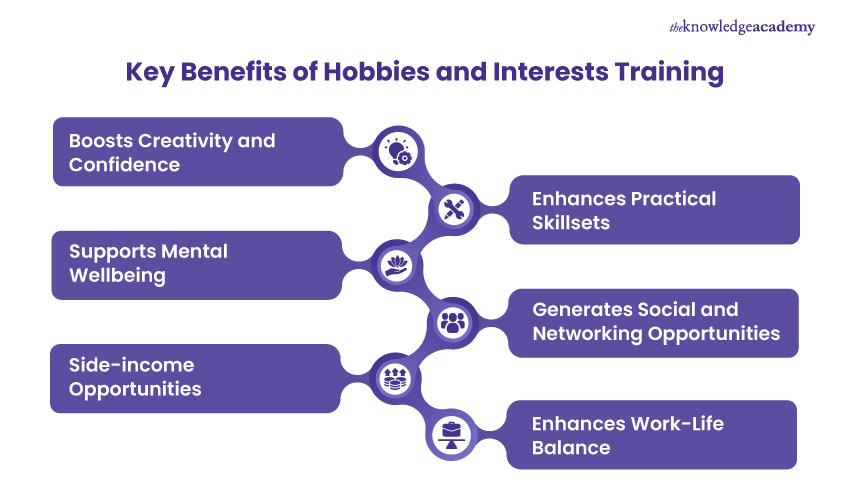
Benefits of Hobbies and Interests Training

Engaging in Hobbies and Interests Training helps learners enrich their lives by expanding their skill set and discovering new outlets for creativity. Here is a list of benefits that our courses offer:

  • Boosts Creativity and Confidence: Develop creative thinking and gain confidence to express ideas artistically and professionally.
  • Enhances Practical Skillsets: Build tangible abilities in crafts, photography, or music that apply both personally and professionally.
  • Supports Mental Wellbeing: Learners with meaningful hobbies can reduce stress, uplift mood, and bring positive energy to everyday life.
  • Generates Social and Networking Opportunities: Connect with like-minded individuals, collaborate on creative projects, and grow within a supportive community.
  • Side-income Opportunities: Professionals can transform their passion into income through freelancing, entrepreneurship, or part-time creative ventures.
  • Enhances Work-Life Balance: Engaging in fulfilling hobbies provides relaxation and balance, helping maintain motivation and productivity in both personal and professional life.
Show more blue-arrow

Hobbies & Interests FAQs

The Hobbies and Interests Training Course offered by The Knowledge Academy covers a variety of leisure activities, teaching practical skills, techniques, and knowledge related to personal interests. Delegates learn to explore new hobbies effectively, enhancing their overall wellbeing and personal development.

Many Hobbies can transition into careers, such as photography, writing, coding, and graphic design. According to The Knowledge Academy, with dedication and skill development, these hobbies can lead to fulfilling professions in respective fields.

Cultivating Hobbies and Interests enhances personal well-being, fosters creativity, reduces stress, and improves mental health. Professionally, it demonstrates diverse skills, boosts productivity, and fosters a positive work-life balance.

Suitable Hobbies and Interests for a CV often include relevant activities such as volunteering, sports, cultural pursuits, and professional development. Tailor your choices to showcase skills like teamwork, leadership, and creativity.

There are no prerequisites for undertaking these Hobbies and Interests Courses.

Each Hobbies and Interests Training Course is 1 day.

No, Hobbies and Interests Training Courses do not include exams.

Engaging in Hobbies can develop diverse skills, including creativity, problem-solving, time management, and communication. According to The Knowledge Academy, Hobbies foster personal growth and offer opportunities to refine talents outside of formal education or professional settings.

When discussing Hobbies and Interests, I highlight pursuits like reading diverse literature, engaging in creative writing, and exploring new technologies. My dedication to continuous learning, fostered by platforms like The Knowledge Academy, enriches my personal and professional development.

Hobbies And Interests can effectively expand your professional network by connecting you with like-minded individuals in relaxed settings. Engaging in shared activities leads to natural conversations, fostering relationships that can evolve into professional opportunities and collaborations.

The Knowledge Academy stands out as a prestigious training provider known for its extensive course offerings, expert instructors, adaptable learning formats, and industry recognition. It's a dependable option for those seeking Hobbies and Interests Certification.

The Knowledge Academy is one of the Leading global training provider for Hobbies & Interests.

The training fees for Hobbies & Interests in Andorra starts from €1595

Show more down

Why we're the go to training provider for you

icon

Best price in the industry

You won't find better value in the marketplace. If you do find a lower price, we will beat it.

icon

Trusted & Approved

Recognised by leading certification bodies, we deliver training you can trust.

icon

Many delivery methods

Flexible delivery methods are available depending on your learning style.

icon

High quality resources

Resources are included for a comprehensive learning experience.

barclays Logo
deloitte Logo
Thames Water Logo

"Really good course and well organised. Trainer was great with a sense of humour - his experience allowed a free flowing course, structured to help you gain as much information & relevant experience whilst helping prepare you for the exam"

Joshua Davies, Thames Water

santander logo
bmw Logo
Google Logo
cross

Exclusive Deals Big Savings This March!

Grab up to 40% OFF and level up your skills this spring! march-madness

WHO WILL BE FUNDING THE COURSE?

close

close

Thank you for your enquiry!

One of our training experts will be in touch shortly to go over your training requirements.

close

close

Press esc to close

close close

Back to course information

Thank you for your enquiry!

One of our training experts will be in touch shortly to go overy your training requirements.

close close

Thank you for your enquiry!

One of our training experts will be in touch shortly to go over your training requirements.