


 Top Rated Course

We may not have the course you’re looking for. If you enquire or give us a call on +44 1344 203 999 and speak to our training experts, we may still be able to help with your training requirements.
What is Corporate Branding? A Complete Guide
James Smith 21 April 2026Corporate Branding is the practice of promoting a company’s overall identity. It encircles the company’s values, mission, personality, and visual elements like logos and colors. A strong corporate brand shapes how the public, employees, and stakeholders perceive the business, building trust, recognition, and loyalty.

Training Outcomes Within Your Budget!
We ensure quality, budget-alignment, and timely delivery by our expert instructors.
Table of Contents

Here’s a hard truth: no one sticks around for a nice logo. They stay for connection, consistency, and trust. It influences decisions, drives loyalty, and defines how the world sees you. That’s where the real magic of branding happens. But what is Corporate Branding at its core? It’s the way your company communicates its values, vibe, and vision across every touchpoint.
Understanding What is Corporate Branding gives your business a personality, a voice, and a vibe people want to be around. Forget false mission statements and stiff brochures. In this blog, you will find how to build a brand that’s magnetic, memorable, and unmistakably you. (Warning: Your competitors might get jealous). Read on!
Table of Contents
1) What is Corporate Branding?
2) Importance of Corporate Branding
3) Types of Corporate Branding
4) Strategy to Create Corporate Branding
5) Best Corporate Branding Examples
6) Key Tips for Sustaining a Strong Brand
7) Conclusion
What is Corporate Branding?
Corporate Branding refers to the practice of promoting the brand name of a corporate entity, as opposed to specific products or services. It encompasses your company’s core values, personality, voice and visuals. It portrays the ways the brand is perceived by customers, employees, and stakeholders.

Key Takeaways:
1) Focuses on promoting the entire company
2) Reflects the company’s values, mission, and personality
3) Builds trust, credibility, and recognition in the market
4) Shapes public perception and strengthens customer loyalty
5) Ensures consistent messaging across all platforms and touchpoints
6) Helps differentiate the business from competitors
7) Influences internal culture and employee engagement
Importance of Corporate Branding
Here are some of the reasons to consider Corporate Branding as an important aspect:
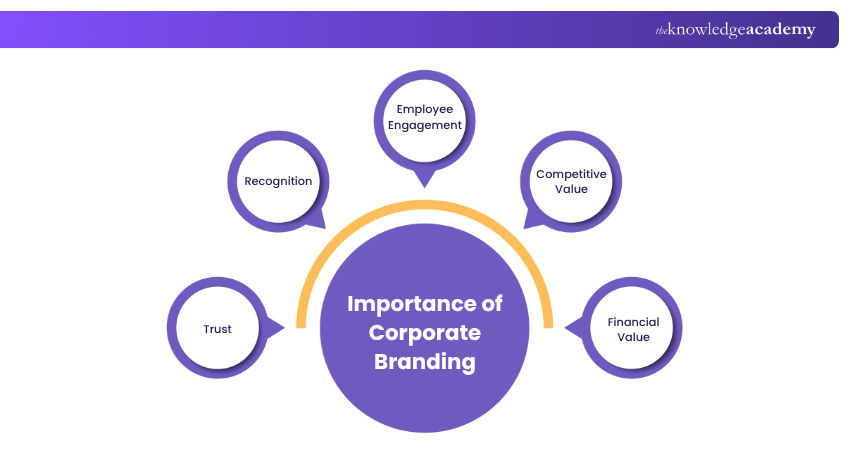
1) Trust: People buy from brands they trust. A strong corporate brand creates credibility and promotes long-term loyalty.
2) Recognition: A consistent and well-defined brand makes you instantly recognisable. Example can be Apple’s minimalist look
3) Employee Engagement: Employees who resonate with your brand mission and values become your biggest ones.
4) Competitive Value: In today’s markets, branding can be your secret weapon to stand out.
5) Financial Value: A strong brand isn’t just about perception. It can boost your company's valuation and attract investors.
Be the reason the internet stops scrolling - Learn Digital Marketing Tools Training now!
Types of Corporate Branding
Corporate Branding can be different for brands depending upon their needs and preferences. Depending on your business model and audience, the approaches might differ. Here are the main types:
1) Product-based Branding: The parent company stays in the background while its products like Tide or Gillette take the center attraction.
2) Service-based Branding: The focus here is on experience. Consulting firms, airlines, and banks often follow this path, where trust and reliability are important.
3) Retail Branding: It happens with the retail industry offering better service, pricing, or Customer Engagement for Retail Branding inorder to create Shift in customer loyalty.
4) Online Branding: For e-commerce and digital platforms like Spotify or Netflix, it’s all about digital presence, UX, and tech-savvy engagement.
5) Personal or Founder-led Branding: Think Elon Musk and Tesla, or Richard Branson and Virgin. The personality of the founder becomes synonymous with the brand.
Strategy to Create Corporate Branding
Here’s a step-by-step roadmap to create a corporate brand that grows:
1) Define the Company's Goals, Vision, And Mission
The mission explains why your company exists. A brand’s vision is the dream you’re chasing. Your goals are the measurable milestones you aim to hit. These core elements shape your brand’s purpose and direction. Defining them upfront can be your brand’s backbone.
Pro Tip: Get crystal clear on these before diving into visuals or messaging
Transform clicks into customers-digital domination starts with Data-Driven Marketing Course. Register today!
2) Perform a Comprehensive Brand Audit
A brand audit assesses your current brand’s strengths, weaknesses, and overall effectiveness. This helps you understand how your audience perceives you versus how you want to be perceived.
The goal is to identify gaps, inconsistencies, and opportunities to improve your brand’s presence. It creates alignment across all platforms and communications.
Tip: Review all brand touchpoints like logos, website, social media and messaging
3) Gather Feedback from Employees
Employees are a key part of your brand experience. Their insights can reveal misalignments, hidden strengths, or morale issues. A strong internal brand fosters engagement and turns employees into brand ambassadors.
Involving them also builds trust and ensures your external branding reflects the true internal culture of your business.
Tip: Collect their feedback to understand how they view the company’s brand value
4) Analyse Your Target Audience
Understand what your ideal customers are, what they value, how they behave, and why they choose certain brands. This helps you create messaging and visuals that resonate with your audience’s needs and emotions.
A deep audience analysis ensures your brand connects on a meaningful level, builds loyalty, and stands out in a competitive market.
Pro Tip: Use surveys, interviews, and market research to gather insights
5) Create a Brand Strategy and Style Guide
Develop a detailed brand strategy outlining your brand’s voice, personality, positioning, and messaging. Then create a style guide with rules for logo usage, typography, colors, and tone.
This ensures consistency across all marketing channels and touchpoints. A well-documented strategy keeps everyone aligned.
Tip: It keeps everyone on the same page, from designers to sales representatives
Best Corporate Branding Examples
Here are some of the corporate legends who aren’t just selling products, but selling lifestyles, movements, and identities. Let's look at the examples one by one:
Microsoft
Microsoft was once seen as a corporate giant losing its cool but reinvented itself under Satya Nadella. Today, it’s all about empowerment, innovation, and inclusivity. Their branding speaks to both developers and everyday users with clarity and purpose.

Amazon
Amazon’s brand is built on customer obsession. It is fast, efficient, and reliable and for those who are the words people associate with it.

Apple
Apple's brand isn’t just sleek, but aspirational. It's not just a phone, but a lifestyle. Everything from their packaging to their retail store's screens can be considered as a design-forward innovation.

Hashtags, headlines, and hacks-master the Performance Marketing Training like a pro!
Tesla
It can be said that Tesla doesn’t just sell cars, it sells the future. Bold, disruptive, and visionary, Tesla’s brand taps into a mission to change the world. It does so with a rebellious, tech-savvy flair.

Nike
Nike’s branding is rooted in inspiration. “Just Do It” is a mindset, more than a slogan. Their storytelling, partnerships, and visual identity all revolve around empowerment and achievement.
Key Tips for Sustaining a Strong Brand
Here are some essential tips to sustain a strong brand:
Ensure Consistency Across All Marketing Initiatives
Your brand should feel the same whether someone visits your website, sees an Instagram post, or walks into your office. Consistency is the key to trust.
Use your brand style guide to train your team. Align every piece of communication with the core message.
Study Competitor Brands
Stay curious about your competitors. What’s helping with your shared audience? You don’t need to copy them but knowing the landscape helps you differentiate and innovate.
Sometimes, knowing what not to do is just as important, so you need to understand your competitors.
Conclusion
Corporate Branding is the bridge between your business and the world. It’s not just about how you look, but about how you live as a company. From your mission to your voice to the way your employees answer the phone, every detail tells a story. In a world that’s becoming more transparent, more competitive, and more connected, Corporate Branding is the one. It can earn trust, inspire loyalty, and drive serious growth.
Think viral. Act strategic. Let’s make marketing magic with SEO Course to lead the market!
Frequently Asked Questions
How To Figure Out Branding?

To figure out branding, start by defining your mission, vision, and values. Understand your target audience and what makes you unique. Audit your current brand presence, gather feedback, and analyse competitors. Then, create a clear strategy with consistent visuals, messaging, and tone that reflect your identity.
Is Corporate Branding the Same as Personal Branding?
Corporate Branding and personal branding are not the same. Corporate Branding represents a company's identity, its values, mission, and reputation.
Personal branding, on the other hand, focuses on an individual’s image, expertise, and voice. Both aim to build trust and recognition but serve different purposes and audiences.
What are the Other Resources and Offers Provided by The Knowledge Academy?
The Knowledge Academy takes global learning to new heights, offering over 3,000+ online courses across 490+ locations in 190+ countries. This expansive reach ensures accessibility and convenience for learners worldwide.
Alongside our diverse Online Course Catalogue, encompassing 17 major categories, we go the extra mile by providing a plethora of free educational Online Resources like Blogs, eBooks, Interview Questions and Videos. Tailoring learning experiences further, professionals can unlock greater value through a wide range of special discounts, seasonal deals, and Exclusive Offers.
What is The Knowledge Pass, and How Does it Work?
The Knowledge Academy’s Knowledge Pass, a prepaid voucher, adds another layer of flexibility, allowing course bookings over a 12-month period. Join us on a journey where education knows no bounds.
What are the Related Courses and Blogs Provided by The Knowledge Academy?
The Knowledge Academy offers various Digital Marketing Courses, including the SEO Course, Digital Marketing Tools Training and the Facebook Ads Course. These courses cater to different skill levels, providing comprehensive insights into Business Activity Monitoring.
Our Digital Marketing Blogs cover a range of topics related to Business, offering valuable resources, best practices, and industry insights. Whether you are a beginner or looking to advance your marketing skills, The Knowledge Academy's diverse courses and informative blogs have got you covered.

James Smith


Digital Marketing Manager and Trainer
James Smith is a digital marketing professional with over a decade of experience in SEO, content strategy, paid media and analytics. He has supported both SMEs and global brands in transforming their digital presence. James’s writing and training are rooted in results-driven tactics and the latest marketing trends.
View Detail
Upcoming Digital Marketing Resources Batches & Dates
Date
 Business Branding Course
Business Branding Course
Thu 9th Jul 2026
Business Branding Course
Thu 8th Oct 2026

 If you wish to make any changes to your course, please


