


 Top Rated Course

We may not have the course you’re looking for. If you enquire or give us a call on +44 1344 203 999 and speak to our training experts, we may still be able to help with your training requirements.
Top 12 Benefits of CSR: Boost Revenue and Employee Engagement
Michael Jones 12 February 2026Corporate Social Responsibility (CSR) is a business approach where organisations act ethically while contributing to social, environmental, and economic development. The Benefits of CSR include stronger brand reputation, higher employee engagement, increased customer trust, regulatory compliance, and long-term business growth.

Training Outcomes Within Your Budget!
We ensure quality, budget-alignment, and timely delivery by our expert instructors.
Table of Contents
Tomorrow’s market leaders are building an impact today. As customers become more value-driven and employees seek purpose alongside pay, businesses can no longer afford to focus on profits alone. Corporate Social Responsibility (CSR) has changed from a corporate trend to a core business strategy that shapes a business’s trust, reputation and growth.
Businesses that invest in ethical practices, community impact, and environmental responsibility are seeing improved brand loyalty, employee engagement, and financial performance. In this blog, we explore the key Benefits of CSR, focusing on how responsible business practices help companies boost revenue while building a motivated workforce for long-term success. Let's dive in!
Table of Contents
1) What is Corporate Social Responsibility?
2) Benefits of Corporate Social Responsibility
a) Increased Employee Satisfaction
b) Improved Employee Retention
c) Enhanced Customer Loyalty
d) Increased Employee Engagement
e) Expanded Revenue Streams
f) Accelerated Capital Growth
g) Supports Local and Global Communities
h) Attract and Retain Top Talent
i) Creates Media and Press Opportunities
j) Stronger Brand Reputation
3) Conclusion
What is Corporate Social Responsibility?
Corporate Social Responsibility (CSR) is a way for businesses to act responsibly and be accountable to their Employees, customers, Stakeholders, communities, and the public. It goes beyond profit-making and focuses on how a company’s decisions and activities affect society, the economy, and the environment. This includes fair treatment of workers, caring for the environment, supporting communities, and making honest business decisions that benefit both the company and society.

Benefits of Corporate Social Responsibility
In today's business landscape, organisations recognise the importance of CSR in driving sustainable success, with the core Corporate Social Responsibility Elements. By embracing them, businesses can benefit in several ways. The following are the Benefits of following CSR:

1) Increased Employee Satisfaction
How a company treats its employees plays a huge role in its success. If employees feel unappreciated and see themselves as just tools for making money, their work quality will suffer. On the flip side, when employees know their work matters and feel valued, they're naturally more motivated to do their best and help the company thrive.
So, if an organisation or business wants a positive reputation, it needs to ensure its employees are enthusiastic and satisfied with their roles and work.
2) Improved Employee Retention
CSR initiatives can improve employee retention significantly by building a positive and inclusive workplace culture. In general, alignment with employees’ personal values enhances their morale and job satisfaction, which, in turn, reduces the overall turnover rates.
Additionally, companies that engage in meaningful CSR activities create a sense of purpose and belonging among all employees. This not only retains existing talent but also attracts new employees who are looking for a workplace that aligns with their ethical beliefs.
3) Enhanced Customer Loyalty
Improved customer loyalty is one of the key CSR benefits. Consumers are increasingly drawn to brands that have a strong social and environmental commitment. These CSR initiatives help build stronger emotional connections with customers, making them more inclined to stay with the for a long period.
This loyalty grows when customers feel that a company shares their values and makes a positive contribution to society. Moreover, CSR activities help a brand stand out from competitors in a crowded market.
4) Increased Employee Engagement
CSR helps businesses to drive higher employee engagement by making them realise the sense of purpose and pride associated with their work. It happens when they are treated correctly with social responsibility. This makes them feel respected and gives them the confidence to engage more with their role.
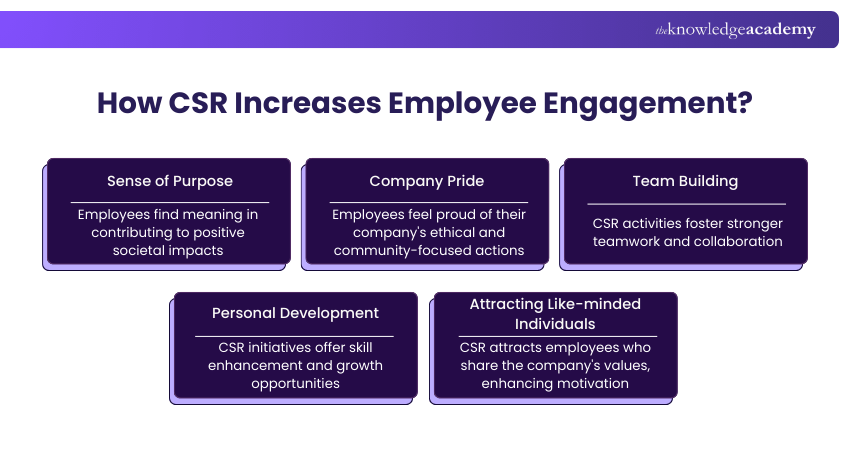
CSR activities also promote better teamwork and collaboration, as employees work together on meaningful projects. This increased engagement improves workplace culture and enhances the company’s overall performance and reputation.
Strengthen your organisation’s social impact strategy with our Corporate Social Responsibility CSR Training – Register today!
5) Expanded Revenue Streams
CSR can lead to expanded revenue streams by opening up newer market opportunities and customer segments that are interested in ethical and sustainable products. Companies adopting CSR practices often create products that are more eco-friendly and contribute to social responsibilities.
This approach tends to attract more consumers who are willing to pay their good’s premium. Additionally, CSR can enhance brand loyalty and attract new customers, which leads to better Sales and market profits.
6) Accelerated Capital Growth
A strong CSR strategy can accelerate capital growth by attracting investors prioritising sustainability and ethical business practices at an increasing rate. Companies known for their CSR commitments are often viewed as lower risk and more resilient to market fluctuations. This perception further leads to more favourable financing terms and a broader base of investors.
Moreover, CSR brings additional advantages such as lower capital cost, building a more stable business model, and implementing responsible management and sustainable growth plans.
7) Supports Local and Global Communities
CSR initiatives play a critical role in supporting both local and global communities by addressing pressing social issues. These include education, health, and economic development. By incorporating these practices, companies can make a notable impact by investing in community projects, providing resources, and developing robust partnerships.
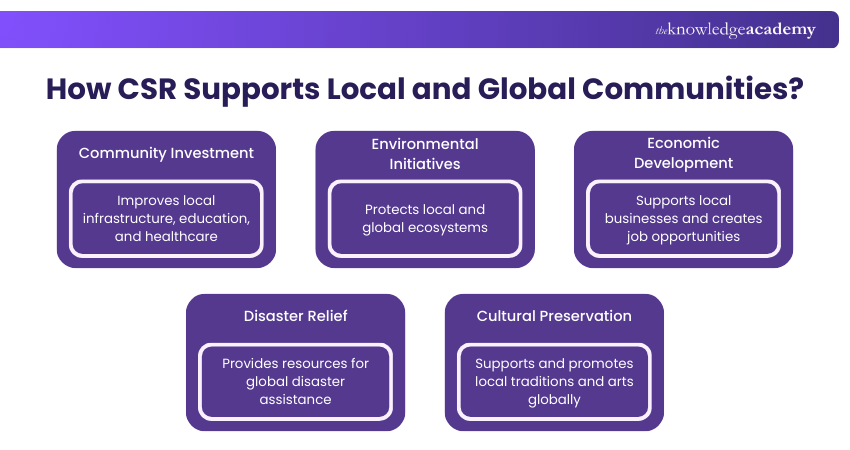
By actively contributing to societal well-being, businesses can build stronger and more supportive relationships with the communities in which they operate. These efforts not only improve the quality of life but also strengthen the company’s reputation.
8) Attract and Retain Top Talent
A strong CSR strategy helps organisations attract skilled professionals who want to work for companies that share their values and purpose. This means you create a supportive and meaningful work environment that makes people willing to work with you.
This in turn leads to higher job satisfaction, lower employee turnover, and long-term loyalty, helping organisations retain top talent and build a motivated, engaged workforce.
9) Creates Media and Press Opportunities
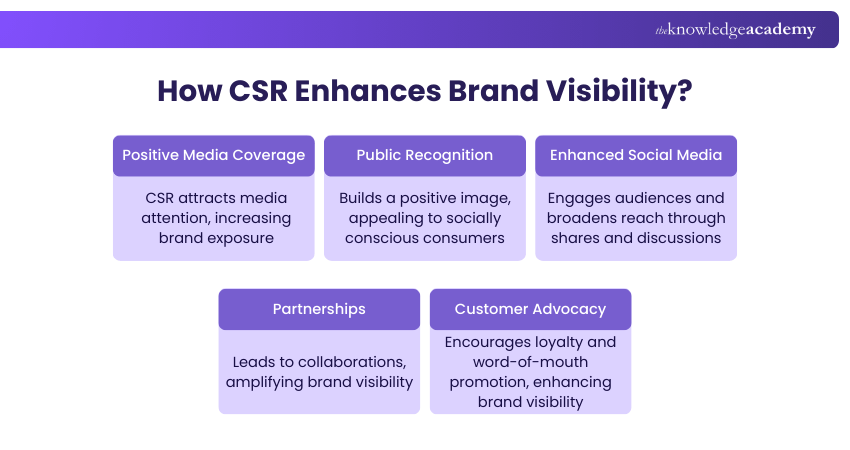
If you are working with CSR strategies, you will generally get attention from the media. Social impact projects, sustainability efforts, and community programmes provide meaningful stories that journalists and stakeholders are eager to highlight. For example, if your company is in a small town and focuses on improving literacy rates, you will get free media attention.
This positive coverage improves brand visibility and public perception without relying solely on traditional advertising methods.
10) Stronger Brand Reputation
One of the major Benefits of Corporate Social Responsibility (CSR) is that it plays a key role in building a trustworthy brand image. When companies act correctly and support social and environmental causes, customers are more likely to view them as trustable and worthy of their attention. This trust strengthens brand loyalty and encourages long-term customer relationships.
Such practices also attract customers, partners, and investors who prefer to engage with organisations that care about more than just profits.
11) Resilience and Risk Management
CSR helps businesses identify and manage risks related to environmental, social, and governance issues. By following ethical practices and sustainable policies, businesses reduce the chances of legal issues, reputational damage, and operational disruptions. Responsible companies are better prepared to handle all these things.
This resilience allows them to adapt quickly, maintain stability during uncertainty, and protect long-term business performance.
12) Purpose-led Innovation
Businesses indulging in CSR are likely to innovate with purpose by finding solutions that benefit both society and the company. When organisations focus on social and environmental challenges, they often develop new products, services, or processes that create shared value. This helps companies stay competitive while addressing real-world problems.
It also promotes creativity, supports sustainable growth, and allows businesses to meet changing customer expectations through meaningful practices.
Support sustainable growth that aligns with your business with our Environmental, Social, and Governance (ESG) Training – Sign up soon!
3 Businesses Using CSR to Drive Growth
Now that you know the Benefits of CSR, let’s check some of the real-world examples of businesses that actually benefited from it and the strategies they used:
1) Google’s CSR Strategy and Its Impact on Employer Reputation
Google focuses heavily on employee well-being, sustainability, and inclusive workplace practices as part of its CSR strategy. Initiatives such as renewable energy commitments, flexible working policies, and diversity programmes have helped position Google as a desirable employer worldwide.
For instance, Google’s commitment to racial equity strengthened its corporate responsibility image and elevated its employer brand. As a result, the company attracted more qualified applicants and reinforced its reputation as an organisation that values diversity, inclusion, and social impact.
2) Johnson & Johnson’s Skill-sharing CSR Approach
Johnson & Johnson uses skill-sharing initiatives to encourage employees to apply their expertise to support healthcare and community development projects. Through volunteer programmes and global health initiatives, employees contribute their skills to create social impact.
For example, Johnson & Johnson’s Talent for Good initiative focused on skill-sharing to support non-profit organisations. It improved engagement, boosted morale and helped employees grow professionally, showing how CSR can directly support workforce motivation and retention.
3) LEGO’s Global CSR Efforts and Their Role in Brand Loyalty
The LEGO brand is an excellent example of how CSR can drive customer trust and loyalty. It continues to grow as a purpose-driven and sustainability-focused brand. This is because its CSR strategy centres on three key areas: children, the environment, and people.
Through this, LEGO invests in responsible sourcing, sustainable materials and initiatives that support child development and local communities worldwide. These actions resonate strongly with customers, helping LEGO build trust and emotional connection.
Conclusion
Corporate Social Responsibility is no longer just about doing good; it is about doing business better. From building stronger brand reputations and attracting top talent to driving customer loyalty and long-term growth, CSR has proven to be a powerful strategic advantage. Achieving the Benefits of CSR, companies can better equip themselves to earn trust, manage risks, and stay competitive in an evolving market.
Enhance your understanding of social responsibility standards with our ISO 26000 Training – Explore now!
Frequently Asked Questions
What are the Four Types of Corporate Social Responsibility?

The four primary types of CSR are environmental, ethical, philanthropic, and economic responsibility. In addition, companies can consider diversity and inclusion, governance, well-being, and employee engagement.
What is the Purpose of Corporate Social Responsibility?
The purpose of CSR is to:
1) Ensure businesses operate ethically
2) Minimise negative impact
3) Support society and the environment
4) Build trust with stakeholders
Create sustainable long-term value beyond profits
What are the Other Resources and Offers Provided by The Knowledge Academy?
The Knowledge Academy takes global learning to new heights, offering over 3,000+ online courses across 490+ locations in 190+ countries. This expansive reach ensures accessibility and convenience for learners worldwide.
Alongside our diverse Online Course Catalogue, encompassing 19 major categories, we go the extra mile by providing a plethora of free educational Online Resources like Blogs, eBooks, Interview Questions and Videos. Tailoring learning experiences further, professionals can unlock greater value through a wide range of special discounts, seasonal deals, and Exclusive Offers.
What is The Knowledge Pass, and How Does it Work?
The Knowledge Academy’s Knowledge Pass, a prepaid voucher, adds another layer of flexibility, allowing course bookings over a 12-month period. Join us on a journey where education knows no bounds.
What are the Related Courses and Blogs Provided by The Knowledge Academy?
The Knowledge Academy offers various ISO 26000 Training, including the ISO 26000 Social Responsibility Training and ISO 26000 Foundation Training. These courses cater to different skill levels and provide comprehensive insights into the Types of Corporate Social Responsibility.
Our Health & Safety Blogs cover a range of topics related to the Benefits of CSR, offering valuable resources, best practices, and industry insights. Whether you are a beginner or looking to advance your Corporate Social Responsibility skills, The Knowledge Academy's diverse courses and informative blogs have got you covered.

Michael Jones


Health and Safety Consultant and Compliance Trainer
Michael Jones is a seasoned health and safety expert with more than 15 years of experience in workplace safety, risk management, and compliance training. He has worked across construction, manufacturing, and corporate sectors, helping organisations meet legal requirements and create safer working environments. Michael’s training and writing are known for being practical, clear, and aligned with UK regulations.

Upcoming Health & Safety Resources Batches & Dates
Date
 ISO 26000 Foundation Training
ISO 26000 Foundation Training
Fri 29th May 2026
ISO 26000 Foundation Training
Fri 16th Oct 2026
ISO 26000 Foundation Training
Fri 18th Dec 2026

 If you wish to make any changes to your course, please


