• Overview
  • Courses
  • Methods
  • Important
  • Growth
  • Benefits
  • Career
  • Reviews
  • Faqs

Python Masters Course Overview

Python is a programming language used in various industries, including desktop software, web development, and machine learning. It is popular because it is easy to read and understand, used for many different tasks, beginners friendly, free to use and distribute, and has a large and active community. This Python Masters Course will help individuals to get comprehensive knowledge and skills of various topics which are discussed below:

  • Python Training
  • Data Analysis And Visualisation With Python
  • Python with Machine Learning
  • Python Django Training
  • PySpark Training
  • Natural Language Processing (NLP) Fundamentals With Python
  • OpenCV With Python Training
  • Python Game Development Training With Pygame
  • Python Data Science Training
  • Advanced SQL

Python has unquestionably been successful in this regard, and as a result, it is one of the keys to the advancement of technology in the future.
overview-info

Best Selling Courses in United Kingdom

Python Masters Course Syllabus

Online Instructor-led

Python Programming Training

This training provides learners with in-depth knowledge about important concepts of python programming and get depth understanding in data analytics, machine learning, web scraping, natural language processing.

  • Modules -13
  • Hours - 16
  • Skills - 3

Course Content

arrow-down

Module 1: Introduction to Python

Overview
Why Use Python?
Python
  • Platform
  • Flavours
  • Today
  • Installation
IDLE – Simple IDE
Writing a Program
Using Script Mode
PyDev Eclipse

Module 2: Python Basics

Statements
Blocks
Variables
Input () Function
Data Types
Numeric Operators
Strings
Tuple and List
Sets
Comparison
Logical Expression

Module 3: Flow Control and Functions

IF Statement
Functions
String Methods
Sorting Data
Range
Loops
Iterators
Generators

Module 4: Python Programming

Functions in Python
Namespaces
Scopes
Parameters
Map () Function
Modules and Packages
Random Numbers
Date and Time
Exception
Introducing the Handle it Program
Regular Expression

Module 5: Object-Oriented Programming

Creating Classes, Methods, and Objects
Introducing the Simple Critter Program
Defining a Class
Defining a Method
Using Constructors
Creating a Constructor
Instantiating an Object
Invoking a Method
Creating Multiple Objects
Access Object
Destroy Objects

Module 6: Class Attributes and Inheritance

Using Class Attributes and Static Methods
Creating a Class Attribute
Creating a Static Method
Class and Object Example
Class Vs Object Method
Class Built-in Attributes
Printing an Object (How?)
Class Inheritance

Module 7: Overloading and Overriding

Overloading and Overriding
Encapsulation: ‘setter’ and ‘getter’
What is the Output?

Module 8: File I/O Operations

Selected Binary File Access Modes
Text Files
Files and Directories
CSV
Path for Windows
JSON
Python PIP

Module 9: Database

SQL Language
Database Connection
NoSQL Database
Database Lab
Sqlite3 Lab

Module 10: Web Development

Django Tutorials
Creating a Project
Using PyCharm
Boot Up your Webserver
Browse your Website
Create your First App
TKAweb- urls.py
Create urls.py in Staff App
Modify Views.py
Database Setup

Module 11: Introduction to Django Framework

How to Create Django Superuser Password?
Modify models.py
Changing the setting.py
Migrate the Classes to the Database
Dealing with the Database
Working with admin.py
Add New App to Staff
Views.py
Publications Update
REST API Model
Change in setting.py
Models.py
Admin.py
Add the Stocks from Admin App

Module 12: Introduction to TCP/IP Networking

Socket Overview
Network Layering
Inter-Layer Relationships
TCP/IP Layering Model
TCP/IP Components
IP Characteristics
UDP Characteristics
TCP Characteristics

Module 13: Client/Server Concepts

Client/Server Concepts
Connectionless Services
Connection-Oriented Services
Socket Programming-1
Socket Programming-Telnet
The World’s Simplest Web Browser
Retrieving an Image over HTTP
Online Instructor-led

Data Analysis and Visualisation with Python

In this 1-day Data Analysis and Visualisation with Python Training course, delegates will become fully familiar with the Data Analysis and Visualisation with Python. During this training, delegates will learn about the importance of data visualisation in business intelligence

  • Modules - 7
  • Hours - 8
  • Skills - 2

Course Content

arrow-down

Module 1: Table of Contents

Stages of Data Science
Why Python?
Python Environment and Editors
Fundamental Python Programming Techniques
Data Cleaning and Manipulation Techniques
Abstraction of the Series and Data Frame
Running Basic Inferential Analyses

Module 2: Importance of Data Visualisation in Business Intelligence

Shifting from Input to Output
Importance of Data Visualisation
Why do Modern Businesses Need Data Visualisation?
Future of Data Visualisation
How Data Visualisation is Used for Business Decision-Making
Data Visualisation Techniques

Module 3: Data Collection Structures

Lists
Dictionaries
Tuples
Series
Data Frames
Panels

Module 4: File I/O Processing and Regular Expressions

File I/O Processing
Regular Expressions

Module 5: Data Gathering and Cleaning

Cleaning Data
Reading and Cleaning CSV Data
Merging and Integrating Data
Reading Data from
  • JSON Format
  • HTML Format
  • XML Format

Module 6: Data Exploring and Analysis

Series Data Structures
Data Frame Data Structures
Data Analysis

Module 7: Data Visualisation

Direct Plotting
Seaborn Plotting System
Matplotlib Plot
Online Instructor-led

Python with Machine Learning

In this Python with Machine Learning Training course, delegates will thoroughly understand Python language and its integration with Machine Learning. During this training, delegates will also get acquainted with non-linear classification models to categorise instances that are not linearly separable.

  • Modules - 10
  • Hours - 16
  • Skills - 2

Course Content

arrow-down

Module 1: Introduction to Python

What is Python?
Python Syntax
Control Flow Tools
Defining Functions
Modules
Input and Output

Module 2: Basics of Machine Learning

Introduction to Machine Learning
Benefits of Machine Learning
Supervised Machine Learning
Unsupervised Machine Learning
Reinforcement Machine Learning

Module 3: Data Sets of Python

Structured Data Sets
Unstructured Data Sets
How to Manage the Missing Data?
Splitting Your Data
Training and Testing your Data

Module 4: Supervised Learning with Regressions

Linear Regression
Cost Function
Using Weight Training with Gradient Descent
Polynomial Regression

Module 5: Regularisation

Types of Fitting with Predicted Prices
How to Detect Overfitting?
How to Fix Overfitting?

Module 6: Supervised Learning with Classification

Logistic Regression
Multiclass Classification

Module 7: Non-linear Classification Models

K-Nearest Neighbour
Decision Trees and Random Forests
Working with Support Vector Machines
Neural Networks

Module 8: Validation and Optimisation Techniques

Cross-Validation Techniques
Hyperparameter Optimisation
Grid and Random Search

Module 9: Unsupervised Machine Learning with Clustering

K-Means Clustering
Hierarchal Clustering
DBSCAN

Module 10: Reduction of Dimensionality

Principal Component Analysis
Linear Discriminant Analysis
Comparing PCA and LDA
Online Instructor-led

Python Django Training

Delegates will learn how Django is the perfect framework for Python websites. This training will acquaint delegates with a vast knowledge of static assets like Static directories, images, JavaScript, collect static, bootstrap, about page, and Django crispy forms.

  • Modules - 6
  • Hours - 8
  • Skills - 2

Course Content

arrow-down

Module 1: Introduction to Django

What is Django?
What is Python and Django?
When Use Django?
Why Django is the Perfect Framework for Python Websites?

Module 2: PostgreSQL

Docker
Detached Mode
PostgreSQL
Settings
Psycopg
New Database

Module 3: Pages App

Templates
URLs and Views
Tests
Testing Templates
Testing HTML
Setup Method

Module 4: User Registration

Auth App
Auth URLs and Views
Homepage
Django Source Code
Log In
Redirects
Log Out
Sign Up
Tests
setUpTestData()

Module 5: Static Assets

staticfiles app
STATIC_URL
STATICFILES_DIRS
STATIC_ROOT
STATICFILES_FINDERS
Static Directory
Images
JavaScript
collectstatic
Bootstrap
About Page
Django Crispy Forms

Module 6: Environment Variables

.env files
SECRET_KEY
DEBUG
Databases
Online Self-paced

PySpark Training

Learners will attain thorough understanding delegates will learn about using the Conda environment to ship their third-party Python packages by leveraging Conda-pack. During this training, delegates will become familiar with the frameworks for implementing the architecture of data-intensive applications in their organisations

  • Modules - 6
  • Hours - 8
  • Skills - 1

Course Content

arrow-down

Module 1: Introduction to PySpark

What is PySpark?
Environment
Spark Dataframes
Reading Data
Writing Data
Transforming Data
MLlib
Pandas UDFs
Best Practices

Module 2: Installation

Using PyPI
Using Conda
Using PySpark Native Features
Using Virtualenv
Using PEX
Manual Downloading
Installing from Source
Dependencies

Module 3: DataFrame

DataFrame Creation
Viewing Data
Selecting and Accessing Data
Applying a Function
Grouping Data
Getting Data In/Out
Working with SQL

Module 4: Setting Up a Spark Virtual Environment

Understanding the Architecture of Data-Intensive Applications
Understanding Spark
Understanding Anaconda
Setting Up the Spark Powered Environment
Setting Up an Oracle VirtualBox with Ubuntu
Building First App with PySpark
Virtualising the Environment with Vagrant
Moving to the Cloud

Module 5: Building Batch and Streaming Apps with Spark

Architecting Data-Intensive Apps
Connecting to Social Networks
Analysing the Data
Exploring the GitHub World
Previewing App

Module 6: Learning from Data Using Spark

Contextualising Spark MLlib in the App Architecture
Classifying Spark MLlib Algorithms
Spark MLlib Data Types
Machine Learning Workflows and Data Flows
Clustering the Twitter Dataset
Building Machine Learning Pipelines
Online Self-paced

Natural Language Processing (NLP) Fundamentals With Python

In this Jenkins Training for Continuous Integration course, delegates will be familiarised with knowledge of how to configure the Jenkins Server. They will also learn will learn how to set up a Continuous integration tool.

  • Modules - 8
  • Hours - 16
  • Skills - 1

Course Content

arrow-down

Module 1: Introduction to Natural Language Processing (NLP)

Introduction to NLP
NLP and Writing Systems
NLP Examples
Advantages of NLP
Disadvantages of NLP

Module 2: Overview of Python

Why Python?
Design of NLTK
NLTK Installation

Module 3: Text Wrangling and Cleansing

What is Text Wrangling and Cleansing?
Sentence Splitting
Tokenisation
Stemming
Lemmatisation
Top Word Removal
Text Mining

Module 4: POS Tagging

Parts of Speech (POS) Tagging
Stanford Tagger
Diving Deep into a Tagger
Sequential Tagger
Brill Tagger
Machine Learning Based Tagger

Module 5: Parsing Structure in Text

Introduction of Parsing
Types of Parsing
Parser

Module 6: NLP Applications

Machine Translation
Statistical Machine Translation
Information Retrieval
Speech Recognition
Text Classification
Information Extraction
Question Answering System
Word Sense Disambiguation
Topic Modelling
Language Detection
Optical Character Recognition

Module 7: Text Classification

Classification of Text
Sampling
Naive Bayes
Decision Tree
Stochastic Gradient Descent
Logistic Regression
Support Vector Machines

Module 8: Using NLTK with Other Python Libraries

NumPy
SciPy
Pandas
Matplotlib
Online Instructor-led

OpenCV With Python Training

Learners will attain a thorough understanding of the concepts of object tracking and object recognition. During this training, delegates will become familiar with the various functionalities like detection and tracking and enhance computer vision.

  • Modules - 6
  • Hours - 8
  • Skills - 1

Course Content

arrow-down

Module 1: Applying Geometric Transformations to Images

Installing OpenCV-Python
Reading, Displaying, and Saving Images
Image Colour Spaces
Image Translation, Rotation, and Scaling
Affine and Projective Transformations
Image Warping

Module 2: Detecting Edges and Applying Image Filter

2D Convolution
Blurring, Sharpening, Embossing, and Edge Detection
Erosion and Dilation
Cartooning an Image

Module 3: Image Features Extraction

Keypoints
Detecting the Corners
SIFT (Scale Invariant Feature Transform)
SURF (Speeded-Up Robust Features)
FAST (Features from Accelerated Segmented Test)
BRIEF (Binary Robust Independent Elementary features)

Module 4: Seam Carving

What is Seam Carving?
Traditional Resizing Vs Seam Carving

Module 5: Detecting Shapes and Segmenting an Image

Shape Matching and Contour Analysis
Approximating a Contour
Censoring a Shape
Image Segmentation

Module 6: Object Recognition

Object Detection Vs Object Recognition
Dense Feature Detector
Visual Dictionary
Support Vector Machines
Detecting and Tracking Body Parts
Machine Learning by an Artificial Neural Network
Online Self-paced

Python Game Development Training With Pygame

This training help learners to know about Python language and its Pygame library. During this training, delegates will learn about game development and how to create packages for different platforms. They will also learn about this course and help delegates to become skilled and practised with Python libraries.

  • Modules - 7
  • Hours - 8
  • Skills - 1

Course Content

arrow-down

Module 1: Introduction to Python

Python Overview
Application of Python
Installation
Variables
Data Types
Lists and Loops
Conditional Statements
Tuples
Object-Oriented Concepts

Module 2: Introduction to Pygame

Installing Pygame
Events in Pygame
Display
Font Module

Module 3: Creating Visuals

Working with Pixel
Working with Colour
Images in Pygame
Drawing Objects

Module 4: Moving Objects

Frame Rate
Moving in a Straight Line
Exploring Vectors

Module 5: User Inputs

Controlling the Game
Keyboard Control
Mouse Control
Moving in a Straight Line
Joystick Control

Module 6: Third Dimension

3D Space
3D Vectors
Time-Based Movement in 3D
Projecting 3D Points
What is a Matrix?
Using the Matrix Class

Module 7: Packaging Your Game

Creating Windows Packages
Creating Packages for Linux
Creating Packages for the Mac
Online Self-paced

Python Data Science Training

In this Python Data Science Training for continuous integration course, delegate will be familiarised with knowledge of Python and its integration with data science. They will also become familiar with the visualisation for analysing the data using different methodologies.

  • Modules - 5
  • Hours - 24
  • Skills - 1

Course Content

arrow-down

Module 1: Introduction of Python

What is Python?
What can be Done by Using Python Programming Language?
Why Python?

Module 2: Working with IPython

Launching IPython Shell and Jupyter Notebook Using Anaconda
Keyboard Shortcuts in the IPython Shell
Special Commands of Python
IPython’s In and Out Objects
IPython and Shell Commands
Errors and Debugging
Profiling and Timing Code

Module 3: Introduction to NumPy

Introduction to NumPy
Data Types in Python
NumPy Arrays
Universal Functions
Aggregations: Min, Max, and More
Computation on Arrays: Broadcasting
Comparison, Boolean Logic, and Masks
Fancy Indexing
Sorting Arrays
NumPy’s Structured Array

Module 4: Working with Pandas

Installing and Using Pandas
Pandas Objects
Data Indexing and Selection
Operating on Data in Pandas
Handling Missing Data
Hierarchical Indexing
Concat and Append
Merge and Join
Aggregations and Grouping
Pivot Tables
Vectorised String Operations
Working with Time Series
eval() and query()

Module 5: Visualisation with Matplotlib

Overview of Matplotlib
Object-Oriented Interface
Simple Line Plots and Scatter Plots
Visualising Errors
Contour Plots
Histograms, Binnings, and Density
Customising Plot Legends
Customising Colorbars
Multiple Subplots
Text Annotation
Three-Dimensional Plotting in Matplotlib
Visualisation with Seaborn
Online Self-paced

Advanced SQL

Learners will attain a thorough knowledge of SQL that focuses on new and complex SQL techniques. During this training, delegates will learn about scalar functions that returns a single valued based input value and testing conditions to check the condition is true or false.

  • Modules - 13
  • Hours - 24
  • Skills - 1

Course Content

arrow-down

Module 1: Creating Tables

Creating Tables in SQL
Inserting Data
Inserting Multiple Rows
View Table

Module 2: Stored Procedure Basics

Benefits of Stored Procedures
Creating Stored Procedures
Two Ways to Execute
System Stored Procedures

Module 3: Variables

Declaring Variables
SET Versus SELECT
Global Variables
Tricks with Variables

Module 4: Parameters and Return Values

Passing Parameters
Default Values and WHERE Clauses
Output Parameters
Using RETURN

Module 5: Scalar Functions

Introduction to Scalar Functions
Various Scalar Functions
Advantages

Module 6: Testing Conditions

IF/ELSE Statement
Using CASE Where Possible

Module 7: Looping

Syntax of WHILE
Breaking Out of a Loop
Basic Transactions
Using DELETE and UPDATE
Sys.Objects

Module 8: Temporary Tables and Table Variables

Using Temporary Tables
Creating Table Variables
Pros of Each Approach

Module 9: Table Valued Functions

In-line Table-Valued Functions
Multi-Statement Table-Valued Functions
User-Defined Functions

Module 10: Derived Tables and CTEs

Using Derived Tables
Common Table Expressions (CTEs)
Recursive CTEs

Module 11: Subqueries

Subquery
Using ALL, ANY, and IN
Correlated Subqueries
Using EXISTS

Module 12: Cursors

What is Cursor?
Life Cycle of Cursor
Types of Cursor
Syntax of Fetching Rows

Module 13: Error-Handling

Using TRY/CATCH
System Error Functions
Custom Error Messages
Obsolete @@Error Function
SQL Server Debugger

Request a Quote

laptop
name name-red
mail mail-red
+44
number number-red

Available Delivery Methods

classroom

Classroom Training

Enquire Now
led

Online Instructor-Led Training

Enquire Now
paced

Online Self-Paced Training

Enquire Now
onsite

Onsite Training

Enquire Now

Why Python Programming is Important?

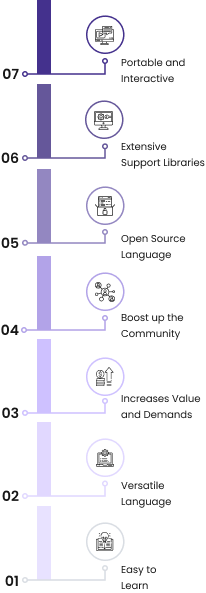
Python is Interpreted

It means that the interpreter processes each line individually at runtime and that you do not need to build your programme before running it.

Python is Interactive

It implies that you can really develop and run your programs while seated at a Python prompt and interacting directly with the interpreter.

Python is Object-Oriented

Python supports the Object-Oriented programming paradigm, in which code is contained within objects.

Python is Beginner's Language

Python is a great language for new programmers since it makes it easy to create a variety of programs, from simple text editors to web browsers to games.

Portable

Python has the same interface across all hardware platforms and can be executed on a variety of them. On Windows, Linux, Mac, Raspberry Pi, Mango Pi, Android, etc., the same Python software can be run.

GUI Programming

Python allows for the creation and porting of GUI programs to a variety of system calls, libraries, and windows platforms, including Windows, Macintosh, and the X Window system of Unix. Tkinter, WxPython, and other libraries are included in it.

View More

Skills to Master

  • Core Python
  • Object-Relation Mappers
  • Multi-Purpose Architecture
  • Web Frameworks
  • Code Packaging, Release, and Deployment
  • Design Skills
  • RESTful APIs
  • Scriptwriting
  • Python Skills
  • Python Frameworks
  • Python Skills
  • ORM Libraries
View More

Tools to Master

  • science-tools
  • python-tools
  • selenium
  • robot
  • test
  • beautiful-soup
  • lxml
  • scrapy
View More

Career Growth with Python Masters Course

Choosing a career can be a tough prospect. We assist individuals in assessing their abilities and provide information and advice on the best training options to assist them in making decisions and selecting the right direction for immediate career growth.

comprehension

Ease of Comprehension

Python is that it is easy to learn and fun to use and also handles complexity nicely. Discovering the benefits of Python will help individuals to get hassle-free code, and on top of it all, it is open-source.

profile

Earn High-Profile Jobs

Begin your Python Developer journey with our expert programme, which includes a comprehensive curriculum.

earning

Earning Potential

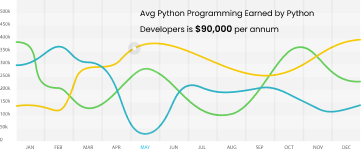
Python is the highest-paid language. You can expect more salary. You'll earn the most if you can land a job as Python Developer.

100%

Open-Source Code

60%

Annual Growth

80%

First-Choice Language

$130,000

Highest Salary

Top Companies Using Python

  • intel

    Intel

  • ibm

    IBM

  • nasa

    NASA

  • pixar

    Pixar

  • netflix

    Netflix

  • facebook

    Facebook

Job Titles Include

  • Data Scientist
  • Django Developer
  • Remote Python Developer
  • Python Data Engineer
  • Cloud Platform Engineer

Top Benefits of Python Programming training

benefits benefits-lg

Our Career-Related Masters Course

What Our Clients Are Saying

I purchased this selenium webdriver with python training from the knowledge academy and got a great deal on it, and I attended it via the virtual instructor-led method. The course ran smoothly with a trainer named Liza, and she was very experienced and knowledgeable. She taught all the concepts and techniques very patiently with examples. She also cleared all the doubts and queries we had during the course. I will definitely recommend this course to my friends and colleagues.

stars

John was brilliant during Python Data Science Training course. I could not have wished for a more engaging trainer. The material was professionally designed, which made the whole training easy to understand. I came away from this course with a great understanding of various things and enjoyed it more than any training courses I've done before. I thank the knowledge academy for this incredible training.

stars

I was really amazed by the learning experience from the Pandas For Python Django Training course. The instructor was very knowledgeable and ensured that everyone understood each topic. She explained and showed me the best way to understand the essential course concepts. She was very patient when people wanted to ask questions and answered most of the queries. I am extremely thankful to Karen for helping me with the precise study material.

stars

I completed the Spark Training for Python Developers course, full of handy tips and tricks. Our trainer helped us get familiar with apache spark concepts with suitable examples. Mark was excellent throughout the course delivery. He was very informative and engaging, with a great personality. Thanks, Mark. The course delivery format was apparent overall. I will recommend this training to my fellow employees.

stars

This OpenCV With Python Training course was fantastic, and the course material was well structured and according to my requirement. Paul was an excellent instructor for this course. He provided relevant examples to the course content, making learning more effortless and enjoyable for me. He also made sure I was at ease throughout the training session because it was my first time. He also provided me with helpful hints for revising my topics.

stars

I just finished my Python Data Science Training course, and the trainer was excellent, and he explained every topic with good examples that will remain unforgettable. He was very professional and taught to show he had wonderful knowledge about the subject matter. The course material was also up to the mark, which helped me gain in-depth knowledge about contract management. I will surely recommend this course to my friends and colleagues.

stars

Frequently Asked Questions

What is Python?

Python is an open-source, object-oriented, high-level, and interpreted programming language that is used for general-purpose programming with dynamic semantics.

What is the Python Expert Package?

The most well-known programming language in the world is arguably Python and in addition, Python powers every tech behemoth, including Facebook and Amazon.

What is the Python package?

Python package is the modular approach for the next logical level. The module consists of multiple objects, such as functions, classes, etc.

What is included in the Python Expert Package?

This Python is a whole expert package of knowledge which will help you to gain an in-depth understanding of below courses:

  • Python Training
  • Data Analysis and Visualisation With Python
  • Python with Machine Learning
  • Python Django Training
  • PySpark Training
  • Natural Language Processing (NLP) Fundamentals With Python
  • OpenCV With Python Training
  • Python Game Development Training With Pygame
  • Python Data Science Training
  • Advanced SQL

Who is the Python Expert Package for?

This course is intended for programmers who need to write or maintain scripts in Python. This course is also suitable for trainees with minor to no in-depth programming knowledge.

Why is Python used for Data Science?

Python is an open-source high-level scripting language which provides simple syntax and is easy to use. Data Scientists prefer this language for data science projects as it approaches object-oriented programming and libraries over a great deal.

How will I benefit from the Python Expert Package training?

The Python Masters Course will train you on Python principles which as discussed as follows:

  • Easy to Learn Commands
  • Improved Productivity
  • Free and Open-Source
  • Python and its Concepts, such as Hadoop and MapReduce
  • prepare for your Job Interview
  • solve Real-Life Business Problems

What are the advantages of SQL?

There are several advantages of SQL like no coding, well defined standards, portability, multiple data views, interactive language, better security features.

What career opportunities can I explore after the Python Expert Package training?

After completing this Python Masters Course, you will be qualified for positions such as Python Developer, Data Analyst, Product Manager, and Machine Learning Engineer.

Is there a specific order in which I should take the courses?

No, there is not a specific order to choose the courses. The most effective route to becoming a Python Master is through our expert package. The learner, however, is free to complete the courses in any order they choose.